.jpg)
Orphic Hymns · Hymn 65
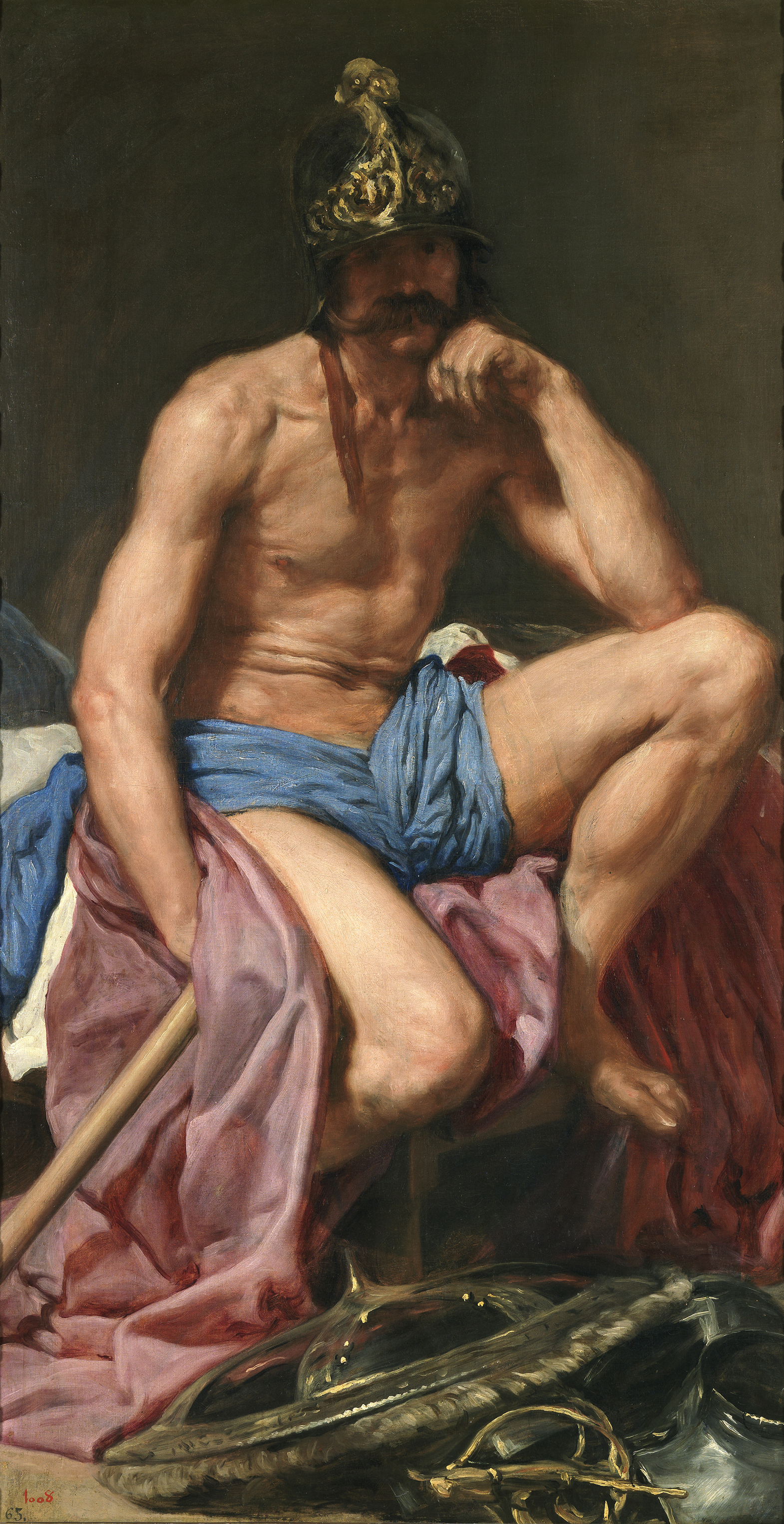
Ares
Ἄρεος
Prayer and ritual
These hymns may be spoken as complete prayers to the Gods. Within the Temple’s practice, a ritual is a direct theurgical act; hymnody gathers the mind and turns it toward the Divine, helping the initiate enter reverent communion with the Gods.
Use a hymn on its own in place of another prayer, or add it to the prayer portion of a suitable ritual. Choose according to the deity addressed and the petition expressed in the hymn. When combining them, preserve the ritual’s prescribed sequence and let the hymn give voice to its purpose.
The petition of this hymn
For the ending of destructive strife and the turning of strength toward peaceful, fruitful work.
Recite the hymn alone when asking Ares to quiet conflict and direct strength well. In a protective or peace-seeking rite, place it after the statement of need, retaining its final movement toward Aphrodite, Dionysus, and the work of Demeter.
English hieratic rendering
Hymn 65 · An English rendering aligned with the Greek lines.
- Unbreakable, mighty-hearted, greatly strong, O powerful Spirit,
- rejoicing in arms, untamable, slayer of mortals, batterer of walls,
- Lord Ares, resounding with weapons, ever stained with slaughter,
- delighting in the blood of the slain, shaker of war, terrible one,
- you who desire the songless strife of swords and spears,
- still the frenzy of conflict, release the labour that grieves the heart;
- incline toward the longing of Cypris and the revels of Lyaeus,
- changing the might of weapons into the labours of Deo.
Ancient Greek & pronunciation
Read the English pronunciation spelling directly below each Greek line.
- Ἄρρηκτ’, ὀβριμόθυμε, μεγασθενές, ὄβριμε δαῖμον,AH-reekt’, oh-vree-MOH-thee-meh, meh-ghahs-theh-NEHS, OH-vree-meh DHEH-mohn,
- ὁπλοχαρής, ἀδάμαστε, βροτοκτόνε, τειχεσιπλῆτα,oh-ploh-khah-REES, ah-DHAH-mah-steh, vroh-tohk-TOH-neh, tee-hyeh-see-PLEE-tah,
- Ἆρες ἄναξ, ὁπλόδουπε, φόνοις πεπαλαγμένος αἰεί,AH-rehs AH-nahks, oh-PLOH-dhoo-peh, FOH-nees peh-pah-lahgh-MEH-nohs eh-EE,
- αἵματι τ’ ἀνδροφόνῳ χαίρων, πολεμόκλονε, φρικτέ,EH-mah-tee t’ ahn-dhroh-FOH-noh HYEH-rohn, poh-leh-MOH-kloh-neh, freek-TEH,
- ὃς ποθέεις ξίφεσίν τε καὶ ἔγχεσι δῆριν ἄμουσον·OHS poh-THEH-ees KSEE-feh-SEEN teh KEH EHN-hyeh-see DHEE-reen AH-moo-sohn·
- στῆσον ἔριν λυσσῶσαν, ἄνες πόνον ἀλγεσίθυμον,STEE-sohn EH-reen lee-SOH-sahn, AH-nehs POH-nohn ahl-yeh-SEE-thee-mohn,
- ἐς δὲ πόθον νεῦσον Κύπριδος κώμους τε Λυαίουehs DHEH POH-thohn NEHF-sohn KEE-pree-dhohs KOH-moos teh lee-EH-oo
- ἀλλάξας ἀλκὴν ὅπλων εἰς ἔργα τὰ Δηοῦς.ah-LAHK-sahs ahl-KEEN OH-plohn ees EHR-ghah TAH dhee-OOS.
Short sound guide for English speakers
Every line beneath the Greek uses English pronunciation spellings. Say each hyphenated syllable in sequence and emphasize the syllable in CAPITALS. For example, οὐρανόθεν is oo-rah-NOH-thehn. Read adjacent vowels separately: theh-AH has two syllables; oo-rah-NEE-een has four. Hyphens guide the voice; they do not mark pauses.
| Spelling | Sound to make |
|---|---|
| ah · eh · ee · oh · oo | father · met · see · go without its final glide · moon. Keep these vowels clear in unstressed syllables too. |
| th · dh | The unvoiced th in thin · the voiced th in this. Thus DHEE begins with the sound in “thee.” |
| kh | The ch in Scottish loch or German Bach: let air pass at the back of the mouth, without closing it into a k. |
| hy | The breathy beginning of a carefully spoken Hugh. Raise the middle of the tongue toward the roof of the mouth and let air pass without voice. In shy, sound s followed by hy; do not use the English sh sound or the English word “shy.” |
| gh | Make the kh sound above, then add voice. Keep the passage open; this is a flowing sound, not a hard g. |
| y · g | y as in yes, with gentle friction · always a hard g as in get. |
| r | Tap the tongue lightly behind the upper teeth, or use a light roll. |
| ks · ps | Sound both consonants, even at the beginning of a word: ks as in backs, ps as in lips. |
| n-g · m-b · n-d | Sound the nasal and the following consonant. In AHN-geh-leh, the n-g group is like finger, with the g audible. |
Always sound s as in hiss, even at the end of DHEE-kees; z is voiced, as in zero. All other consonants have their usual English sounds. Initial consonant groups may be unfamiliar: sound every written consonant, without inserting an extra vowel. A word without capitals carries no written stress in the Greek. Where two syllables have capitals, both written accents are retained. An apostrophe marks a vowel already elided in the Greek; do not add it back. A hyphen at the end of a Greek verse joins the unfinished word to the next verse.
These spellings follow the Modern Greek liturgical reading used throughout this library. Breathings and iota subscripts are silent; separately pronounced vowels remain separate. The few Greek consonants without an exact English equivalent use the sound cues above. Ancient vowel length, pitch accent and metre are not reconstructed.
Hymn notes
Sacred meaning
The hymn first acknowledges the full terror and force of Ares. Its sacred turn is the petition that raging conflict cease and martial strength change its work. Love, Dionysian celebration, and the cultivation of the earth are named as the powers toward which that strength is directed.
Ancient offering rubric: Frankincense.
Textual note
Cypris is Aphrodite, Lyaeus is Dionysus as the releaser, and Deo is Demeter. Abel’s main text reads ὄβριμε in verse 1 and ἐς in verse 7; these readings are followed.
Text and attribution
Greek text: Eugenius Abel, Orphica (1885), printed pages 92, 93. The text follows the printed main reading of this edition; source-specific variants are recorded where relevant. Read the digitised edition. Greek source. Wikisource transcription, revision 124452; checked and corrected against Abel’s print. The English hieratic rendering and suggested devotional use are new editorial work. The applications are guidance for this library, not additional lines of the ancient poem.