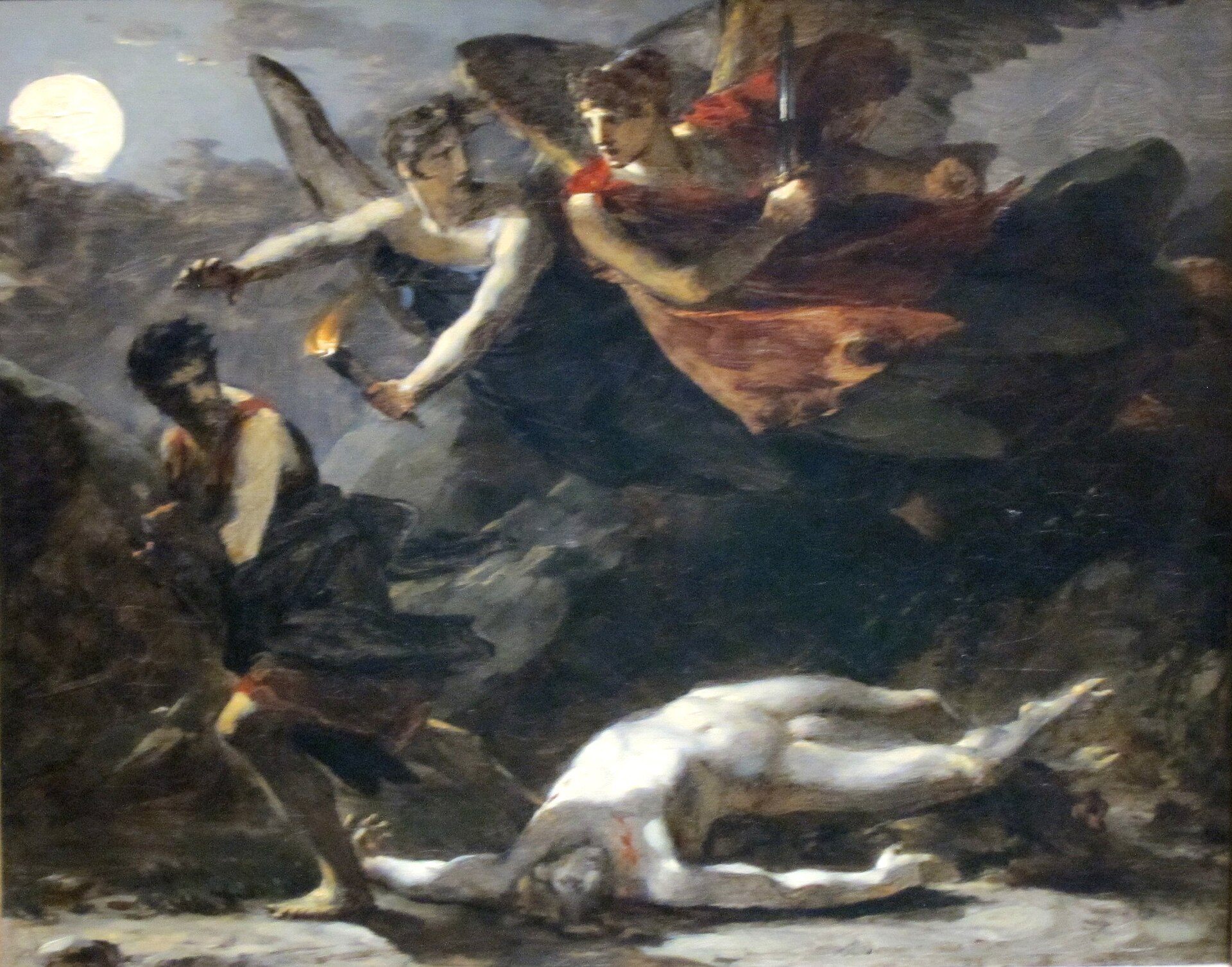

Orphic Hymns · Hymn 63
Dikaiosyne, Righteousness
Δικαιοσύνης
Prayer and ritual
These hymns may be spoken as complete prayers to the Gods. Within the Temple’s practice, a ritual is a direct theurgical act; hymnody gathers the mind and turns it toward the Divine, helping the initiate enter reverent communion with the Gods.
Use a hymn on its own in place of another prayer, or add it to the prayer portion of a suitable ritual. Choose according to the deity addressed and the petition expressed in the hymn. When combining them, preserve the ritual’s prescribed sequence and let the hymn give voice to its purpose.
The petition of this hymn
For right proportion, peace, and a life directed by fairness toward living beings.
Recite this hymn as a prayer for integrity in judgment and conduct. Add it to a rite for justice or reconciliation when seeking balanced relations, an end to grasping excess, and the establishment of peace.
English hieratic rendering
Hymn 63 · An English rendering aligned with the Greek lines.
- O most righteous toward mortals, richly blessed and longed for,
- ever delighting, through equality, in righteous mortals,
- all-honoured, blessed in your portion, glorious Dikaiosyne,
- you who with pure counsels ever determine what is due,
- unbroken in conscience, for ever you break all those
- who have not come beneath your yoke, the wavering of purpose,
- who greedily turn the mighty scales aside.
- Free from discord, friend of all, lover of festivity, lovely one,
- delighting in peace, devoted to a steadfast life,
- you ever abhor the grasping for more, and in equality rejoice.
- For in you wisdom attains the noble fulfilment of virtue.
- Hear, O Goddess, who justly breaks the wickedness of mortals,
- that in enduring balance the good life may go forward
- for mortal human beings who eat the harvest of the field,
- and for all living creatures nourished within the bosoms
- of Earth the Mother Goddess and the ocean-dwelling Zeus.
Ancient Greek & pronunciation
Read the English pronunciation spelling directly below each Greek line.
- Ὦ θνητοῖσι δικαιοτάτη, πολύολβε, ποθεινή,OH thnee-TEE-see dhee-keh-oh-TAH-tee, poh-LEE-ohl-veh, poh-thee-NEE,
- ἐξ ἰσότητος ἀεὶ θνητοῖς χαίρουσα δικαίοις,ehks ee-SOH-tee-tohs ah-EE thnee-TEES HYEH-roo-sah dhee-KEH-ees,
- πάντιμ’, ὀλβιόμοιρε, Δικαιοσύνη μεγαλαυχές,PAHN-deem’, ohl-vee-OH-mee-reh, dhee-keh-oh-SEE-nee meh-ghah-lahf-HYEHS,
- ἣ καθαραῖς γνώμαις ἀεὶ τὰ δέοντα βραβεύεις,EE kah-thah-REHS GHNOH-mehs ah-EE TAH DHEH-ohn-dah vrah-VEH-vees,
- ἄθραυστος τὸ συνειδός· ἀεὶ θραύεις γὰρ ἅπανταςAH-thrahf-stohs TOH see-nee-DHOHS· ah-EE THRAH-vees GHAHR AH-pahn-dahs
- ὅσσοι μὴ τὸ σὸν ἦλθον ὑπὸ ζυγόν, ἀλλοπρόσαλλοι,OH-see MEE TOH SOHN EEL-thohn ee-POH zee-GHOHN, ah-loh-PROH-sah-lee,
- πλάστιγξι βριαρῇσι παρεγκλίναντες ἀπλήστως·PLAH-steenk-see vree-ah-REE-see pah-rehn-GLEE-nahn-dehs ah-PLEE-stohs·
- ἀστασίαστε, φίλη πάντων, φιλόκωμ’, ἐρατεινή,ah-stah-SEE-ah-steh, FEE-lee PAHN-dohn, fee-LOH-kohm’, eh-rah-tee-NEE,
- εἰρήνῃ χαίρουσα, βίον ζηλοῦσα βέβαιον·ee-REE-nee HYEH-roo-sah, VEE-ohn zee-LOO-sah VEH-veh-ohn·
- αἰεὶ γὰρ τὸ πλέον στυγέεις, ἰσότητι δὲ χαίρεις·eh-EE GHAHR TOH PLEH-ohn stee-YEH-ees, ee-SOH-tee-tee DHEH HYEH-rees·
- ἐν σοὶ γὰρ σοφίη ἀρετῆς τέλος ἐσθλὸν ἱκάνει.ehn SEE GHAHR soh-FEE-ee ah-reh-TEES TEH-lohs ehsth-LOHN ee-KAH-nee.
- κλῦθι, θεά, κακίην θνητῶν θραύουσα δικαίως,KLEE-thee, theh-AH, kah-KEE-een thnee-TOHN THRAH-voo-sah dhee-KEH-ohs,
- ὡς ἂν ἰσορροπίῃσιν ἀεὶ βίος ἐσθλὸς ὁδεύῃohs AHN ee-soh-roh-PEE-ee-seen ah-EE VEE-ohs ehsth-LOHS oh-DHEH-vee
- θνητῶν ἀνθρώπων, οἳ ἀρούρης καρπὸν ἔδουσι,thnee-TOHN ahn-THROH-pohn, EE ah-ROO-rees kahr-POHN EH-dhoo-see,
- καὶ ζῴων πάντων, ὁπόσ’ ἐν κόλποισι τιθηνεῖKEH ZOH-ohn PAHN-dohn, oh-POHS’ ehn KOHL-pee-see tee-thee-NEE
- γαῖα θεὰ μήτηρ καὶ πόντιος εἰνάλιος Ζεύς.YEH-ah theh-AH MEE-teer KEH POHN-dee-ohs ee-NAH-lee-ohs ZEHFS.
Short sound guide for English speakers
Every line beneath the Greek uses English pronunciation spellings. Say each hyphenated syllable in sequence and emphasize the syllable in CAPITALS. For example, οὐρανόθεν is oo-rah-NOH-thehn. Read adjacent vowels separately: theh-AH has two syllables; oo-rah-NEE-een has four. Hyphens guide the voice; they do not mark pauses.
| Spelling | Sound to make |
|---|---|
| ah · eh · ee · oh · oo | father · met · see · go without its final glide · moon. Keep these vowels clear in unstressed syllables too. |
| th · dh | The unvoiced th in thin · the voiced th in this. Thus DHEE begins with the sound in “thee.” |
| kh | The ch in Scottish loch or German Bach: let air pass at the back of the mouth, without closing it into a k. |
| hy | The breathy beginning of a carefully spoken Hugh. Raise the middle of the tongue toward the roof of the mouth and let air pass without voice. In shy, sound s followed by hy; do not use the English sh sound or the English word “shy.” |
| gh | Make the kh sound above, then add voice. Keep the passage open; this is a flowing sound, not a hard g. |
| y · g | y as in yes, with gentle friction · always a hard g as in get. |
| r | Tap the tongue lightly behind the upper teeth, or use a light roll. |
| ks · ps | Sound both consonants, even at the beginning of a word: ks as in backs, ps as in lips. |
| n-g · m-b · n-d | Sound the nasal and the following consonant. In AHN-geh-leh, the n-g group is like finger, with the g audible. |
Always sound s as in hiss, even at the end of DHEE-kees; z is voiced, as in zero. All other consonants have their usual English sounds. Initial consonant groups may be unfamiliar: sound every written consonant, without inserting an extra vowel. A word without capitals carries no written stress in the Greek. Where two syllables have capitals, both written accents are retained. An apostrophe marks a vowel already elided in the Greek; do not add it back. A hyphen at the end of a Greek verse joins the unfinished word to the next verse.
These spellings follow the Modern Greek liturgical reading used throughout this library. Breathings and iota subscripts are silent; separately pronounced vowels remain separate. The few Greek consonants without an exact English equivalent use the sound cues above. Ancient vowel length, pitch accent and metre are not reconstructed.
Hymn notes
Sacred meaning
Dikaiosyne joins an unbroken conscience to the power that breaks injustice. Her scales oppose the appetite for more, and her delight in equality gives wisdom its fulfilment in virtue. The final petition extends the balance of good life beyond humanity to the creatures nourished by Earth and the Zeus of the sea.
Ancient offering rubric: Frankincense.
Textual note
“The ocean-dwelling Zeus” is the hymn’s own divine designation in verse 16; it is retained rather than silently replaced by another name. Obvious digital accent and letter errors have been corrected against Abel’s printed main text.
Text and attribution
Greek text: Eugenius Abel, Orphica (1885), printed pages 91, 92. The text follows the printed main reading of this edition; source-specific variants are recorded where relevant. Read the digitised edition. Greek source. Wikisource transcription, revision 124443; checked and corrected against Abel’s print. The English hieratic rendering and suggested devotional use are new editorial work. The applications are guidance for this library, not additional lines of the ancient poem.