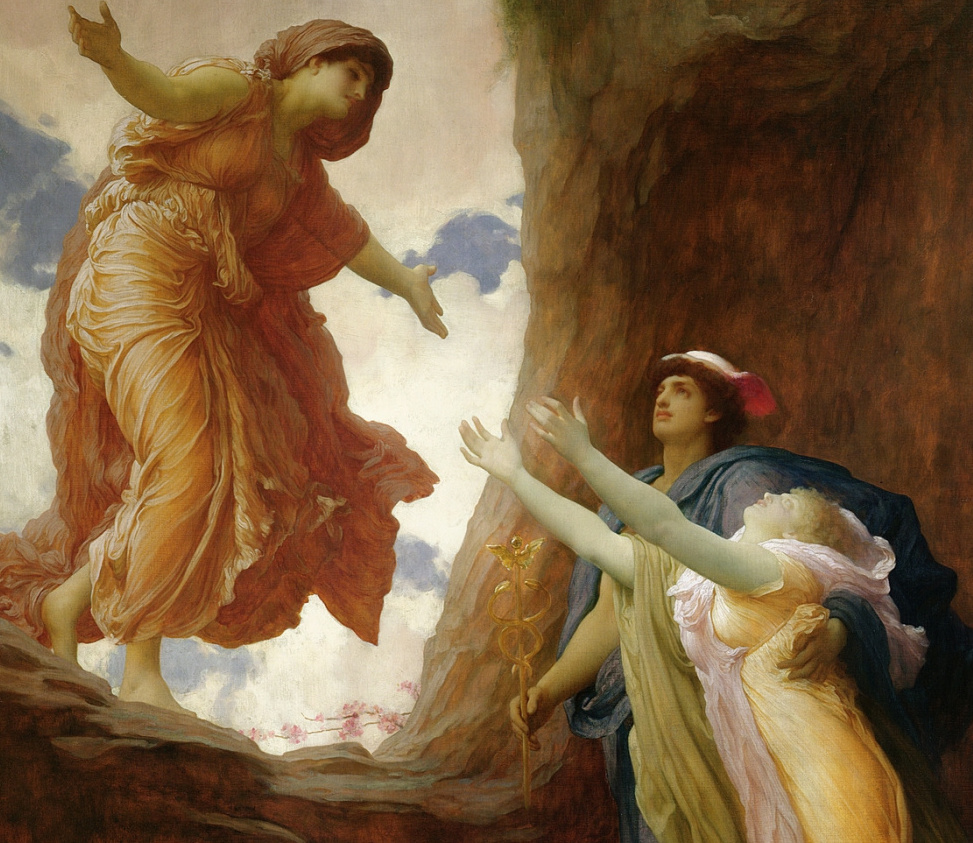
_(cropped).jpg)
Orphic Hymns · Hymn 57
Hermes Beneath the Earth
Ἑρμοῦ Χθονίου
Prayer and ritual
These hymns may be spoken as complete prayers to the Gods. Within the Temple’s practice, a ritual is a direct theurgical act; hymnody gathers the mind and turns it toward the Divine, helping the initiate enter reverent communion with the Gods.
Use a hymn on its own in place of another prayer, or add it to the prayer portion of a suitable ritual. Choose according to the deity addressed and the petition expressed in the hymn. When combining them, preserve the ritual’s prescribed sequence and let the hymn give voice to its purpose.
The petition of this hymn
For Hermes’s guidance of souls and a good fulfillment of the initiates’ works.
The hymn may be recited alone in prayer for divine guidance and a good completion. It may also accompany a rite of remembrance or sacred transition, honoring Hermes’s office under Persephone and preserving the closing petition for the initiates.
English hieratic rendering
Hymn 57 · An English rendering aligned with the Greek lines.
- You who dwell on Kokytos’s unreturning road of necessity,
- who lead the souls of mortals down beneath the depths of earth,
- O Hermes, offspring of Dionysus who leads the Bacchic dance
- and of the Paphian maiden, Aphrodite with curling lashes,
- you who attend Persephone beside her sacred house,
- serving beneath the earth as guide to grievously fated souls,
- whom you lead downward when the appointed time of fate arrives,
- charming all with your sacred, sleep-giving wand,
- and waking those who sleep once more; for she has given you
- the honor, the goddess Persephone, throughout wide Tartarus,
- to lead the way for the grievously fated souls of mortals.
- But, blessed one, send the initiates a good fulfillment in their works.
Ancient Greek & pronunciation
Read the English pronunciation spelling directly below each Greek line.
- Κωκυτοῦ ναίων ἀνυπόστροφον οἶμον ἀνάγκης,koh-kee-TOO NEH-ohn ah-nee-POH-stroh-fohn EE-mohn ah-NAHN-gees,
- ὃς ψυχὰς θνητῶν κατάγεις ὑπὸ νέρτερα γαίης,OHS psee-KHAHS thnee-TOHN kah-TAH-yees ee-POH NEHR-teh-rah YEH-ees,
- Ἑρμῆ, βακχεχόροιο Διωνύσοιο γένεθλονehr-MEE, vahk-hyeh-KHOH-ree-oh dhee-oh-NEE-see-oh YEH-nehth-lohn
- καὶ Παφίης κούρης, ἑλικοβλεφάρου Ἀφροδίτης,KEH pah-FEE-ees KOO-rees, eh-lee-koh-vleh-FAH-roo ah-froh-DHEE-tees,
- ὃς παρὰ Φερσεφόνης ἱερὸν δόμον ἀμφιπολεύεις,OHS pah-RAH fehr-seh-FOH-nees ee-eh-ROHN DHOH-mohn ahm-fee-poh-LEH-vees,
- αἰνομόροις ψυχαῖς πομπὸς κατὰ γαῖαν ὑπάρχων,eh-noh-MOH-rees psee-HYEHS pohm-BOHS kah-TAH YEH-ahn ee-PAHR-khohn,
- ἃς κατάγεις, ὁπότ’ ἂν μοίρης χρόνος εἰσαφίκηται,AHS kah-TAH-yees, oh-POHT’ AHN MEE-rees KHROH-nohs ee-sah-FEE-kee-teh,
- εὐιέρῳ ῥάβδῳ θέλγων ὑπνοδώτιδι πάντα,eh-vee-EH-roh RAHV-dhoh THEHL-ghohn eep-noh-DHOH-tee-dhee PAHN-dah,
- καὶ πάλιν ὑπνώοντας ἐγείρεις· σοὶ γὰρ ἔδωκεKEH PAH-leen eep-NOH-ohn-dahs eh-YEE-rees· SEE GHAHR EH-dhoh-keh
- τιμὴν Φερσεφόνεια θεὰ κατὰ Τάρταρον εὐρὺνtee-MEEN fehr-seh-FOH-nee-ah theh-AH kah-TAH TAHR-tah-rohn eh-VREEN
- ψυχαῖς αἰνομόροις θνητῶν ὁδὸν ἡγεμονεύειν.psee-HYEHS eh-noh-MOH-rees thnee-TOHN oh-DHOHN ee-yeh-moh-NEH-veen.
- ἀλλά, μάκαρ, πέμποις μύσταις τέλος ἐσθλὸν ἐπ’ ἔργοις.ah-LAH, MAH-kahr, PEHM-bees MEE-stehs TEH-lohs ehsth-LOHN ehp’ EHR-yees.
Short sound guide for English speakers
Every line beneath the Greek uses English pronunciation spellings. Say each hyphenated syllable in sequence and emphasize the syllable in CAPITALS. For example, οὐρανόθεν is oo-rah-NOH-thehn. Read adjacent vowels separately: theh-AH has two syllables; oo-rah-NEE-een has four. Hyphens guide the voice; they do not mark pauses.
| Spelling | Sound to make |
|---|---|
| ah · eh · ee · oh · oo | father · met · see · go without its final glide · moon. Keep these vowels clear in unstressed syllables too. |
| th · dh | The unvoiced th in thin · the voiced th in this. Thus DHEE begins with the sound in “thee.” |
| kh | The ch in Scottish loch or German Bach: let air pass at the back of the mouth, without closing it into a k. |
| hy | The breathy beginning of a carefully spoken Hugh. Raise the middle of the tongue toward the roof of the mouth and let air pass without voice. In shy, sound s followed by hy; do not use the English sh sound or the English word “shy.” |
| gh | Make the kh sound above, then add voice. Keep the passage open; this is a flowing sound, not a hard g. |
| y · g | y as in yes, with gentle friction · always a hard g as in get. |
| r | Tap the tongue lightly behind the upper teeth, or use a light roll. |
| ks · ps | Sound both consonants, even at the beginning of a word: ks as in backs, ps as in lips. |
| n-g · m-b · n-d | Sound the nasal and the following consonant. In AHN-geh-leh, the n-g group is like finger, with the g audible. |
Always sound s as in hiss, even at the end of DHEE-kees; z is voiced, as in zero. All other consonants have their usual English sounds. Initial consonant groups may be unfamiliar: sound every written consonant, without inserting an extra vowel. A word without capitals carries no written stress in the Greek. Where two syllables have capitals, both written accents are retained. An apostrophe marks a vowel already elided in the Greek; do not add it back. A hyphen at the end of a Greek verse joins the unfinished word to the next verse.
These spellings follow the Modern Greek liturgical reading used throughout this library. Breathings and iota subscripts are silent; separately pronounced vowels remain separate. The few Greek consonants without an exact English equivalent use the sound cues above. Ancient vowel length, pitch accent and metre are not reconstructed.
Hymn notes
Sacred meaning
This Hermes is explicitly born of Dionysus and Aphrodite and serves beside Persephone. His sleep-giving wand both stills and awakens, while his guiding office becomes active at the appointed time of fate. The final prayer carries that care for passage into the completion of sacred works.
Ancient offering rubric: Storax.
Textual note
The genealogy in this hymn differs from Hermes’s familiar Olympian genealogy and is preserved exactly. A duplicated τιμήν in the digital verse 9 is absent from the printed main text. The sleep-giving epithet modifies the wand in the printed reading ὑπνοδώτιδι.
Text and attribution
Greek text: Eugenius Abel, Orphica (1885), printed pages 88, 89. The text follows the printed main reading of this edition; source-specific variants are recorded where relevant. Read the digitised edition. Greek source. Wikisource transcription, revision 124400; checked and corrected against Abel’s print. The English hieratic rendering and suggested devotional use are new editorial work. The applications are guidance for this library, not additional lines of the ancient poem.