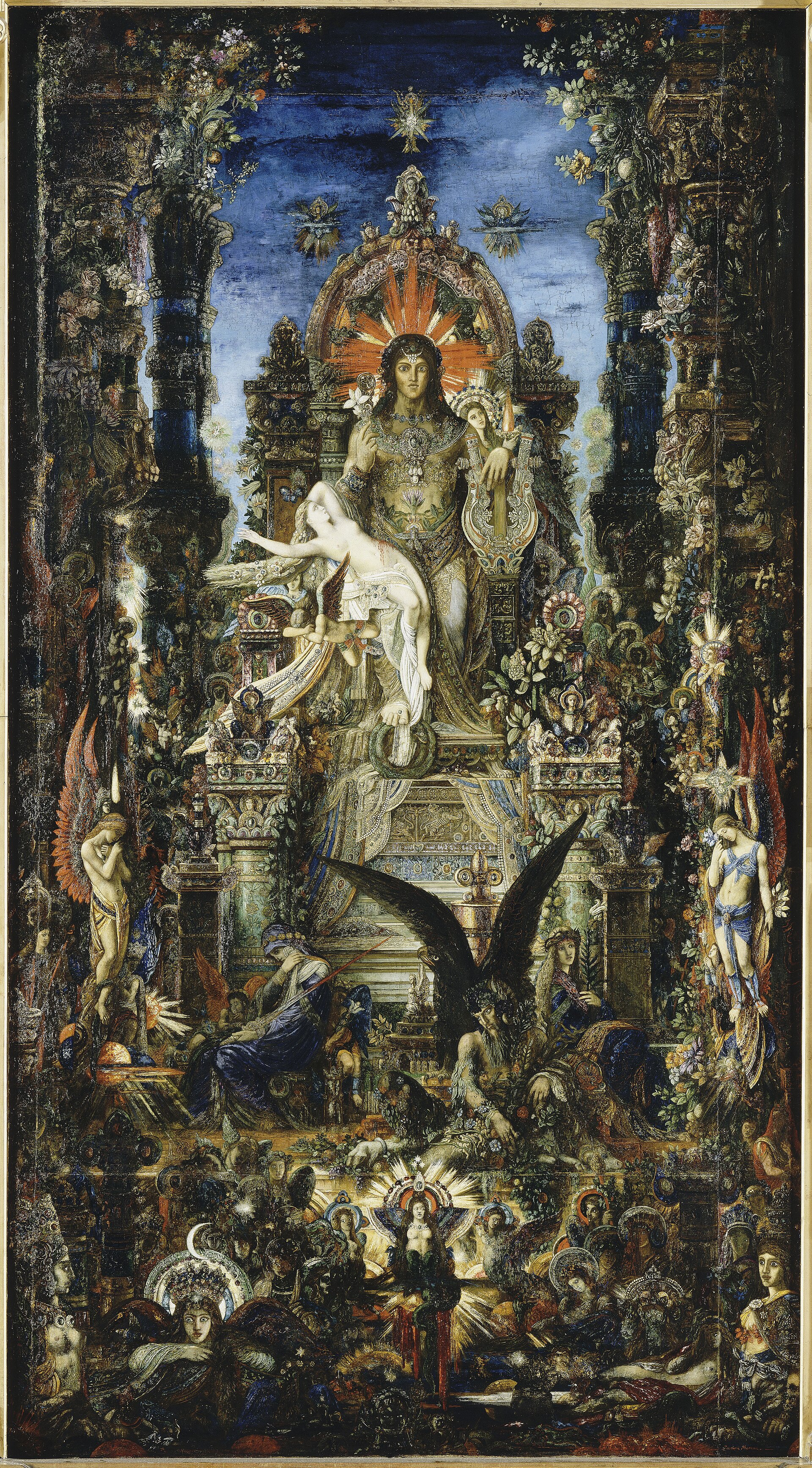

Orphic Hymns · Hymn 44
Semele
Σεμέλης
Prayer and ritual
These hymns may be spoken as complete prayers to the Gods. Within the Temple’s practice, a ritual is a direct theurgical act; hymnody gathers the mind and turns it toward the Divine, helping the initiate enter reverent communion with the Gods.
Use a hymn on its own in place of another prayer, or add it to the prayer portion of a suitable ritual. Choose according to the deity addressed and the petition expressed in the hymn. When combining them, preserve the ritual’s prescribed sequence and let the hymn give voice to its purpose.
The petition of this hymn
For Semele’s gentle favor toward the initiates and her blessing upon the sacred birth of Dionysian life.
Use this hymn as a standalone prayer seeking Semele’s enduring kindness. It may also be joined to a Dionysian initiation or commemorative rite, honoring the divine birth and the sacred mysteries already named in the hymn.
English hieratic rendering
Hymn 44 · An English rendering aligned with the Greek lines.
- I call upon the daughter of Kadmos, queen of all,
- beautiful Semele, with lovely tresses and deep bosom,
- mother of many-joyed Dionysus, bearer of the thyrsus,
- who banished the great pains of birth through fire-bearing radiance,
- giving birth amid the flashing bolts of Zeus, son of Kronos;
- you received honors from glorious Persephone
- among mortal humankind in the seasons of the third-year feast,
- when they celebrate the fruitful travail of your Bacchus,
- the sacred table, and the pure mysteries.
- Now I beseech you, goddess, daughter of Kadmos, sovereign,
- calling upon you to remain ever gentle-minded toward the initiates.
Ancient Greek & pronunciation
Read the English pronunciation spelling directly below each Greek line.
- Κικλήσκω κούρην Καδμηίδα παμβασίλειαν,kee-KLEE-skoh KOO-reen kahdh-mee-EE-dhah pahm-vah-SEE-lee-ahn,
- εὐειδῆ Σεμέλην, ἐρασιπλόκαμον, βαθύκολπον,eh-vee-DHEE seh-MEH-leen, eh-rah-see-PLOH-kah-mohn, vah-THEE-kohl-pohn,
- μητέρα θυρσοφόροιο Διωνύσου πολυγηθοῦς,mee-TEH-rah theer-soh-FOH-ree-oh dhee-oh-NEE-soo poh-lee-yee-THOOS,
- ἣ μεγάλας ὠδῖνας ἐλάσσατο πυρφόρῳ αὐγῇEE meh-GHAH-lahs oh-DHEE-nahs eh-LAH-sah-toh peer-FOH-roh ahv-YEE
- ἀστραπίοιο τεκοῦσα Διὸς βολίσι Κρονίοιο·ah-strah-PEE-ee-oh teh-KOO-sah dhee-OHS voh-LEE-see kroh-NEE-ee-oh·
- τιμὰς τευξαμένη παρ’ ἀγαυῆς Φερσεφονείηςtee-MAHS tehfk-sah-MEH-nee pahr’ ah-ghah-VEES fehr-seh-foh-NEE-ees
- ἐν θνητοῖσι βροτοῖσιν ἀνὰ τριετηρίδας ὥρας,ehn thnee-TEE-see vroh-TEE-seen ah-NAH tree-eh-tee-REE-dhahs OH-rahs,
- ἡνίκα σοῦ Βάκχου γονίμην ὠδῖνα τελῶσινee-NEE-kah SOO VAHK-khoo ghoh-NEE-meen oh-DHEE-nah teh-LOH-seen
- εὐίερόν τε τράπεζαν ἰδὲ μυστήριά θ’ ἁγνά.eh-VEE-eh-ROHN teh TRAH-peh-zahn ee-DHEH mee-STEE-ree-AH th’ ahgh-NAH.
- νῦν σέ, θεά, λίτομαι, κούρη Καδμηίς, ἄνασσα,NEEN SEH, theh-AH, LEE-toh-meh, KOO-ree kahdh-mee-EES, AH-nah-sah,
- πρηύνοον καλέων αἰεὶ μύστῃσιν ὑπάρχειν.pree-EE-noh-ohn kah-LEH-ohn eh-EE MEE-stee-seen ee-PAHR-hyeen.
Short sound guide for English speakers
Every line beneath the Greek uses English pronunciation spellings. Say each hyphenated syllable in sequence and emphasize the syllable in CAPITALS. For example, οὐρανόθεν is oo-rah-NOH-thehn. Read adjacent vowels separately: theh-AH has two syllables; oo-rah-NEE-een has four. Hyphens guide the voice; they do not mark pauses.
| Spelling | Sound to make |
|---|---|
| ah · eh · ee · oh · oo | father · met · see · go without its final glide · moon. Keep these vowels clear in unstressed syllables too. |
| th · dh | The unvoiced th in thin · the voiced th in this. Thus DHEE begins with the sound in “thee.” |
| kh | The ch in Scottish loch or German Bach: let air pass at the back of the mouth, without closing it into a k. |
| hy | The breathy beginning of a carefully spoken Hugh. Raise the middle of the tongue toward the roof of the mouth and let air pass without voice. In shy, sound s followed by hy; do not use the English sh sound or the English word “shy.” |
| gh | Make the kh sound above, then add voice. Keep the passage open; this is a flowing sound, not a hard g. |
| y · g | y as in yes, with gentle friction · always a hard g as in get. |
| r | Tap the tongue lightly behind the upper teeth, or use a light roll. |
| ks · ps | Sound both consonants, even at the beginning of a word: ks as in backs, ps as in lips. |
| n-g · m-b · n-d | Sound the nasal and the following consonant. In AHN-geh-leh, the n-g group is like finger, with the g audible. |
Always sound s as in hiss, even at the end of DHEE-kees; z is voiced, as in zero. All other consonants have their usual English sounds. Initial consonant groups may be unfamiliar: sound every written consonant, without inserting an extra vowel. A word without capitals carries no written stress in the Greek. Where two syllables have capitals, both written accents are retained. An apostrophe marks a vowel already elided in the Greek; do not add it back. A hyphen at the end of a Greek verse joins the unfinished word to the next verse.
These spellings follow the Modern Greek liturgical reading used throughout this library. Breathings and iota subscripts are silent; separately pronounced vowels remain separate. The few Greek consonants without an exact English equivalent use the sound cues above. Ancient vowel length, pitch accent and metre are not reconstructed.
Hymn notes
Sacred meaning
Semele’s motherhood passes through the fire-bearing radiance of Zeus and into the honors granted through Persephone. Her remembrance in the recurring festival links birth, sacred feast, and initiation. The final request asks her to remain gentle-minded toward the initiates.
Ancient offering rubric: Storax.
Textual note
The third-year festival uses ancient inclusive counting for a biennial observance. No modern ceremony is inferred from the brief mention of a sacred table.
Text and attribution
Greek text: Eugenius Abel, Orphica (1885), printed pages 82. The text follows the printed main reading of this edition; source-specific variants are recorded where relevant. Read the digitised edition. Greek source. Wikisource transcription, revision 124344; checked and corrected against Abel’s print. The English hieratic rendering and suggested devotional use are new editorial work. The applications are guidance for this library, not additional lines of the ancient poem.