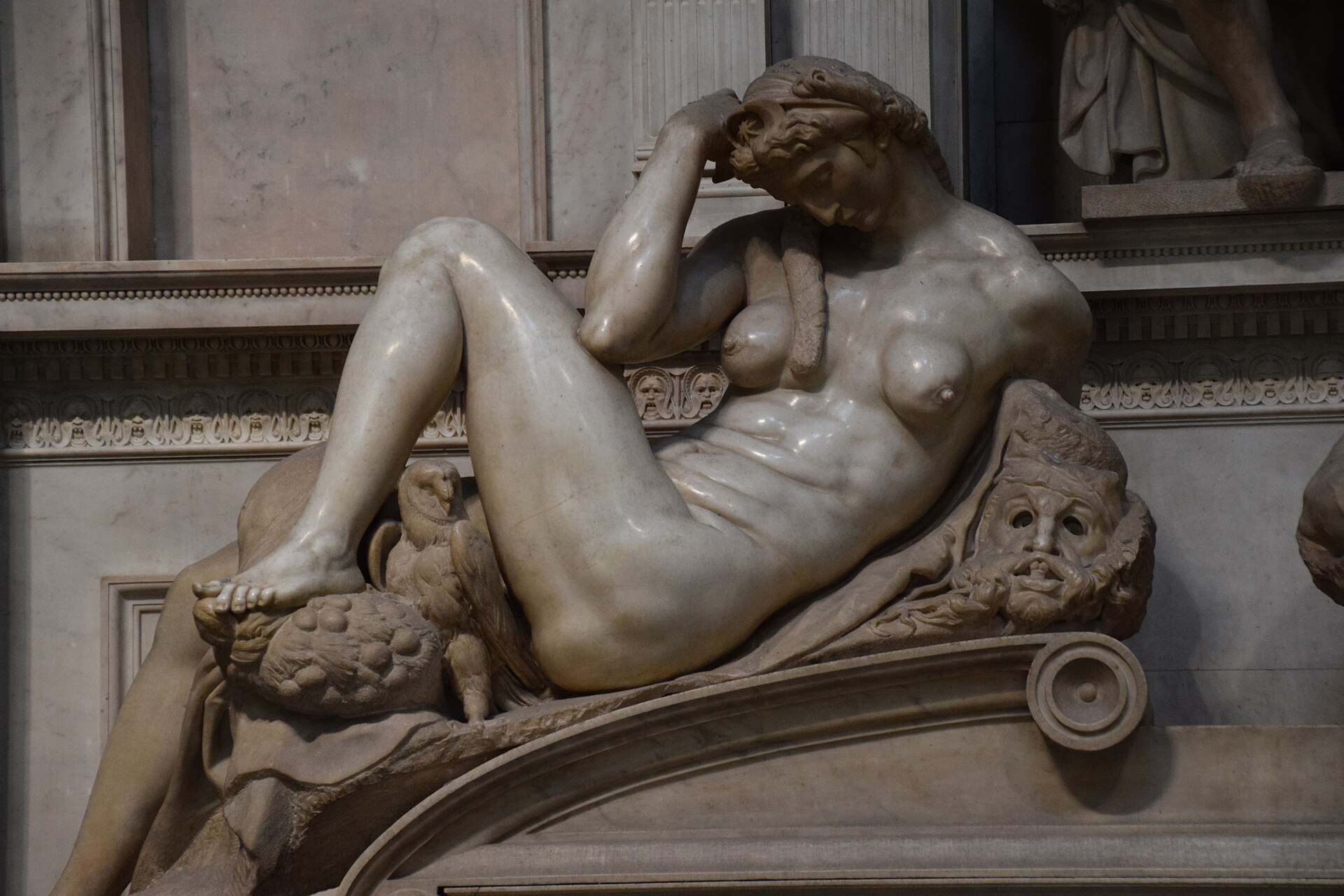
,_The_Sagrestia_Nuova_at_the_Medici_Chapel.jpg)
Orphic Hymns · Hymn 03
Night
Νυκτός
Prayer and ritual
These hymns may be spoken as complete prayers to the Gods. Within the Temple’s practice, a ritual is a direct theurgical act; hymnody gathers the mind and turns it toward the Divine, helping the initiate enter reverent communion with the Gods.
Use a hymn on its own in place of another prayer, or add it to the prayer portion of a suitable ritual. Choose according to the deity addressed and the petition expressed in the hymn. When combining them, preserve the ritual’s prescribed sequence and let the hymn give voice to its purpose.
The petition of this hymn
Prayer to Night for repose, release from care, and protection from nocturnal terrors. It honours her as a divine source of dreams and the mother of Gods and mortals.
Use independently before rest or during a vigil devoted to Night. It may supplement an established rite seeking peaceful sleep or protection through the night, with attention to the closing request that fears be sent away.
English hieratic rendering
Hymn 03 · An English rendering aligned with the Greek lines.
- I shall sing of Night, mother of Gods and of mortals.
- Night is the source of all, whom we may also call Kypris.
- Hear, blessed Goddess, darkly radiant, shining with stars,
- rejoicing in stillness and the quiet of abundant sleep,
- gladness, delight, lover of the nightlong vigil, mother of dreams,
- releaser of care, bearing kindly rest from toil,
- giver of sleep, beloved of all, driver of horses, gleaming by night,
- whose portion is half, earthly and in turn heavenly,
- turning in a circle, playing in the chase through the air,
- who send the light beneath the lower regions, and again flee
- into Hades, for dread Necessity rules all.
- Now, O blessed Night, rich in blessings, desired by all,
- gracious to encounter, hearing the suppliant voice of my words,
- come in kindness, and send away the terrors that shine in the night.
Ancient Greek & pronunciation
Read the English pronunciation spelling directly below each Greek line.
- Νύκτα θεῶν γενέτειραν ἀείσομαι ἠδὲ καὶ ἀνδρῶν.NEEK-tah theh-OHN yeh-NEH-tee-rahn ah-EE-soh-meh ee-DHEH KEH ahn-DHROHN.
- Νὺξ γένεσις πάντων, ἣν καὶ Κύπριν καλέσωμεν.NEEKS YEH-neh-sees PAHN-dohn, EEN KEH KEE-preen kah-LEH-soh-mehn.
- κλῦθι, μάκαιρα θεά, κυαναυγής, ἀστεροφεγγές,KLEE-thee, MAH-keh-rah theh-AH, kee-ah-nahv-YEES, ah-steh-roh-fehn-GEHS,
- ἡσυχίῃ χαίρουσα καὶ ἠρεμίῃ πολυύπνῳ,ee-see-HYEE-ee HYEH-roo-sah KEH ee-reh-MEE-ee poh-lee-EEP-noh,
- εὐφροσύνη, τερπνή, φιλοπάννυχε, μῆτερ ὀνείρων,eh-froh-SEE-nee, tehrp-NEE, fee-loh-PAH-nee-hyeh, MEE-tehr oh-NEE-rohn,
- λυσιμέριμν’, ἀγαθήν τε πόνων ἀνάπαυσιν ἔχουσα,lee-see-MEH-reemn’, ah-ghah-THEEN teh POH-nohn ah-NAH-pahf-seen EH-khoo-sah,
- ὑπνοδότειρα, φίλη πάντων, ἐλάσιππε, νυχαυγές,eep-noh-DHOH-tee-rah, FEE-lee PAHN-dohn, eh-LAH-see-peh, nee-khahv-YEHS,
- ἡμιτελές, χθονίη ἠδ’ οὐρανίη πάλιν αὐτή,ee-mee-teh-LEHS, khthoh-NEE-ee eedh’ oo-rah-NEE-ee PAH-leen ahf-TEE,
- ἐγκυκλίη, παίκτειρα διώγμασιν ἠεροφοίτοις,ehn-gee-KLEE-ee, PEHK-tee-rah dhee-OHGH-mah-seen ee-eh-roh-FEE-tees,
- ἣ φάος ἐκπέμπεις ὑπὸ νέρτερα καὶ πάλι φεύγειςEE FAH-ohs ehk-PEHM-bees ee-POH NEHR-teh-rah KEH PAH-lee FEHV-yees
- εἰς Ἀίδην∙ δεινὴ γὰρ ἀνάγκη πάντα κρατύνει.ees ah-EE-dheen∙ dhee-NEE GHAHR ah-NAHN-gee PAHN-dah krah-TEE-nee.
- νῦν δέ, μάκαιρ’ ὦ Νύξ, πολυόλβιε, πᾶσι ποθεινή,NEEN DHEH, MAH-kehr’ OH NEEKS, poh-lee-OHL-vee-eh, PAH-see poh-thee-NEE,
- εὐάντητε, κλύουσα λόγων ἱκετηρίδα φωνὴνeh-VAHN-dee-teh, KLEE-oo-sah LOH-ghohn ee-keh-tee-REE-dhah foh-NEEN
- ἔλθοις εὐμενέουσα, φόβους δ’ ἀπόπεμπε νυχαυγεῖς.EHL-thees ehv-meh-NEH-oo-sah, FOH-voos dh’ ah-POH-pehm-beh nee-khahv-YEES.
Short sound guide for English speakers
Every line beneath the Greek uses English pronunciation spellings. Say each hyphenated syllable in sequence and emphasize the syllable in CAPITALS. For example, οὐρανόθεν is oo-rah-NOH-thehn. Read adjacent vowels separately: theh-AH has two syllables; oo-rah-NEE-een has four. Hyphens guide the voice; they do not mark pauses.
| Spelling | Sound to make |
|---|---|
| ah · eh · ee · oh · oo | father · met · see · go without its final glide · moon. Keep these vowels clear in unstressed syllables too. |
| th · dh | The unvoiced th in thin · the voiced th in this. Thus DHEE begins with the sound in “thee.” |
| kh | The ch in Scottish loch or German Bach: let air pass at the back of the mouth, without closing it into a k. |
| hy | The breathy beginning of a carefully spoken Hugh. Raise the middle of the tongue toward the roof of the mouth and let air pass without voice. In shy, sound s followed by hy; do not use the English sh sound or the English word “shy.” |
| gh | Make the kh sound above, then add voice. Keep the passage open; this is a flowing sound, not a hard g. |
| y · g | y as in yes, with gentle friction · always a hard g as in get. |
| r | Tap the tongue lightly behind the upper teeth, or use a light roll. |
| ks · ps | Sound both consonants, even at the beginning of a word: ks as in backs, ps as in lips. |
| n-g · m-b · n-d | Sound the nasal and the following consonant. In AHN-geh-leh, the n-g group is like finger, with the g audible. |
Always sound s as in hiss, even at the end of DHEE-kees; z is voiced, as in zero. All other consonants have their usual English sounds. Initial consonant groups may be unfamiliar: sound every written consonant, without inserting an extra vowel. A word without capitals carries no written stress in the Greek. Where two syllables have capitals, both written accents are retained. An apostrophe marks a vowel already elided in the Greek; do not add it back. A hyphen at the end of a Greek verse joins the unfinished word to the next verse.
These spellings follow the Modern Greek liturgical reading used throughout this library. Breathings and iota subscripts are silent; separately pronounced vowels remain separate. The few Greek consonants without an exact English equivalent use the sound cues above. Ancient vowel length, pitch accent and metre are not reconstructed.
Hymn notes
Sacred meaning
Night is both a cosmic origin and the presence that brings relief to living beings. Her circular movement and the rule of Necessity place repose within the ordered alternation of light and darkness.
Ancient offering rubric: Torches.
Textual note
The heading specifies δαλούς, torches or burning brands, although it uses the customary word for incense. Line 8, ἡμιτελές, evokes Night's half share in the cycle; the English preserves the half portion without expanding it into an additional verse.
Text and attribution
Greek text: Eugenius Abel, Orphica (1885), printed pages 59, 60. The text follows the printed main reading of this edition; source-specific variants are recorded where relevant. Read the digitised edition. Greek source. Wikisource transcription, revision 124066; checked and corrected against Abel’s print. The English hieratic rendering and suggested devotional use are new editorial work. The applications are guidance for this library, not additional lines of the ancient poem.