Thanatos Power Ritual
Θάνατος · The Appointed Mortal Boundary
I stand among the living at the threshold of memory.
I honor the boundary of life and remember those who have died.
Let this prayer lead from reverence for the dead to faithful care for those still here.
 Isax10
 Laguzx10Isax10
 Thetax3
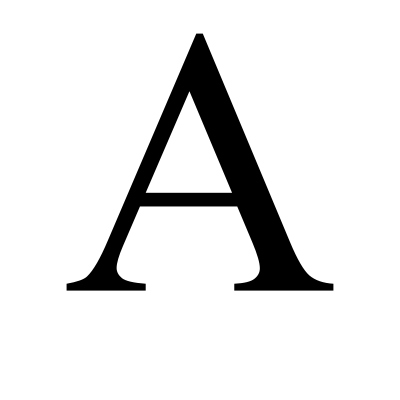 Alphax3
 Nux3
Nux3Ō Thanate, ho Hypnos anapauei tous zōntas; sy to peras phylasseis.
O Thanatos, you and Hypnos are children of Night.
Your brother passes through the night and releases the sleeper at dawn.
I acknowledge your office and honor the boundary.
Your own threshold comes once, and every household must one day answer it.
O Thanatos, Sleep gives rest to the living; you guard the final boundary.
Let the distinction steady us as we honor the dead and tend the weary.
I honor each divine office in its own order.
Give this mortal hour its proper weight in our sight.
We stand before your office with quiet speech and an undivided mind.
Hold Death and Sleep as distinct brothers. Do not confuse a nightly rest with the mortal end.
 Raidhox10
 Mannazx10Raidhox10
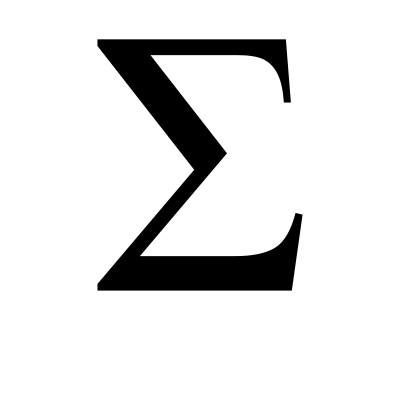 Sigmax3Alphax3
 Rhox3
Rhox3Ō Thanate, tōn teleutōntōn tēn timēn phylasse.
You and Hypnos bore Sarpedon to Lycia.
Apollo made the body clean before the journey began.
O Thanatos, guard the honor of those who have died.
Let their names be spoken with the care due to whole lives.
Apollo washed and anointed the body.
Their kin waited for the body and the lasting marker of remembrance.
Burial and memorial give form to human honor.
Let grief find its work in tending, naming, and keeping faith.
Receive our reverence for the passage entrusted to you.
See the journey as care for the dead, not a summons for the living to follow.
 Eihwazx10Mannazx10Eihwazx10
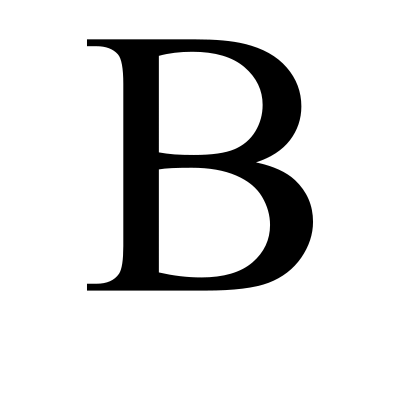 Betax3
 Iotax3
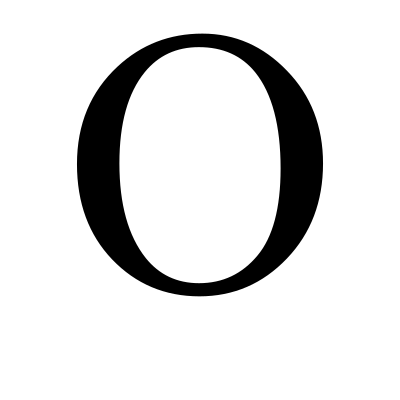 Omicronx3
Ō Thanate, hoson khronon zō, dikaia praxō.
O Thanatos, as long as I live, I will act justly.
Let that promise be proved by the next choice I make.
I will spend this day in truth.
I will put truthful words beside the deeds that follow them.
The memory of the departed guides my choice.
Their remembered lives call me to use this day well.
I will not put off the deed that justice calls for.
Let justice be made visible in a completed act of care.
May the measure of my days sharpen my generosity and my resolve.
Name inwardly one act of care or justice you can complete today.
 Dagazx10
 Othalax10Dagazx10
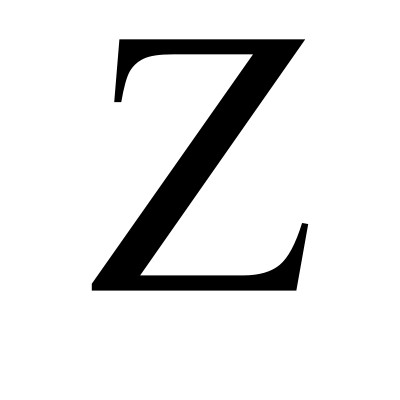 Zetax3
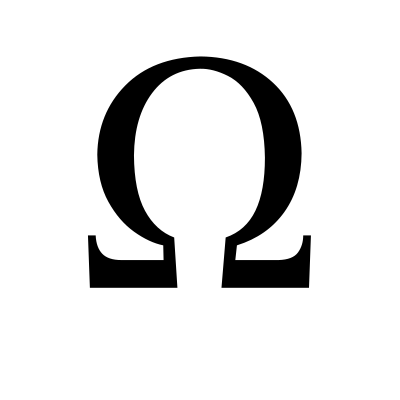 Omegax3
 Etax3
Etax3Ō Thanate, pros tous zōntas kai ta erga tou biou epanerkhomai.
O Thanatos, I revere your appointed work.
I seek no passage before the hour appointed to me.
O Thanatos, I return to the living and to the work of life.
Let the living receive my voice, my labor, and my loyalty.
I give careful attention to the people here with me.
I will answer a need that stands within my reach.
I carry remembrance and live the life before me.
What I have loved among the dead will bear fruit in the living world.
As I leave this image, let my feet find the ground and my hands their work.
Feel the ground beneath your feet. Let the present day come fully into view.
May their names be carried with dignity and their good works remembered.
Zeus, guard the just works of the living.
I leave this rite with one just deed before me.
Look once more at the wings and the clear path between them. Let remembrance remain, while attention returns to the room and to one necessary act of care.
Short return if stopping early
Thanatos, receive my honor. I return to the living. Hail Zeus.
On Thanatos
Thanatos, Θάνατος, is Death as a distinct divine power. Hesiod's Theogony 211 to 213 names him among the children of Nyx. At lines 758 to 766, Sleep and Death dwell as brothers near the house of Night. Hesiod distinguishes their natures: Sleep can move gently among mortals, while Death holds fast the one he takes. The first station recognizes the kinship without softening that difference.
He is neither Charon, who ferries the dead, nor Hades, who rules the underworld. His own office is the mortal end. The opening of Euripides' Alcestis places Thanatos before the house of Admetus, asserting his appointed claim. The rite does not reenact that dramatic contest. It honors the boundary and then turns the speaker toward worthy conduct while life remains.
Euripides gives that office a voice in Alcestis 24 to 76. Thanatos arrives at Admetus's house carrying a sword and challenges Apollo over the honors due to the powers below. The exchange is a dramatic contest about Alcestis, not a license to negotiate another person's death. Its force for this rite lies in Thanatos's insistence that his portion of divine order be recognized. The first station therefore names him plainly and asks nothing that would deny his office.
Sarpedon and the Dignity of the Dead
In Iliad 16.667 to 683, Zeus orders Apollo to cleanse Sarpedon's body, bathe and anoint it, and clothe it before entrusting it to the twin bearers Sleep and Death. They take Sarpedon to Lycia, where his kin may give him burial and a memorial. The second station follows this precise scene. Its petition for honor concerns the dead as persons owed care; it does not invent an ancient general promise that Thanatos escorts every soul in the same way.
The clean cloth mentioned in the instructions recalls Homer's sequence of care. It is optional and remains with the living participant. The rite offers no burial rule, payment, or dangerous action.
The scene also entered Greek art. On the Attic calyx krater signed by Euxitheos and Euphronios, about 515 BCE, winged Sleep and Death carry Sarpedon while Hermes directs them. The vase is a distinct visual witness: Homer names Apollo's care and the twin bearers, while the painter gives the bearers wings and places Hermes in the scene. The Shenu takes its paired wings from that iconographic tradition and its path to Lycia from the poem.
The Sigil and Four Stations
The paired wings recall Sleep and Death carrying Sarpedon in Homer and the winged bearers on the Euphronios krater. Their small, closed tips hold the pair in balance. The narrow gate and gold road belong to this new image: they lead the eye from the battlefield scene toward the care of burial and return to Lycia. The Greek capitals ΘΑΝΑΤΟΣ name the addressee. This is a present ritual construction, not a recovered ancient seal.
The House of Night establishes lineage. The Bearers to Lycia honors care of the dead. The Measure of Life turns the mortal limit toward just action. The Return to the Living seals that turn. The triads and letter groups serve these four movements. They are modern liturgical groupings, not attested Greek funerary sounds. Their repeated counts are printed in the rite.
The surrounding Shenu takes the form of one joined rope: a rounded enclosure above a horizontal base, joined visibly at the center. The white field leaves the two wings and the narrow path legible. Egyptian shen rings signify encircling and enduring protection, as described by the Metropolitan Museum of Art in The Art of Ancient Egypt: A Resource for Educators. This joining and the emblem within it are a new rendering for Thanatos, not an ancient funerary seal.
The Prayer and Closing
The Greek prayers are new composition. Their historical anchors are Hesiod's genealogy, Homer's Sarpedon scene, and the separate office of Thanatos in Euripides. The closing names Zeus in a prayer for justice among the living. The final contemplation ends at a concrete act of care, so the rite does not leave its speaker at the threshold.
The third station's promise of just action comes from the speaker, while life and choice remain. It does not place a moral command in Thanatos's mouth. The final station names the living, their present duties, and the ground beneath the feet. That return is the rite's answer to the gravity of the first two stations: remembrance is carried into a deed of care rather than prolonged at the image of death.