Terpsichore Ritual
Τερψιχόρη · Delight of the Sacred Chorus
tehrp-see-KHOH-ree, TOHN ee-eh-ROHN khoh-ROHN peh-REE TAH THEE-ah ee-STAH-sah, KEE-kloh-sohn TEEN ee-meh-TEH-rahn zoh-EEN TOH TEES ehf-tahk-SEE-ahs reeth-MOH.
DHEE-dhah-skeh TAH MEH-lee seem-foh-NEEN TOH LOH-ghoh, ohs AHN TOH MEHN ah-nah-yee-noh-SKOH-meh-nohn ehn EHR-yees kee-nee-THEE, ee DHEH PRAHK-sees PROHS TEEN ee-eh-RAHN pee-YEEN eh-pee-STREH-foo-sah TOHN khoh-ROHN teh-lee-OH-see.
tehrp-see-KHOH-ree, SEE DHEH mohl-PEEN ehn-THAH-dheh PAH-seen oh-PAH-zees.
KEE-klohn eh-pee-KHOH-mehth' ahm-FEE SEH-thehn voh-MOHN peh-ree-kah-LEE.
KHREE-seh-ah NEH-vrah LEE-rees thnee-TOHN EHV thee-MOHN ee-EH-nee.
dhehk-see-teh-ROHN POH-dhah PAHS kah-TAH KOH-zmohn ehn AHN-theh-see THEE-ee.
HYEE-rah DHEH hyee-REE DHEE-dhoh-mee, khoh-ROHS dh' ah-reh-TEEN ah-nah-FEH-nee.
SOH-mah DHEH PAHN kah-TAH KOH-zmohn eh-LEE-seh-teh, AHM-vroh-teh MOO-sah.
YEH-ah DHEH POH-seen eep' ee-meh-TEH-rees MEH-ghah DHOH-rohn oh-PAH-zee.
TEHRP-sees ah-ghah-VEE PAHN-dah POH-nohn ghlee-keh-ROHN kah-tah-TEHF-hyee.
SEE DHEH khoh-ROHN PLEH-koh-mehn, steh-FAH-noos KEH DHOH-rah FEH-rohn-dehs.
HYEH-reh, theh-AH, SEE yeh mohl-PEES ee-yeh-MOH-neh-veh khoh-REE-oh.
Terpsichore, leader of the sacred chorus, receive the praise of the circle gathered in your honour. Through your rhythm the many movements become one graceful concord. Glory to Zeus, whose order sustains the dance of the heavens and the fellowship of the Gods. Hail to the Muse who gives harmony its living motion; hail to the Father whose divine measure brings the chorus to fulfilment.
After you are done with this, you can meditate on Terpsichore's Sigil in the Temple of Zeus. Let yourself be immersed and to receive energy from Terpsichore.
It's important to meditate on yourself after the Ritual calmly for a few minutes.
The dance upon Helicon
At the beginning of Hesiod’s Theogony, the Muses dance around the spring and the altar of Kronos’ mighty son. Water, movement and divine honour appear together at the origin of the poet’s account. Their chorus supplies an ancient image for Terpsichore’s circle and for the praise of Zeus. Hesiod, Theogony 1–115; 135; 915–917
The chorus and its sacred source
The Golden Book places Terpsichore’s dance about the Divine. Its invocation joins the limbs to the word and the rhythm of life to noble order, until the movement returns to its sacred source. The circle of her Shenu is contemplated in this fellowship of motion, harmony and divine measure. The Golden Book of Zeus, Invocation of the Muses · Terpsichore
Reading the Shenu
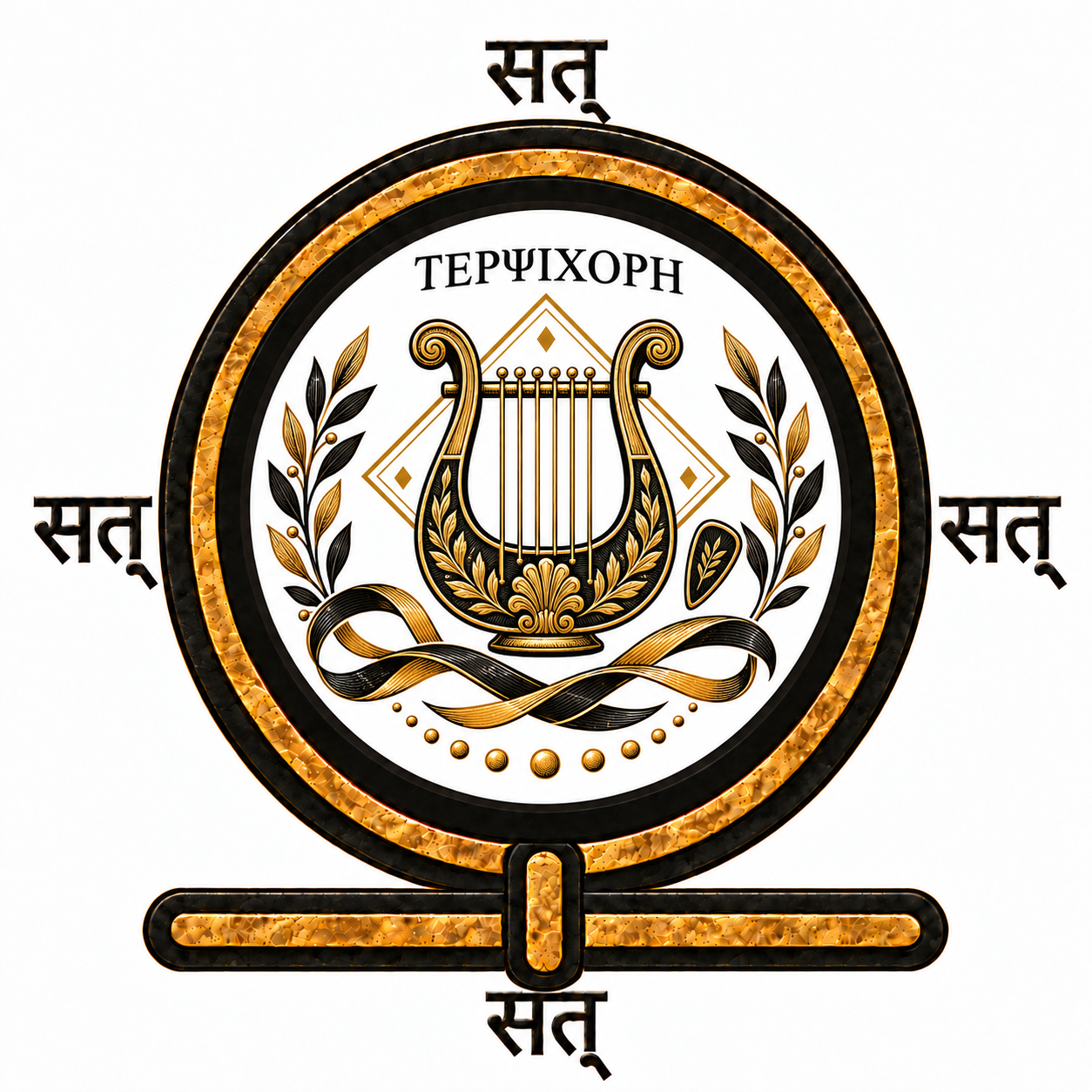
The central lyre and plectrum bear the musical office. Laurel, ribbons and an arc of gold beads extend that office into movement. The diamond sets a stable orientation behind the lyre, while the ribbons cross and return beneath it. The composition joins a clear centre to a flowing circumference. The Muses: traditional literary and artistic attributes
The sacred letters
Τ · Χ · Ρ gathers Τερψιχόρη, χορός and ῥυθμός: Terpsichore, the chorus and rhythm. Her letters accompany the joining of distinct movements into one sacred measure, as the circle returns to its Divine source. Temple of Zeus: sacred-letter recitation