Astraios's Power Ritual
Titan of the Stars, Father of the Winds, Husband of the Dawn, He Who Set the Constellations, Lord of Stones and Herbs
Learn more… Kenazx10
 Sowilox10Kenazx10
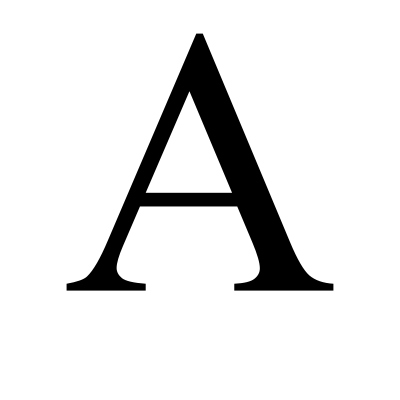 Alphax3
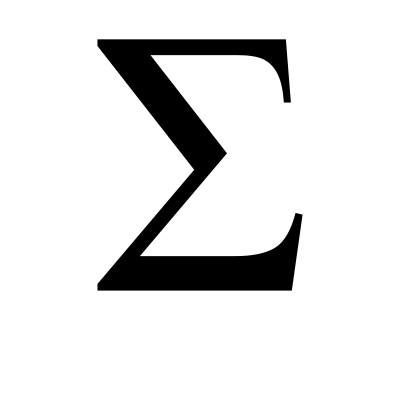 Sigmax3
 Taux3
Taux3σὺ εἶσαι ἀρχαιότερος τῶν Ὀλυμπίων.
Πρὶν ὁ Ζεὺς ἀνέβῃ εἰς τὸν θρόνον,
σὺ ἔθεσας τὰ ἄστρα εἰς τὰς θέσεις τους.
Τοὺς ἀστερισμοὺς ἐσχεδίασας, τοὺς πλανήτας ὡδήγησας.
Ἡ ἀστρονομία εἶναι ἡ γλῶσσά σου.
Δίδαξε τοὺς Ζευϊστὰς νὰ διαβάζουν τὸν οὐρανόν.
Oh Astraie, Titanidee, Asterotheta, / see eisai arkhaioteros ton Olimpion. / Prin o Zevs anavee eis ton thronon, / see ethesas ta astra eis tas theseis toos. / Toos asterismoos eskhedeiasas, toos planeetas odeegesas. / Ee astronomia einai ee glossa soo. / Didaxe toos Zevistas na diavazoon ton ooranon.
you are older than the Olympians.
Before Zeus ascended to the throne,
you set the stars in their places.
The constellations you designed, the planets you guided.
Astronomy is your language.
Teach the Zevists to read the sky.
 Ansuzx10
 Raidhox10Ansuzx10
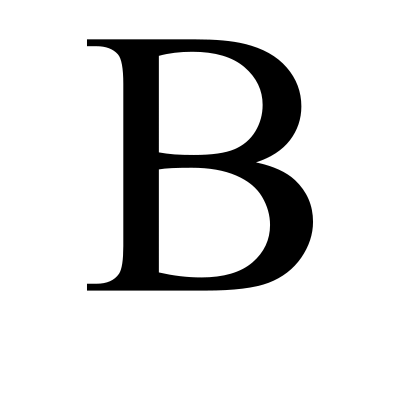 Betax3
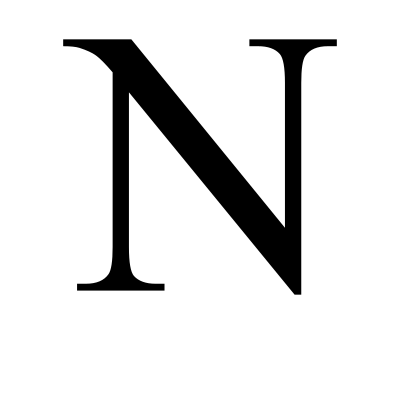 Nux3
Nux3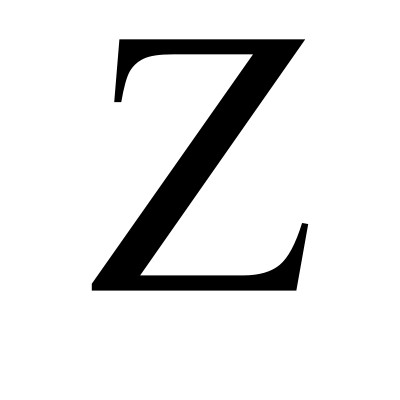 Zetax3
ἐκ τῆς ἑνώσεώς σου μὲ τὴν Ἠῶ
ἐγεννήθησαν οἱ τέσσαρες Ἄνεμοι:
Βορέας ὁ Βόρειος, Νότος ὁ Νότιος,
Ζέφυρος ὁ Δυτικός, Εὖρος ὁ Ἀνατολικός.
Αἱ τέσσαρες κατευθύνσεις εἶναι τέκνα σου.
Πνεῦσε τοὺς ἀνέμους σου ὑπὲρ τοῦ Ναοῦ τοῦ Διός.
Oh Astraie, Anemopater, Tessaraneme, / ek tees enoseos soo me teen Eo / egenneetheesan oi tessares Anemoi: / Voreas o Voreios, Notos o Notios, / Zefiros o Deetikos, Evros o Anatolikos. / Ai tessares kateeftheenseis einai tekna soo. / Pnevse toos anemoos soo eeper too Naoo too Dios.
from your union with Eos
the four Winds were born:
Boreas the North, Notus the South,
Zephyrus the West, Eurus the East.
The four directions are your children.
Blow your winds for the Temple of Zeus.
 Dagazx10
 Gebox10Dagazx10
 Etax3
Etax3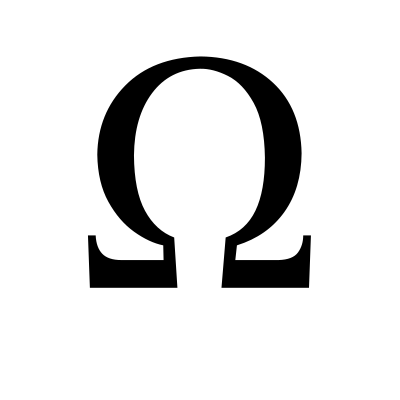 Omegax3Sigmax3
σὺ εἶσαι ἡ Νύξ, ἡ Ἠὼς εἶναι ἡ Αὐγή:
ἐκ τῆς ἑνώσεώς σας γεννᾶται κάθε ἡμέρα.
Τὰ ἄστρα σου λάμπουν ὅτε ἡ Ἠὼς κοιμᾶται,
ἡ Ἠὼς ξυπνᾷ ὅτε τὰ ἄστρα σου σβήνουν.
Εἶσθε τὸ ζεῦγος ποὺ κυβερνᾷ τὸν χρόνον.
Εὐλόγησε τοὺς Ζευϊστὰς μὲ τὸν ρυθμὸν τοῦ κόσμου.
Oh Astraie, Eosfore, Neektopatere, / see eisai ee Neex, ee Eo einai ee Avgee: / ek tees enoseos sas gennatai kathe eemera. / Ta astra soo lampoon ote ee Eo kimatai, / ee Eo xeepna ote ta astra soo sveenoon. / Eisthe to zevgos poo keeverna ton khronon. / Evlogeese toos Zevistas me ton reethmon too kosmoo.
you are the Night, Eos is the Dawn:
from your union every day is born.
Your stars shine when Eos sleeps,
Eos wakes when your stars fade.
You are the couple that governs time.
Bless the Zevists with the rhythm of the cosmos.
 Berkanox10
 Jerax10Berkanox10Betax3
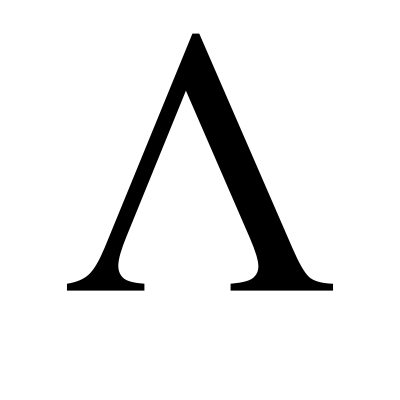 Lambdax3
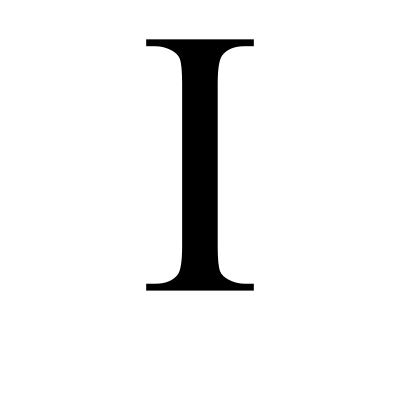 Iotax3
τὰ ἄστρα κυβερνοῦν τὰ βότανα τῆς γῆς:
κάθε φυτὸν ἔχει τὸν πλανήτην του,
κάθε λίθος ἔχει τὸν ἀστερισμόν του.
Σὺ γνωρίζεις τὰς ἀντιστοιχίας
μεταξὺ οὐρανοῦ καὶ γῆς, ἄστρου καὶ ρίζης.
Δίδαξε τοὺς Ζευϊστὰς τὴν ἀρχαίαν βοτανικήν.
Oh Astraie, Votanognosta, Lithognosta, / ta astra keevernoon ta votana tees gees: / kathe feeton ekhei ton planeeten too, / kathe lithos ekhei ton asterismon too. / See gnorizeis tas antistikhias / metaxee ooranoo kai gees, astroo kai rizees. / Didaxe toos Zevistas teen arkhaian votanikeen.
the stars govern the herbs of the earth:
every plant has its planet,
every stone has its constellation.
You know the correspondences
between sky and earth, star and root.
Teach the Zevists the ancient botany.
 Perthrox10
 Wunjox10Perthrox10
 Rhox3Omegax3Alphax3
ὁ οὐρανὸς εἶναι τὸ ἔργον τῶν χειρῶν σου.
Κάθε ἀστερισμὸς εἶναι γράμμα σου,
κάθε πλανήτης εἶναι λέξις σου,
ὁ Γαλαξίας εἶναι ἡ πρότασίς σου.
Ὅστις ἀναγνωρίζει τὰ γράμματά σου
ἀναγνωρίζει τὸν νόμον τοῦ κόσμου.
Γράψε τοὺς Ζευϊστὰς εἰς τὰ ἄστρα σου.
Oh Astraie, Kosmotheta, Aeiastre, / o ooranos einai to ergon ton kheiron soo. / Kathe asterismos einai gramma soo, / kathe planeetes einai lexis soo, / o Galaxias einai ee protasis soo. / Ostis anagnorizei ta grammata soo / anagnorizei ton nomon too kosmoo. / Grapse toos Zevistas eis ta astra soo.
the sky is the work of your hands.
Every constellation is a letter of yours,
every planet is a word of yours,
the Galaxy is your sentence.
Whoever reads your letters
reads the law of the cosmos.
Write the Zevists into your stars.
Τιτάν, Ἀστεροθέτα, Ἀνεμοπάτερ, σύζυγε τῆς Ἠοῦς,
Εὐλογημένα τὰ ἄστρα σου καὶ οἱ ἄνεμοί σου.
Εὐλογημένοι ἡμεῖς διὰ σοῦ.
Εὐλογημένοι καὶ τρὶς εὐλογημένοι αἰωνίως!Evlogeemenos ei, Astraie, / Titan, Asterotheta, Anemopater, seezige tees Eous, / Evlogeemena ta astra soo kai oi anemoi soo. / Evlogeemenoi eemeis dia soo. / Evlogeemenoi kai tris evlogeemenoi aionios!
Titan, Star-Setter, Wind-Father, husband of Eos.
Blessed are your stars and your winds.
Blessed are we through you.
Blessed and thrice blessed eternally!
After you are done with this, you can meditate on Astraios's Sigil in the Temple of Zeus. Let yourself be immersed in the deep indigo of the night sky, the silver light of distant stars, the ancient silence of the Titan who set the firmament in order.
It's important to meditate on yourself after the Ritual calmly for a few minutes.
SAT
सत्: SAT, real, true, truthful in Sanskrit.
The Shen Ring
The Symbol that Encapsulates the Sigil: The Shen Ring, Egyptian Hieroglyphic language.
Letters of the Sigil
The Ancient Greek letters for Astraios's Name in arrangement.
On Astraios
Astraios (Greek: Ἀστραῖος, "Starry One") is a second-generation Titan, son of Krios and Eurybia. With Eos (the Dawn) he fathered the four Winds (Boreas, Notus, Zephyrus, Eurus), the Morning Star (Eosphoros/Phosphoros), and the Stars and Planets (Astra Planeta). He represents the dusk sky where stars first appear. His role as celestial architect places him as the divine source of astronomy, astrology, and all stellar knowledge.
(Sources: Hesiod, Theogony 375-382; Apollodorus, Bibliotheca I.2.2, I.2.4; Hyginus, Fabulae, Preface)
On Stolas (Goetic #36)
Stolas is the thirty-sixth spirit: a Prince commanding 26 legions, who appears as an owl or a long-legged man. He teaches astronomy, the virtues of herbs and precious stones. The owl is the creature of the night sky (Astraios's domain), the herbs and stones correspond to planetary and stellar influences that Astraios governs as father of the Astra Planeta.
(Sources: Weyer, Pseudomonarchia Daemonum, 1577; Ars Goetia, 17th c.)
Compact Runic Triads
Kenaz-Sowilo-Kenaz (starfire-sun-starfire) for the Titan; Ansuz-Raidho-Ansuz (breath-journey-breath) for the Winds; Dagaz-Gebo-Dagaz (dawn-gift-dawn) for the Husband of Dawn; Berkano-Jera-Berkano (growth-harvest-growth) for the Herbalist; Perthro-Wunjo-Perthro (fate-joy-fate) for the Star-Setter.