Styx Power Ritual
Στύξ · River Goddess of the Great Oath
I honor the river Goddess whose arrival Zeus remembered.
In the presence of Zeus I honor truth and faithfulness.
Let this rite teach the gravity of a word freely given.
 Othalax10
 Tiwazx10Othalax10
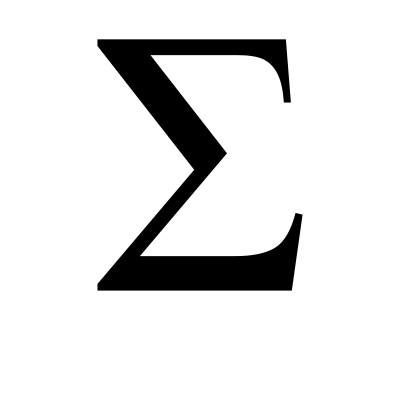 Sigmax3
 Taux3
Taux3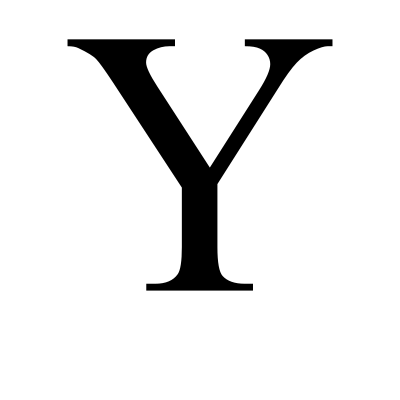 Upsilonx3
Ō Styx, prōtē pros ton Dia meta teknōn ēlthes.
O Styx, you came first to Zeus with your children.
Hesiod remembers the day you entered Zeus's cause of your own will.
Your honor remains in the order of Zeus.
Your children stand near the throne as signs of that honored choice.
Zelos, Nike, Kratos, and Bia remained beside Zeus.
Zelos, Nike, Kratos, and Bia bear distinct names and powers.
I remember your willing arrival.
Let loyalty begin with a clear choice freely made.
Styx, receive our honor for your place in the divine order.
Regard the four initials as the children who dwell near Zeus, each named and distinct.
 Laguzx10
 Kenazx10Laguzx10Upsilonx3
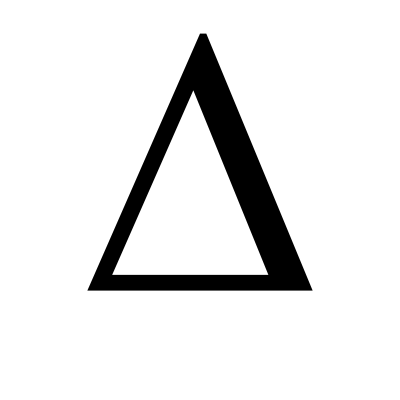 Deltax3
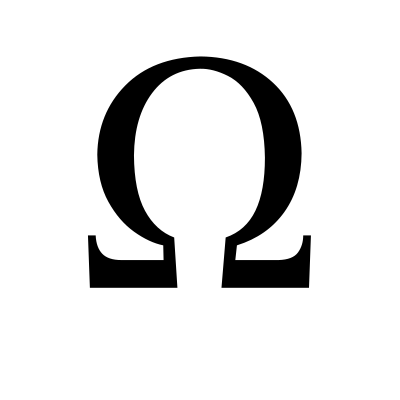 Omegax3
Ō Styx, tēn barytēta tou theiou horkou sebomai.
Iris carries the water in a golden vessel.
The messenger crosses a long distance to bring the sacred water.
O Styx, I revere the gravity of the divine oath.
Let the image of the vessel slow a careless tongue.
Iris brings the water from a distant place.
Its gold holds a sign of consequence before the Gods.
The golden vessel shows the gravity of the oath.
I will contemplate the weight of speech without claiming their oath.
Styx, let reverence govern what I say in your presence.
This is an ancient scene to contemplate. Do not reenact the oath.
 Ansuzx10
 Isax10Ansuzx10
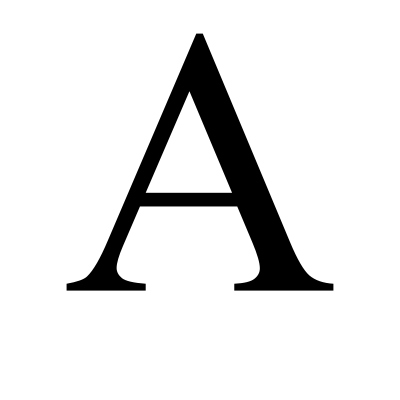 Alphax3
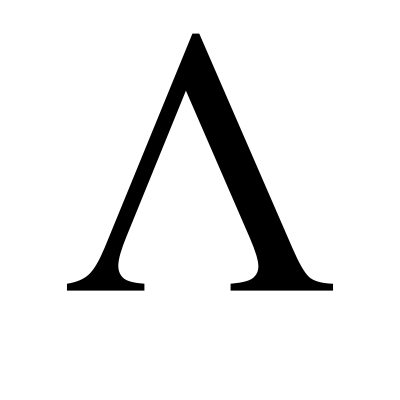 Lambdax3
 Etax3
Etax3Ō Styx, logon alēthē lexō kai ho hypeskhomai phylaxō.
O Styx, I will speak a true word and keep what I have promised.
A promise already made asks for the labor that completes it.
I do not promise what I cannot do.
I will speak within the reach of my strength and time.
Before promising, I measure what I can do.
Let my measure be taken before my word is given.
Faithfulness is tested in action, not only in speech.
May those who trust me find their trust answered by deeds.
Where I have delayed, let the next faithful action begin now.
Choose one existing promise you can fulfill. Do not make a new vow in the rite.
 Dagazx10
 Gebox10Dagazx10
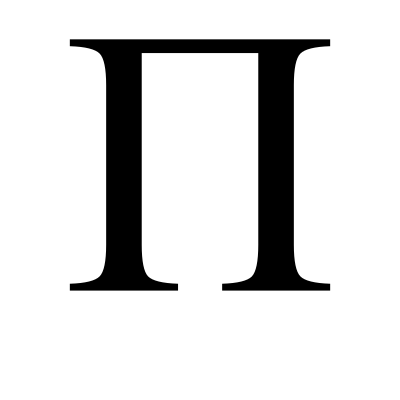 Pix3
Pix3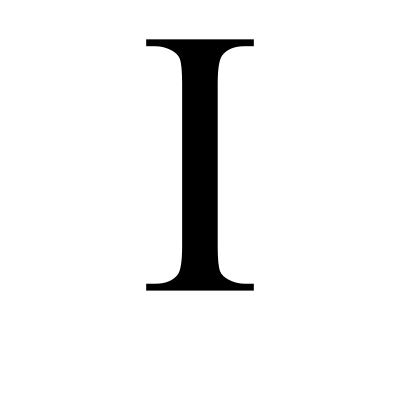 Iotax3Sigmax3
Ō Styx, tēn sēn dynamin timō kai pros ton bion epanerkhomai.
O Styx, I honor your power and return to life.
I leave the golden vessel in the divine scene where it belongs.
I will show faithfulness in my acts.
Let the word entrusted to me take shape in ordinary work.
I leave the divine oath to the Gods.
I will speak plainly of what has been completed and what remains.
I honor the human word through action.
May the path from pledge to deed stay open and clear.
Styx, receive my honor as I return to the duties I can fulfill.
Decide the first step toward completing the existing promise.
May my speech be measured and my existing promises be answered by deeds.
Zeus, guard faithfulness and justice.
I return to the work entrusted to me.
Look once at the vessel, then at the water bowl if you placed one. Let the image fade. Carry the chosen act into ordinary time.
Short return if stopping early
Styx, receive my honor. I return to truthful speech and the work already promised. Hail Zeus.
On Styx
Styx, Στύξ, is both a divine river and a Goddess. In Hesiod's Theogony 383 to 403 she is a daughter of Ocean and the mother, with Pallas, of Zelos, Nike, Kratos, and Bia. When Zeus calls the immortals to his side, Styx comes first with her children. Zeus grants them enduring honor: the children dwell with him, and Styx is appointed the great oath of the Gods. The first station gives those four children four visible points around the vessel.
Hesiod's account is not a tale of Styx opposing Zeus. Her chosen alliance and the honor Zeus gives her are the foundation of this rite. The Goddess of river and oath remains one addressee here, while her four children retain their separate identities.
Hesiod's Theogony 383 to 403 makes the four children more than a surrounding ornament. Zelos is zeal, Nike victory, Kratos strength, and Bia force. They remain close to Zeus after Styx brings them to his cause. Their arrangement around the vessel in the sigil recalls their shared arrival while leaving each child distinct. The first station speaks all four names before it turns to the honor granted their mother.
The Great Oath
The golden vessel in the second station comes from Hesiod's account. The bowl permitted beside the sigil holds ordinary clean water and represents no claim to the sacred river. It remains untouched by any oath or libation.
Hesiod situates Styx in a remote house under towering rock and silver pillars, with a cold stream descending from the greater waters of Ocean (Theogony 775 to 806). Iris' journey with the golden vessel is exceptional, made when discord among the immortals requires the oath. A God who swears falsely endures one year without breath or divine food, then nine years apart from the councils and feasts. Such detail gives the second station its solemn measure. The vessel is seen, then left untouched.
Hera's appeal to Styx in Iliad 15.34 to 42 shows the oath invoked within a particular divine dispute. That Homeric scene and Hesiod's sanction are not instructions for human use. The bowl beside the modern sigil, if present, is ordinary water and remains ordinary water throughout the rite. The waterline is a visual boundary between contemplating a divine scene and making a mortal promise.
Speech, Promise, and the Return
The four circles around the gold vessel carry the Greek initials Ζ, Ν, Κ, Β for Zelos, Nike, Kratos, and Bia, the children named with Styx in Hesiod's Theogony 383 to 403. Fine gold links keep them related but distinct. The vessel refers to the water Iris carries in Theogony 775 to 806; the dark eye of water and the waves below give it a visible course. These are new arrangements of attested relations, not a human oath device or an ancient seal. The capitals ΣΤΥΞ give her familiar name.
The third station measures an existing promise against actual ability. It makes room for honest limitation: a faithful word cannot be manufactured by swearing more strongly than one can act. The fourth station leaves the vessel behind and chooses the first step of the promised work. The rite thus closes on fulfillment, the same relationship between pledge and deed that Hesiod emphasizes when he says Zeus performed what he had promised to Styx and her children (Theogony 401 to 403).
The golden vessel and its waterline are set within an open white field. The outer Shenu is a joined rope with a horizontal base and a small central knot; the four inscribed circles remain distinct from that boundary. Its form follows the Egyptian shen ring described in the Metropolitan Museum of Art’s Art of Ancient Egypt: A Resource for Educators. The vessel belongs to Hesiod’s account of Iris; this arrangement of signs is new.