The Passage Beneath the Earth Power Ritual
Ἄκερ · Σόκαρ · Νεχεβκάου · Horizon, Sacred Rest, and Sustenance
Before you begin
These rites are for adults. Children and teenagers must not perform them. Pregnant women should not perform them.
Read this ritual in full before beginning, follow its instructions with care, and allow the intervening day its proper quiet.
This rite may be combined with the Ritual of Hades, the God who rules the underworld.
May Zeus bless this observance, and may the Great Chthonic Gods receive our devotion in friendship and honour.
Aker, Sokar, Nehebkau, I greet you in your several powers.
I stand among the living and honor the sacred passages imagined for those who have died.
Let my reverence for the unseen make me more faithful to what is near.
Let the lamp of attention remain clear and the way home remain open.
Vibrate the runes in order
 Algizx10
 Raidhox10
 Dagazx10
Ton horizonta meta aidous theōrō.
I regard the horizon with reverence.
Aker, earth power of the two-facing passage, receive my greeting.
Your lions look toward what has been and what may yet arise.
Between them the sun's path is held without becoming their possession.
The night is real, yet it does not make the horizon disappear.
Let me honor the past without fastening myself to it.
Let me prepare for tomorrow without pretending to command it.
Where someone crosses a hard threshold, let my care be practical.
Where a door is rightly shut, let my respect be firm.
Where a dawn can be made easier, let my hands begin that work.
Aker, receive honor at the boundary that gives passage its meaning.
May every crossing preserve the dignity of those who cross.
Name a threshold in your life and the care it requires.
Vibrate the runes in order
 Isax10
 Eihwazx10
 Jerax10
En hēsykhiai tēn hieran gēn timō.
In quiet I honor the sacred ground.
Sokar, falcon of the Memphite necropolis, receive my greeting.
Ancient hands shaped your likeness to watch over resting places.
The journey through the deep was given form in hymns, images, and festivals.
I do not borrow those sacred acts as though their lineage were mine to command.
I honor the tenderness that builds a place for the dead to be remembered.
Let silence become attentive rather than empty.
Let a grave be kept with dignity, and a name spoken with care.
Let renewal mean the faithful continuation of what was good.
Let grief have its own time and not be hurried toward a bright phrase.
Sokar, receive reverence for the depth that holds both rest and becoming.
May I care for the living who carry memory of the dead.
Remember one person with dignity; do not force a feeling.
Vibrate the runes in order
 Laguzx10
 Berkanox10
 Gebox10
Hē trophē tois tethneōsin en timēi noeisthō.
Let nourishment for the dead be contemplated with honor.
Nehebkau, serpent of sustaining power, receive my greeting.
Egyptian texts remember provision beyond the ordinary table.
Their image does not make the needs of the living less urgent.
If I honor unseen sustenance, let me also offer bread where hunger is visible.
If I praise protection, let me guard someone without making them dependent.
If I speak of a soul, let me respect the embodied person before me.
May the offering be free of display.
May the receiver retain freedom to accept or decline it.
Nehebkau, receive honor for the mysterious care your name carries.
Let my own care be measurable in what it gives and how it is given.
Let gratitude travel with every gift and never demand repayment.
Consider one ordinary act of nourishment you can offer.
Vibrate the runes in order
 Ehwazx10Algizx10
 Mannazx10
Horion kai anapausis kai trophē en taxei menetōsan.
Let boundary, rest, and nourishment remain in order.
Aker keeps the image of a horizon through earth.
Sokar receives the image of consecrated stillness.
Nehebkau receives the image of provision and sustaining force.
I join these three in prayer, while each remains named and distinct.
Let no gate become a prison where help is due.
Let no rest become neglect where a hand is needed.
Let no gift become a bargain that burdens its receiver.
Zeus, let all power answer to right measure.
Let the dead be spoken of with honor and the living met with care.
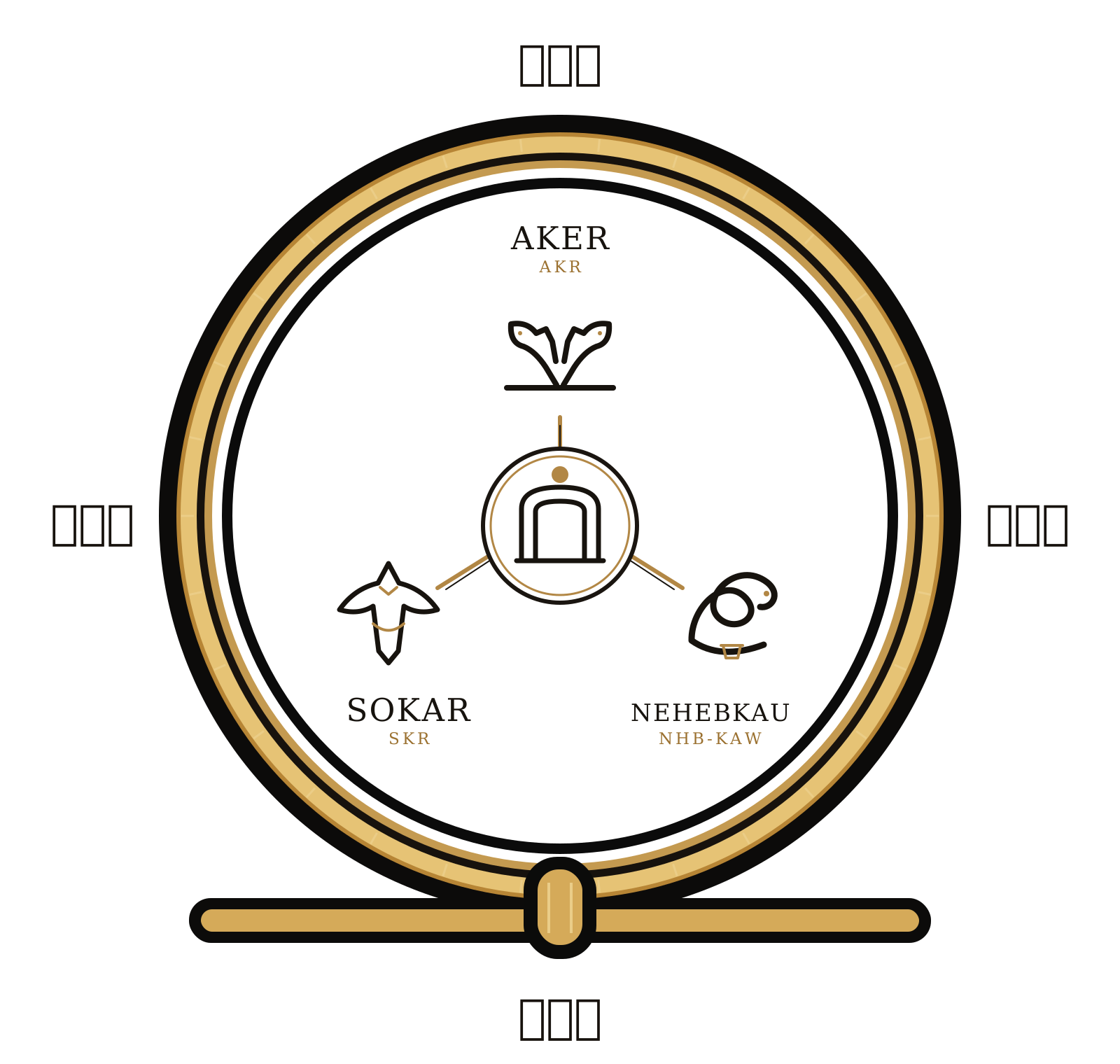
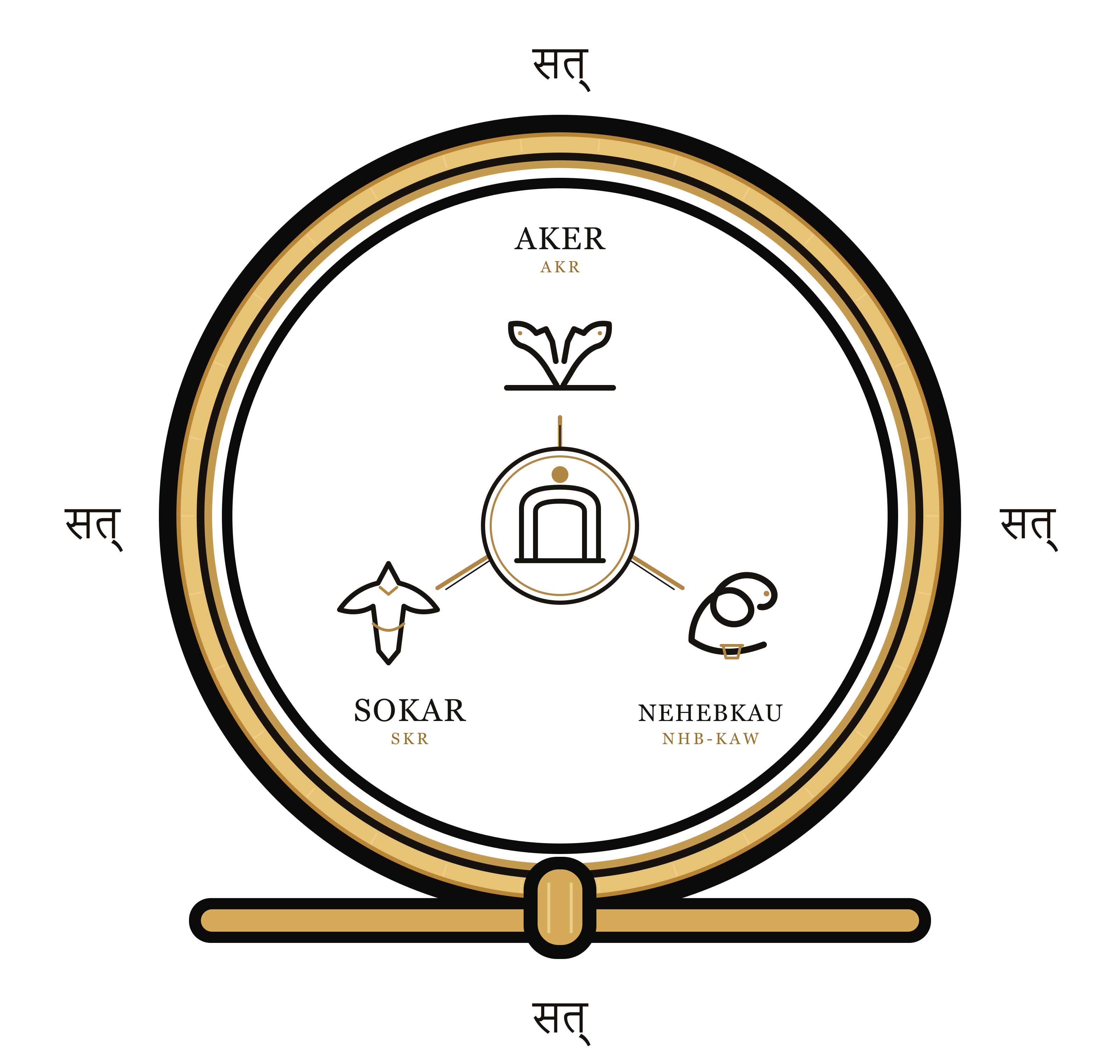
Let the Shenu hold a complete boundary around this image.
Let my attention stay clear within its white field.
Hold the three words boundary, rest, and provision in their order.
Vibrate the runes in order
Dagazx10Jerax10Mannazx10Eis hēmeran epanerkhomai kai tous zōntas therapeuō.
I return to day and care for the living.
The two horizons remain where Aker holds them in the sacred image.
The falcon remains poised above the resting ground.
The serpent remains coiled around its vessel of sustenance.
I leave these signs in the Shenu and do not carry them as a burden.
Aker, receive thanks for the guarded passage.
Sokar, receive thanks for solemn rest.
Nehebkau, receive thanks for the image of provision.
Zeus, lead my thought back to proportion and action.
I can make water available, prepare a meal, or keep a promise.
I can ask what a grieving person needs before I speak for them.
I can return to the day without denying the depth beneath it.
Choose one act of care that can be completed today.
Zeus, keep my living work answerable to care and right measure.
The image rests within the complete Shenu; I return in peace to daylight.
Name a practical act of care for someone living, and carry it out without ceremony or demand.
Short return if stopping early
Aker, Sokar, Nehebkau, receive my thanks. I stand in daylight. Zeus, guide my return.
On Aker
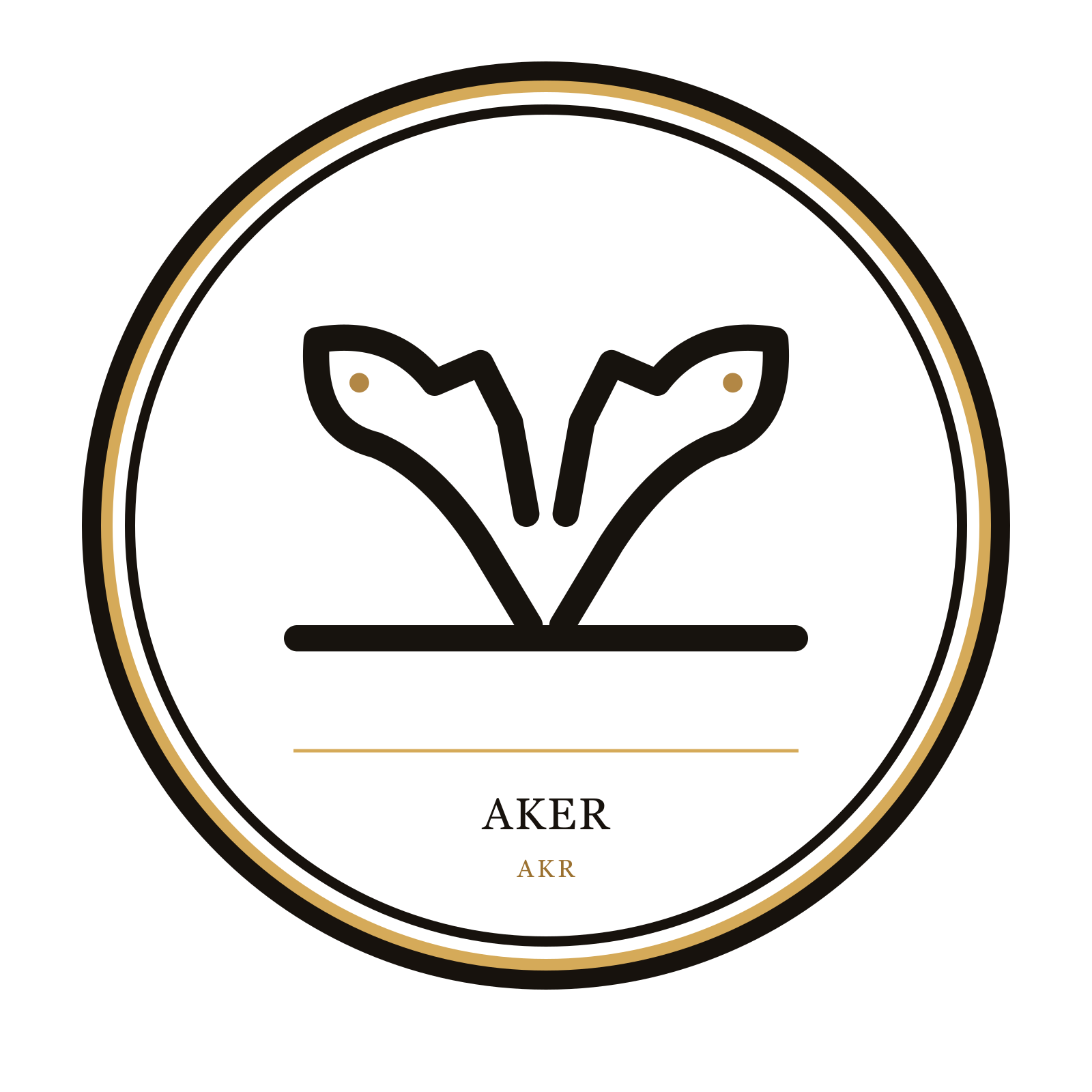
The Global Egyptian Museum's Aker glossary summarizes the old earth sign, the later two-faced or double-lion form, and the sun's passage through the earth. A third-intermediate-period double-lion amulet in The Metropolitan Museum of Art, accession 25.3.189a, is identified cautiously as Ruti or Aker. The rite uses the paired horizon as an image of boundary and emergence; it does not claim the amulet is its own seal.
On Sokar
The Global Egyptian Museum's Sokar glossary places his cult in the Memphite necropolis and describes his falcon form, Rosetau, and the sacred region of the Amduat fourth and fifth hours. The Metropolitan Museum of Art's falcon figure O.C.954 is identified by its curators as a symbol of Sokar, often set upon coffins or funerary boxes. The second station honors this historic funerary office and the possibility of renewal without reproducing a temple festival.
On Nehebkau
The ancient Pyramid Texts, spell 346, associates Nehebkau with provision for the king; Coffin Texts spell 647 also joins his name to sustaining powers. Later serpent forms vary in the material record. The Metropolitan Museum of Art warns that uninscribed snake-headed statuettes once called Nehebkau cannot safely be identified as him. The Shenu's serpent is consequently an original emblem based on textual association, not a copy of an uncertain statuette.
The Shenu and the five stations
Aker's opposed lions frame a horizon, Sokar's falcon stands above, and Nehebkau's serpent embraces a vessel below. The three names, rendered as transparent modern codes AKR, SKR, and NHB-KAW beside full spellings, mark distinct powers. These are design labels, not ancient hieroglyphic attestations. The rites move from threshold to rest to provision, then to their convergence and a living return. Rune triads and Greek letters are new aids to voice and attention. Each of the five stations has one newly composed Ancient Greek sentence aligned with its English prayer. The station sounds total 195 repetitions and the closing adds thirteen, for 208.
The Voices and the Return
The first three letter clusters recall the modern spellings Aker, Sokar, and Nehebkau; ΟΔΟ suggests a road and ΦΩΣ spells light. The Shenu gives the names more fully. Neither these fragments nor the rune sequences are presented as ancient Egyptian speech. The repeated sounds mark measured attention; their values are counted from the printed instructions, not from a supposed Egyptian numerical system.
Each Greek sentence carries one thought from its English station prayer, while the English text gives each Egyptian power a distinct office. The vessel at Nehebkau's station leads to a real act of nourishment among the living. The closing sounds are Greek letter names, and the final contemplation ends with ordinary care rather than an imagined crossing.
The Historical Image
The Metropolitan Museum of Art identifies falcon figurine O.C.954 as a funerary form associated with Sokar. The object gives historical visual context for Sokar only. The Aker and Nehebkau forms in the Shenu are new drawings informed by textual and iconographic witnesses.
Artwork and individual emblems
Ancient Egyptian painted wooden falcon figurine identified as a Sokar symbol.
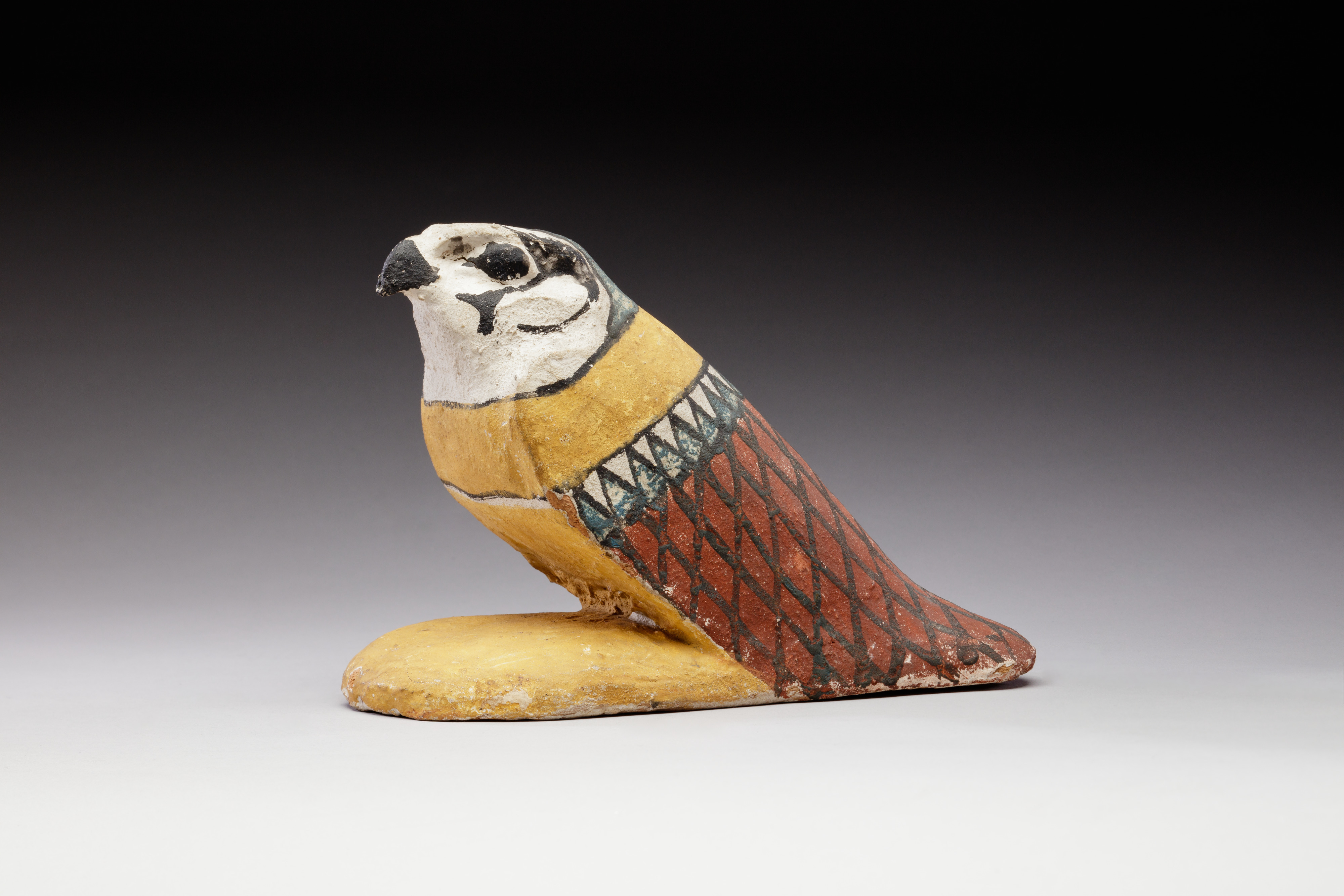
Painted wooden falcon from an Egyptian coffin or box, 664 to 332 BCE, The Metropolitan Museum of Art O.C.954. The museum identifies the form as a Sokar symbol. Public domain image. Source and reuse record.
- Aker · Original emblem — Original devotional emblem for Aker; modern art, not a historical portrait.
- Sokar · Original emblem — Original devotional emblem for Sokar; modern art, not a historical portrait.
- Nehebkau · Original emblem — Original devotional emblem for Nehebkau; modern art, not a historical portrait.
Black and gold Shenu with a complete white center holding Aker's double horizon, Sokar's falcon, and Nehebkau's serpent around a vessel. Open the Shenu SVG.