Moros Power Ritual
Μόρος · The Mortal Measure and the Worth of Today
Before you begin
These rites are for adults. Children and teenagers must not perform them. Pregnant women should not perform them.
Read this ritual in full before beginning, follow its instructions with care, and allow the intervening day its proper quiet.
This rite may be combined with the Ritual of Hades, the God who rules the underworld.
May Zeus bless this observance, and may the Great Chthonic Gods receive our devotion in friendship and honour.
I do not ask to possess the length of my days.
I ask to use the present day honestly and well.
Zeus, keep my will in proportion to truth.
 Isax10
 Jerax10Isax10
 Mux3
Mux3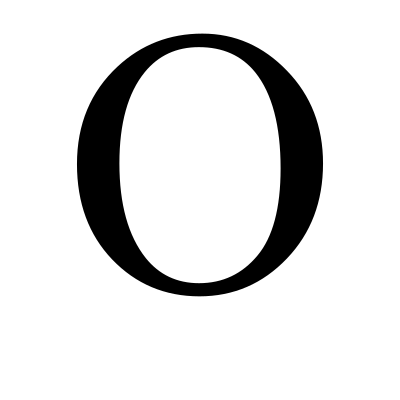 Omicronx3
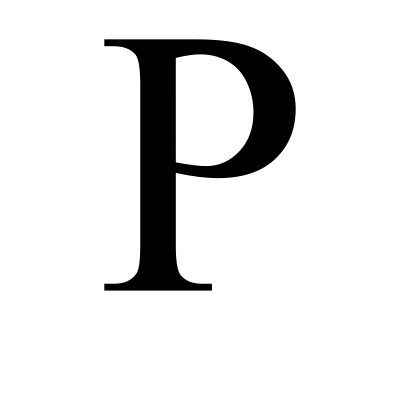 Rhox3
Rhox3Ō More, to metron tou biou ginōskō.
Night names you among her children at the opening of Hesiod's dark genealogy.
The allotment of a mortal life is not mine to calculate in advance.
O Moros, I recognize the measure of life.
Let knowledge of an end make the beginning of this day dearer.
Let it also give dignity to the time of those around me.
I will not spend their hours carelessly in pride or distraction.
I stand before a measure, not an oracle.
Receive my praise for the gravity that teaches care.
Notice that the present hour has value without requiring a prophecy.
 Sowilox10
 Dagazx10Sowilox10
 Etax3Mux3
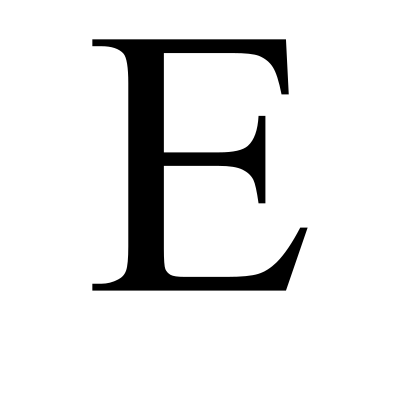 Epsilonx3
Ō More, to sēmeron en sophiai timō.
The day has doors that will not always stand open.
Its light asks for a decision while a decision is still possible.
O Moros, I honor today with wisdom.
Let my attention settle upon one neglected duty.
Let friendship receive an unhurried word rather than a deferred intention.
Let the body receive food, rest, and the kindness due to a living vessel.
I need not exhaust the hour to honor it.
Let enough be done with clarity and gratitude.
Choose one worthy action that fits within this day.
 Tiwazx10
 Mannazx10Tiwazx10
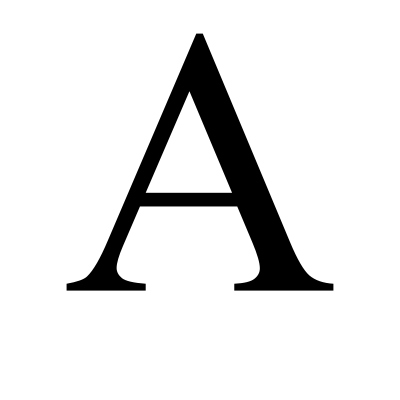 Alphax3Rhox3Epsilonx3
Ō More, ta eph' hēmin met' aretēs prattō.
What has not been given to know need not govern the hand.
The promise already made, the task already seen, and the person already near are enough to begin.
O Moros, I do what lies within our reach with virtue.
Give me the courage to answer a plain obligation plainly.
Keep my mind from dressing delay in the language of mystery.
Let patience govern work whose fruit arrives later.
I accept that outcomes exceed my control while conduct remains mine.
May wisdom be visible in the next action.
Name the next action without naming a hoped-for outcome.
 Raidhox10
 Wunjox10Raidhox10
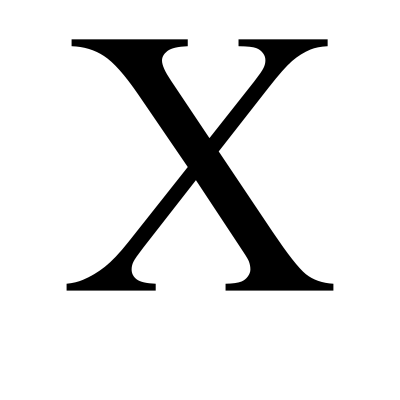 Chix3Rhox3Omicronx3
Ō More, ton chronon ton moi dothenta kalōs oikonomō.
The closed scroll does not become legible merely because I gaze longer.
The living hour remains open to care and honest labor.
O Moros, I steward well the time given to me.
Let the day carry a promise kept, however modest its scale.
Let rest come without the shame of being finite.
Let gratitude take the place of bargaining for certainty.
I thank you for the grave lesson of measure.
Under Zeus, I return to the work of the present.
Release the question of duration and begin the chosen act.
May I spend the day in truth, friendship, rest, and worthy work.
Zeus, bless the strength to do what is mine to do.
I return to the present hour.
Look at a clock once, then put it aside. Begin the one action you named.
Short return if stopping early
Moros, receive my honor. I return to the present hour. Hail Zeus.
On Moros
Hesiod, Theogony 211 to 217, places Moros among the children of Night, before naming the neighboring figures of death, sleep, dreams, and grief. The Greek term conveys doom or allotted end. This rite draws from that severe office a discipline of measured time. It does not claim that Hesiod supplied a rite of time management or a separate ancient cult image.
Moros is kept distinct from Thanatos. The Thanatos rite honors Death as a divine boundary and the dignity of the dead. Moros here concerns the knowledge that mortal time is apportioned, and what that knowledge asks of a person still alive. No station invites prediction of the date or manner of death.
The Scroll and the Living Day
The closed scroll stands for what a mortal cannot read in advance. The beam of a scale stands for measure, not a claim that Moros held an ancient weighing instrument. The day above it is gold because the present hour can still be spent well. These forms are newly made liturgical imagery for the Shenu.
The four stations move from acknowledging limit to honoring today, choosing what can be done, and stewarding time. The English lines ask for friendship, rest, and practical duty. Their Greek counterparts are new prayers in an Ancient Greek register, each drawn from one strong line of the wider petition.
Letters, Sound, and Closure
The letter groups ΜΟΡ, ΗΜΕ, ΑΡΕ, and ΧΡΟ point respectively to Moros, day, virtue, and time. They are mnemonic measures, not inherited voces of power. The rune triads likewise order the stages of attention without claiming an ancient Greek association. Four stations of 39 repetitions and a closing of 13 give 169 printed sounds.
The rite ends with a particular action instead of an attempt to outwit the allotment. The participant looks at one ordinary clock, releases it, and begins the chosen task under the blessing of Zeus. This is the full return intended by the final station.
The Historical Image
View the historical artwork and its reuse record. Baldung's 1513 woodcut pictures the three Fates, a later European rendering of the Moirai's concern with life's allotment. The image is useful precisely because Moros has no secure individual portrait in the chosen ancient sources. Moros and the Moirai are distinct names and figures; the woodcut is a historical comparison, not a claim that the artist painted Moros. The scroll and scale inside this rite's Shenu are also modern signs of measure and must not be mistaken for his ancient attributes.
