Achlys Power Ritual
Ἀχλύς · The Veil of Sorrow and the Lamp of Care
Before you begin
These rites are for adults. Children and teenagers must not perform them. Pregnant women should not perform them.
Read this ritual in full before beginning, follow its instructions with care, and allow the intervening day its proper quiet.
This rite may be combined with the Ritual of Hades, the God who rules the underworld.
May Zeus bless this observance, and may the Great Chthonic Gods receive our devotion in friendship and honour.
I will name sorrow honestly and neither force it away nor enthrone it forever.
Let the lamp in the Shenu call me toward care.
Zeus, guide the living with gentleness and strength.
 Isax10
 Laguzx10Isax10
 Alphax3
 Chix3
Chix3 Lambdax3
Ō Akhly, tēn lypēn alēthōs onomazō.
On Hephaestus' shield the figure stands beside the fierce struggle of the Fates.
The poem gives grief a body so that the eye cannot pass it by.
O Achlys, I name sorrow truthfully.
A loss need not be hidden behind a brave performance.
Nor must I enlarge a sorrow until no other part of life can be seen.
Let the simple word for grief be enough for this moment.
Let those beside a mourner listen before they prescribe a road.
I honor the truth of pain without offering it dominion over all days.
Give the feeling one plain name, or keep a respectful silence.
 Berkanox10
 Mannazx10Berkanox10
 Epsilonx3Lambdax3Epsilonx3
Ō Akhly, en tēi lypēi sympatheian zētō.
A hand can bring water, a meal, or the patience of presence.
Such gifts are small only to the person who has not needed them.
O Achlys, in sorrow I seek compassion.
Let me receive help without proving that I deserve it.
Let me offer help without demanding a grateful face in return.
May a mourner's pace be respected and a living need be noticed.
The lamp is not a promise that the whole road is clear.
It is enough that one caring step can be seen.
Name one person or ordinary support that can be approached freely.
 Othalax10
 Wunjox10Othalax10
 Mux3
Mux3 Nux3
Nux3 Etax3
Etax3Ō Akhly, tēn mnēmēn meta praotētos phylassō.
One life is larger than the final image of it.
A remembered word, a craft, or a kindness can remain true amid grief.
O Achlys, I keep memory with gentleness.
Let memory be offered space, never forced into a fixed shape.
Let the dead be honored as persons and the living permitted to change.
If I cannot speak a name today, quiet regard is still a form of honor.
If joy returns beside remembrance, let it enter without shame.
The lamp can illuminate more than one hour of the past.
Recall one life-giving detail, or let the thought rest.
 Raidhox10
 Dagazx10Raidhox10
 Phix3
Phix3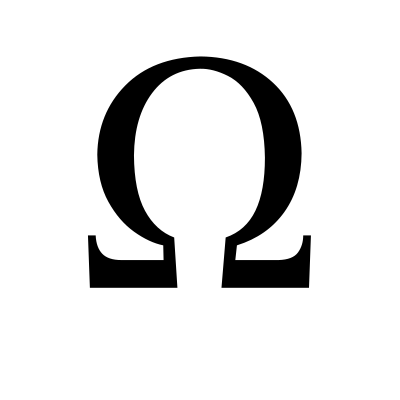 Omegax3
 Sigmax3
Ō Akhly, pros tous zōntas met' elpidos epistrephō.
Sorrow has been honored; it need not be the only voice in the room.
The living still wait for a greeting, a meal, or a tender task.
O Achlys, I return to the living with hope.
Let hope be modest enough to coexist with an unfinished ache.
Let me take one step that supports the body and one that supports connection.
I leave the veil in its poetic place upon the shield.
I carry the lamp as a present promise of care.
Zeus, bless this return with a gentle, truthful strength.
Choose a small act of care for yourself or another living person.
May the bereaved find company, truthful memory, and room to live.
Zeus, bless compassionate hands and the slow return of light.
I return to the present without denying what has been lost.
Look away from the image. Drink water if you wish, and make the chosen small act of care.
Short return if stopping early
Achlys, receive my honor. I return to the living light. Hail Zeus.
On Achlys
The figure called Achlys is the poetic darkness of death in the Shield of Heracles 249 to 270. The surviving English translation on that page calls her 'Darkness of Death' and depicts her beside the Fates on a battle shield. This is a literary image with harsh physical detail. The present rite does not turn those details into an instruction, a historical cult claim, or a demand to contemplate violence.
Achlys is distinct from Nyx. Night in Hesiod's cosmogony is a primordial divine presence with her own wide genealogy; Achlys in the shield poem is the veiled, grieving obscurity of mortal extremity. The rite's lamp, water, and compassionate hand are new liturgical answers to that image. They are not attested implements of worship for Achlys.
From Image to Care
Immediately after the grim portion of the shield, the poem turns at Shield 270 onward to a city of marriage, music, harvest, and ordinary human life. The fourth station uses that literary adjacency as a model for returning to the living. It never says that grief disappears when attention turns outward; it asks for one act of care compatible with grief.
The stations move through naming, receiving help, holding memory, and carrying a small light out. No mourner must disclose a private loss. The optional short return is complete in itself, because a respectful ending is better than forcing a distressed participant to finish a long performance.
The Shenu and Its Sounds
The center is white beneath a translucent engraved veil; a single lamp stands below it. The design offers clarity within sorrow rather than a picture of the ancient figure's body. ΑΧΛ, ΕΛΕ, ΜΝΗ, and ΦΩΣ connect the four stations to Achlys, compassion, memory, and light. They are new letter measures and make no claim to be an old seal.
The rune triads, the 169 total repetitions, and each Greek sentence are new parts of this rite. The Greek sentences align with the English prayers and appear with a reading guide. The closing deliberately names Zeus and an ordinary caring action, so the ritual has a full return rather than an indefinite stay with the shield's shadow.
The Historical Image
View the historical artwork and its reuse record. The Burgon Group pinax records a prothesis, the laying out and lamentation of the dead, in sixth-century BCE Attic art. Its mourners offer a historically grounded visual setting for the prayer's attention to grief and care. They do not personify Achlys. The Shield of Heracles supplies the specific ancient description of Achlys; the page's veil and small lamp are new images that keep sorrow visible while turning the worshipper toward help among the living.
