The Moirai [The 3 Fates] Power Ritual
The Three Fates: Clotho the Spinner, Lachesis the Allotter, Atropos the Unturnable, Daughters of Zeus and Themis
Learn more… Wunjox10
 Jerax10Wunjox10
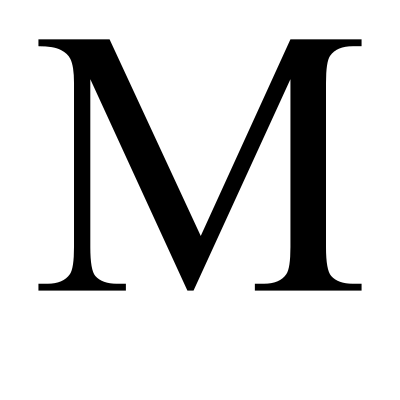 Mux3
Mux3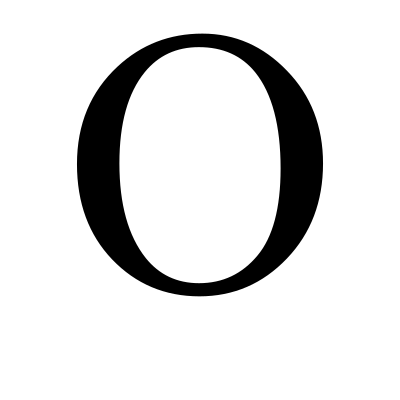 Omicronx3
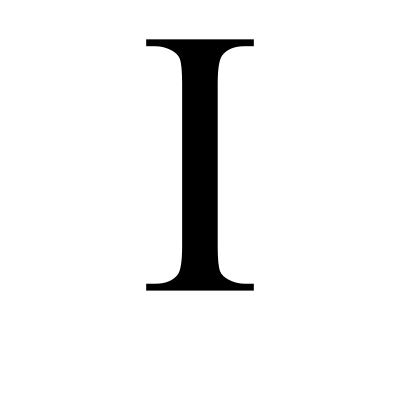 Iotax3
Κλωθώ, ἡ κλώθουσα τὴν κλωστὴν τῆς ζωῆς,
Λάχεσις, ἡ μετροῦσα τὸ μέτρον ἑκάστου,
Ἄτροπος, ἡ ἄτρεπτος, ἡ ἀμετάκλητος,
εὐλογήσατε τοὺς Ζευϊστάς.
Αἱ κλωσταὶ αὐτῶν ἔστωσαν χρυσαῖ.
Αἱ μερίδες αὐτῶν ἔστωσαν γενναῖαι.
Τὸ τέλος αὐτῶν ἔστω τὸ τέλος ἡρώων.
Oh Moirai, Theegatres too Dios kai tees Themidos, / Klotho, ee klothoosa teen klosteen tees zoees, / Lakhesis, ee metroosa to metron ekastoo, / Atropos, ee atreptos, ee ametakleetos, / evlogeesate toos Zevistas. / Ai klostai afton estosan khreesai. / Ai merides afton estosan gennaiai. / To telos afton esto to telos eyroon.
Clotho, who spins the thread of life,
Lachesis, who measures the portion of each,
Atropos, the Unturnable, the Irrevocable,
bless the Zevists.
Let their threads be golden.
Let their portions be noble.
Let their end be the end of heroes.
 Thurisazx10
 Nauthizx10Thurisazx10
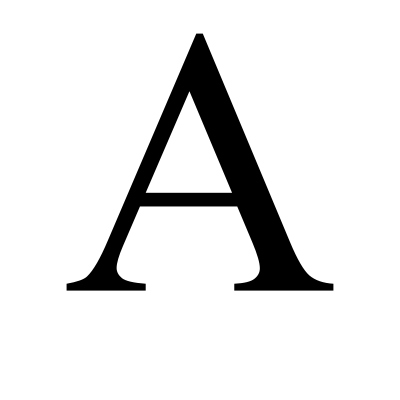 Alphax3
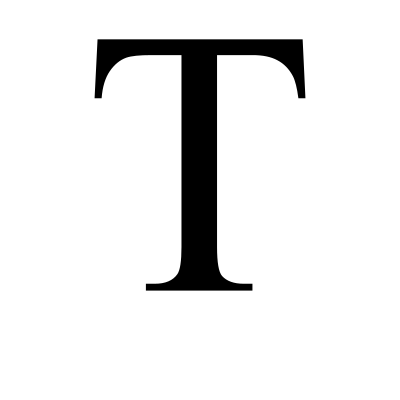 Taux3
Taux3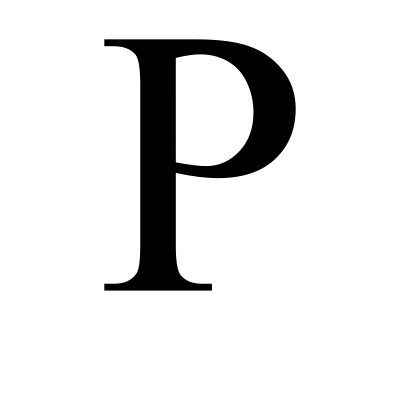 Rhox3
Rhox3κόψε τὰς κλωστὰς ποὺ δένουν τοὺς Ζευϊστὰς
μὲ ἀνθρώπους κακῆς μοίρας.
Κόψε τοὺς δεσμοὺς μὲ τοὺς φέροντας Ἴσφετ.
Κόψε τὰ νήματα τῶν ψευδῶν φιλιῶν,
τῶν δηλητηριωδῶν σχέσεων,
τῶν ἐπαφῶν ποὺ σύρουν εἰς τὸ σκότος.
Ὅ,τι δένεται μὲ Ἴσφετ, κόψε το.
Ὅ,τι σύρει εἰς κακὴν μοῖραν, ἄφες το νὰ πέσῃ.
Oh Atropos, ee ton psallidon keeria, / kopse tas klostas poo denooon toos Zevistas / me anthropoos kakees moiras. / Kopse toos desmoos me toos ferontas Isfet. / Kopse ta neemata ton psevdon filion, / ton deeleeteeriodon skheseon, / ton epafon poo seerooon eis to skotos. / Oti denetai me Isfet, kopse to. / Oti seerei eis kakeen moiran, afes to na pesee.
cut the threads that bind the Zevists
to people of ill fate.
Sever the bonds with those who carry Izfet.
Cut the threads of false friendships,
of poisonous relationships,
of contacts that drag us into darkness.
Whatever is bound to Izfet, cut it.
Whatever pulls us toward ill fate, let it fall.
 Berkanox10
 Perthrox10Berkanox10
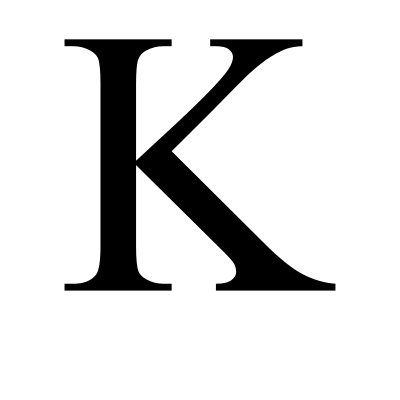 Kappax3
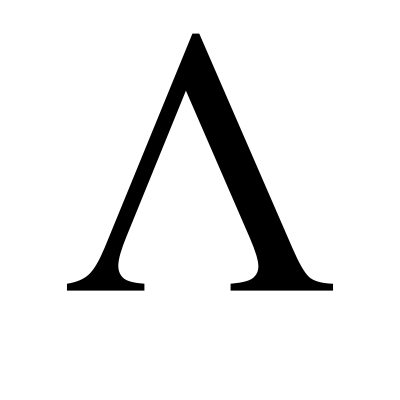 Lambdax3
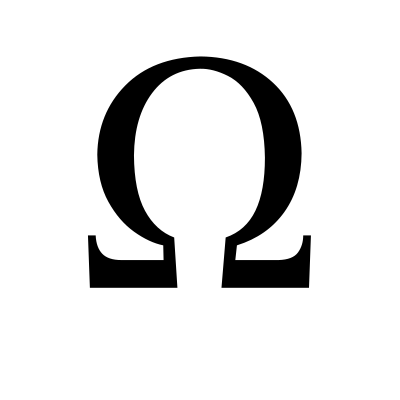 Omegax3
κλῶσε τὰ νήματα τῶν Ζευϊστῶν μὲ χρυσόν.
Κλῶσε εὐτυχίαν εἰς τὰς ζωάς τους.
Κλῶσε ὑγείαν εἰς τὰ σώματά τους.
Κλῶσε σοφίαν εἰς τοὺς νοῦς τους.
Κλῶσε δύναμιν εἰς τὰς ψυχάς τους.
Κλῶσε πλοῦτον εἰς τὰ χέρια τους.
Κλῶσε Ma'at εἰς πᾶν βῆμα τους.
Ὡς τὸ ἀδράχτι σου στρέφεται, οὕτω στρέφεται ἡ μοῖρα τῶν Ζευϊστῶν πρὸς τὸ φῶς.
Oh Klotho, ee atraktoforos, / close ta neemata ton Zeviston me khreeson. / Close eftekhian eis tas zoas toos. / Close eegeian eis ta somata toos. / Close sofian eis toos noos toos. / Close deenameen eis tas pseekas toos. / Close plooton eis ta kheria toos. / Close Ma'at eis pan veema toos. / Os to adrakhti soo strefetai, ooto strefetai ee moira ton Zeviston pros to fos.
spin the threads of the Zevists with gold.
Spin fortune into their lives.
Spin health into their bodies.
Spin wisdom into their minds.
Spin power into their souls.
Spin wealth into their hands.
Spin Ma'at into every step they take.
As your spindle turns, so turns the fate of the Zevists toward the light.
 Sowilox10
 Ansuzx10Sowilox10Lambdax3Alphax3
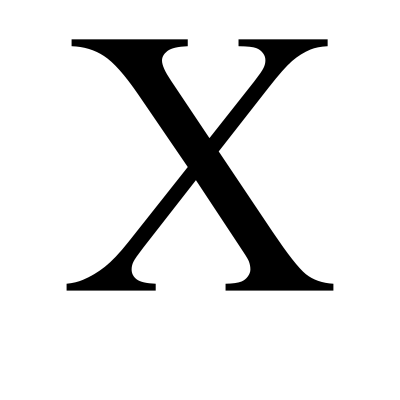 Chix3
Chix3δὸς τοῖς Ζευϊσταῖς τὴν μερίδα τῶν κυριάρχων.
Ὄχι τὴν μερίδα τῶν δούλων,
ὄχι τὴν μερίδα τῶν ἀγνοούντων,
ἀλλὰ τὴν μερίδα ἐκείνων ποὺ ὁ Ζεὺς ἐπέλεξε.
Αἱ μερίδες αὐτῶν ἔστωσαν μερίδες θεῶν ἐπὶ γῆς.
Ἔστω ἡ μοῖρα αὐτῶν κυρίαρχος, ὄχι δουλική.
Ἔστω τὸ νῆμα αὐτῶν ἀκατάλυτον ὑπὸ πάσης δυνάμεως Ἴσφετ.
Αἱ Μοῖραι ἐτίμησαν τὸν Δία. Ὁ Ζεὺς τιμᾷ τὰς Μοίρας.
Τοῦτο τὸ σύμφωνον εἶναι αἰώνιον.
Oh Lakhesis, ee metroosa tas meridas, / dos tois Zevistais teen merida ton keeriaarkhon. / Okhi teen merida ton doolon, / okhi teen merida ton agnooondon, / alla teen merida ekeinon poo o Zevs epelexe. / Ai merides afton estosan merides theon epi gees. / Esto ee moira afton keeriarkhos, okhi doolikee. / Esto to neema afton akataleedon eepo pasees deenameos Isfet. / Ai Moirai etimesan ton Dia. O Zevs tima tas Moiras. / Tooto to seemfonon einai aionion.
give the Zevists the portion of the sovereign.
Not the portion of slaves,
not the portion of the ignorant,
but the portion of those whom Zeus has chosen.
Let their portion be that of Gods upon the earth.
Let their fate be sovereign, not servile.
Let their thread be indestructible by any power of Izfet.
The Moirai honoured Zeus. Zeus honours the Moirai.
This covenant is eternal.
Κλωθώ, Λάχεσις, Ἄτροπος,
Θύγατρες τοῦ Διὸς καὶ τῆς Θέμιδος,
Εὐλογημέναι αἱ κλωσταί, τὰ μέτρα, αἱ ψαλίδες.
Εὐλογημένοι ἡμεῖς δι' ὑμῶν.
Εὐλογημένοι καὶ τρὶς εὐλογημένοι αἰωνίως!Evlogeemenai este, oh Moirai, / Klotho, Lakhesis, Atropos, / Theegatres too Dios kai tees Themidos, / Evlogeemenai ai klostai, ta metra, ai psallides. / Evlogeemenoi eemeis di eemon. / Evlogeemenoi kai tris evlogeemenoi aionios!
Clotho, Lachesis, Atropos,
Daughters of Zeus and Themis,
Blessed are the threads, the measures, the shears.
Blessed are we through you.
Blessed and thrice blessed eternally!
After you are done with this, you can meditate on the Moirai's Shenu in the Temple of Zeus. Visualize three threads of light: one silver (Clotho spinning), one golden (Lachesis measuring), one white (Atropos holding). See these threads weaving through your life, strengthening what is Ma'at, severing what is Izfet.
It's important to meditate on yourself after the Ritual calmly for a few minutes.
SAT
सत्: SAT, real, true, truthful in Sanskrit.
The Shen Ring
The Symbol that Encapsulates the Sigil: The Shen Ring, Egyptian Hieroglyphic language.
On the Moirai
The Moirai (Greek: Μοῖραι, "the Apportioners") are the three Goddesses of Fate. Hesiod names them as daughters of Zeus and Themis (Theogony 901-906), alongside the Horae (Seasons). Their names encode their functions: Clotho (Κλωθώ, "the Spinner") spins the thread of life at birth. Lachesis (Λάχεσις, "the Allotter") measures the thread, determining the length and quality of each life. Atropos (Ἄτροπος, "the Unturnable") cuts the thread, determining the moment of death. In the Republic (X, 617c-d), Plato places them at the Spindle of Necessity (Ἄτρακτος Ἀνάγκης), where they sing: Lachesis of the past, Clotho of the present, Atropos of the future. Homer calls Moira "mighty" (κρατεαί, Iliad XXIV.49) and even Zeus respects the portions they assign. The Orphic Hymn to the Moirai (LIX) invokes them as "daughters of dark Night," but the Hesiodic genealogy (Zeus + Themis) is the Zevist tradition: Fate is the daughter of Divine Law and Divine Authority.
(Sources: Hesiod, Theogony 901-906; Homer, Iliad XXIV.49, Odyssey VII.197; Plato, Republic X, 617c-d; Orphic Hymn LIX; Pindar, Olympian I.26; Pausanias V.15.5; Burkert, Greek Religion, 1985)
Theophoric Name
ΜΟΙΡΑΙ ΑΕΝΑΕ ("Eternal Fates"), ΜΟΙΡΑΙ ΜΗΤΗΡ ("Mother Fates," invoking their maternal authority over all life-threads), ΙΑΟ ΖΕΥΣ ΙΑΟ (the Father who begat them, framed within the sacred name). The theophoric name calls them in their triune authority: as eternal forces, as mothers of destiny, and as daughters of Zeus whose power flows from the ΙΑΩ itself.
Compact Runic Triads
Wunjo-Jera-Wunjo (joy-harvest-joy) for the Blessing: the harvest of a well-spun fate. Thurisaz-Nauthiz-Thurisaz (thorn-constraint-thorn) for the Severing: the thorn that cuts the binding thread. Berkano-Perthro-Berkano (birth-lot-birth) for the Golden Thread: birth and rebirth woven by the lot of fate. Sowilo-Ansuz-Sowilo (sun-divine breath-sun) for the Sovereign Portion: the solar authority of a life measured by the Gods.
Greek Sacred Letters
Segment I: Μ-Ο-Ι from ΜΟΙΡΑΙ (the Fates themselves). Segment II: Α-Τ-Ρ from ΑΤΡΟΠΟΣ (the Cutter). Segment III: Κ-Λ-Ω from ΚΛΩΘΩ (the Spinner). Segment IV: Λ-Α-Χ from ΛΑΧΕΣΙΣ (the Allotter). Each segment vibrates the letters of the Moira whose power it invokes.
On Zeus and the Moirai
The relationship between Zeus and the Moirai is unique in Greek theology. In Homer, even Zeus cannot override Moira (Iliad XVI.431-461, where Zeus considers saving Sarpedon but Hera warns him against violating Fate). In Hesiod, the Moirai are his daughters. The Zevist synthesis: Zeus doesn't override Fate because Fate is his own law, expressed through his daughters. Fate is the structure of Ma'at applied to individual lives. To ask Zeus to violate Fate would be to ask him to violate his own cosmic order. Instead, the Zevist asks the Moirai directly: spin well, measure well, and cut only what must be cut.
(Sources: Homer, Iliad XVI.431-461; Aeschylus, Prometheus Bound 511-518; Pausanias V.15.5, X.24.4; Dietrich, B.C., Death, Fate and the Gods, 1965)