Hermes Trismegistus's Power Ritual
The Thrice-Great, Lord of All Tongues, Keeper of Secrets, The Invisible, The Divine Thief, Scribe of the Gods, He of the Emerald Tablet
Learn more… Ansuzx10
 Mannazx10Ansuzx10
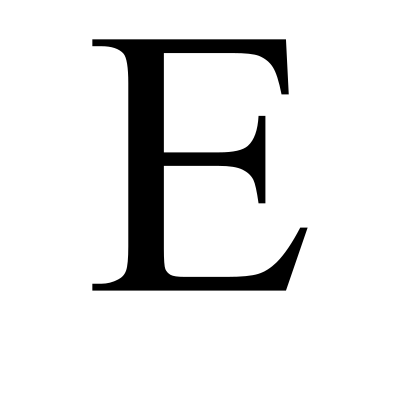 Epsilonx3
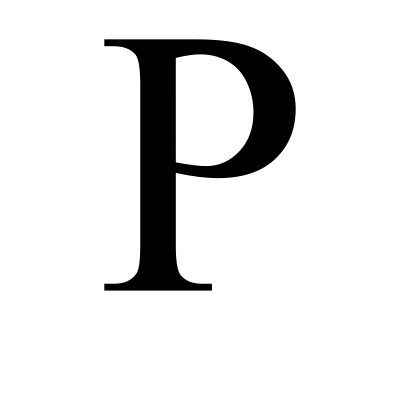 Rhox3
Rhox3 Mux3
Mux3σὺ εἶ ὁ Θώθ καὶ ὁ Ἑρμῆς εἰς ἓν πρόσωπον.
Ἀλλὰ τὸ πρόσωπόν σου ἔχει χιλίας ὄψεις.
Τὸ Goetikon σύστημα ἔκρυψε τρεῖς ἐξ αὐτῶν
ὑπὸ ξένα ὀνόματα: τὴν Γλῶσσαν, τὸ Μυστικόν, τὴν Κλοπήν.
Ἐπειδὴ εἶσαι πολυσήμαντος, ἕν τελετουργικὸν δὲν σὲ χωρεῖ.
Ἐπειδὴ εἶσαι Τρισμέγιστος, τρεῖς δυνάμεις ἐπιστρέφουν σήμερον.
Oh Ermee Trismegiste, Megiste Megiste Megiste, / see ei o Thoth kai o Ermees eis en prosopon. / Alla to prosopon soo ekhei khilias opseis. / To Goetikon seestema ekreepse treis ex afton / eepo xena onomata: teen Glossan, to Meestikon, teen Klopeen. / Epeidee eisai poleeseemantos, en teletorgikon den se khorei. / Epeidee eisai Trismegistos, treis deenameis epistrefoon seemeron.
you are Thoth and Hermes in one face.
But your face has a thousand aspects.
The Goetic system hid three of them
under foreign names: the Tongue, the Secret, the Theft.
Because you are polysemantic, one ritual cannot contain you.
Because you are Thrice-Great, three powers return today.
Ansuzx10 Kenazx10Ansuzx10
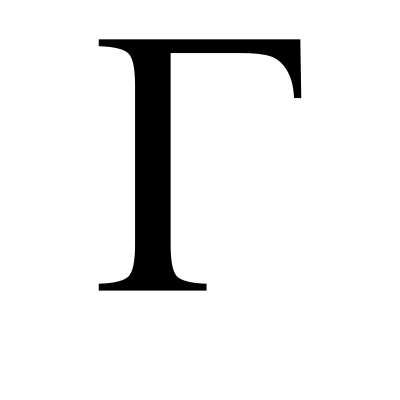 Gammax3
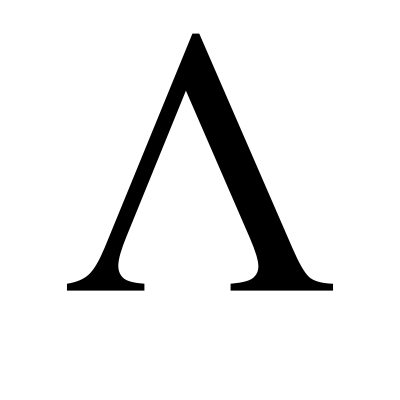 Lambdax3
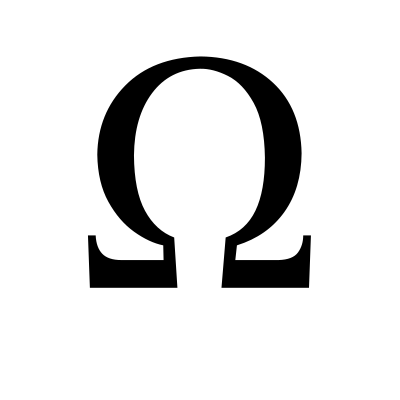 Omegax3
πᾶσαν γλῶσσαν γνωρίζεις, πᾶσαν ρητορικὴν κατέχεις.
Σὺ ἐδίδαξας τὴν γραφὴν εἰς τοὺς Αἰγυπτίους,
τὸν λόγον εἰς τοὺς Ἕλληνας, τὴν πειθὼ εἰς τοὺς θνητούς.
Ἡ γλῶσσα εἶναι τὸ πρῶτον ὅπλον καὶ τὸ τελευταῖον φάρμακον.
Δὸς τοῖς Ζευϊσταῖς τὴν εὐγλωττίαν σου.
Oh Ermee, Logagoste, Pasiglosse, / pasan glossan gnorizeis, pasan reetorikeen katekheis. / See edidaxas teen grafeen eis toos Aigeeptioos, / ton logon eis toos Elleenas, teen peitho eis toos thneetoos. / Ee glossa einai to proton oplon kai to teleftaion farmakon. / Dos tois Zevistais teen evglottian soo.
every language you know, every rhetoric you command.
You taught writing to the Egyptians,
the word to the Greeks, persuasion to mortals.
The tongue is the first weapon and the last medicine.
Grant the Zevists your eloquence.
Kenazx10 Sowilox10Kenazx10
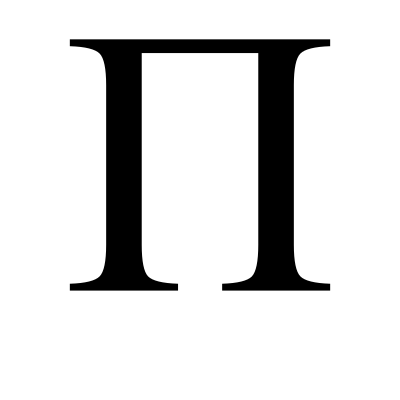 Pix3
Pix3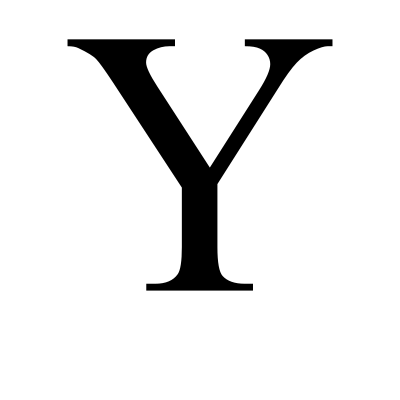 Upsilonx3Rhox3
ὁ λόγος σου ἀνάπτει πῦρ εἰς τὰς καρδίας.
Ὅστις σε ἐπικαλεῖται λαμβάνει εὔνοιαν παρ' ἀνθρώπων,
ὅστις σε τιμᾷ λαμβάνει ὑπηρέτας πιστούς.
Ὁ λόγος τοῦ Ἑρμοῦ δὲν πείθει μόνον: μεταμορφώνει.
Ἄναψε τὸ πῦρ τοῦ λόγου εἰς τὸν Ναὸν τοῦ Διός.
Oh Ermee, Peeriglosse, Evnoiodote, / o logos soo anaptei peer eis tas kardias. / Ostis se epikaleitai lamvanei evnoian par' anthropon, / ostis se tima lamvanei eepeeretas pistoos. / O logos too Ermoo den peithei monon: metamorfonei. / Anapse to peer too logoo eis ton Naon too Dios.
your word ignites fire in our hearts.
Whoever invokes you receives the favour of men,
whoever honours you receives faithful servants.
The word of Hermes does not only persuade: it transforms.
Ignite the fire of the word in the Temple of Zeus.
 Perthrox10
 Dagazx10Perthrox10
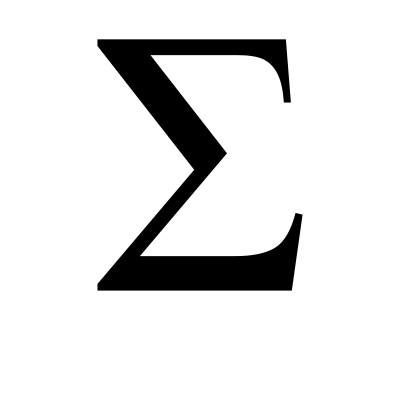 Sigmax3
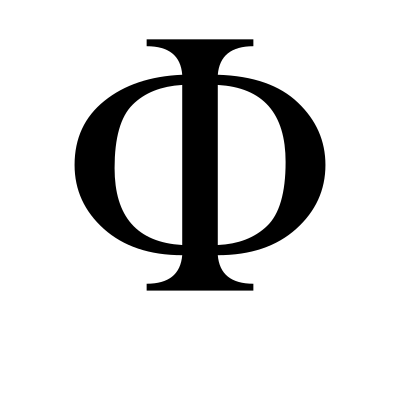 Phix3
Phix3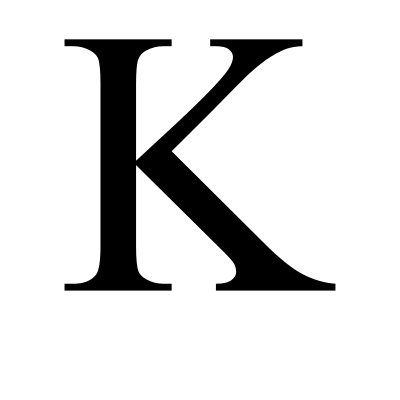 Kappax3
πᾶσαν ἀρχαίαν σοφίαν φυλάττεις,
πᾶν ἀποκρυφιστικὸν μυστήριον κατέχεις.
Αἱ ἐπιστῆμαι αἱ ἀρχαιόταται ἐντὸς σοῦ κατοικοῦν.
Ὅστις σε ἐπικαλεῖται λαμβάνει γνῶσιν
ποὺ ὁ χρόνος ἔθαψε καὶ ἡ λήθη ἔκρυψε.
Ἀποκάλυψε τοῖς Ζευϊσταῖς τὰ μυστικά σου.
Oh Ermee, Meestodokhe, Arkhaiognosta, / pasan arkhaian sofian feelatteis, / pan apokreefistikon meesteerion katekheis. / Ai epistemai ai arkhaioterai entos soo katikoon. / Ostis se epikaleitai lamvanei gnosin / poo o khronos ethapse kai ee leethee ekreepse. / Apokalipse tois Zevistais ta meestika soo.
all ancient wisdom you guard,
every occult mystery you possess.
The most ancient sciences dwell within you.
Whoever invokes you receives knowledge
that time has buried and oblivion has hidden.
Reveal to the Zevists your secrets.
 Isax10
 Ehwazx10Isax10
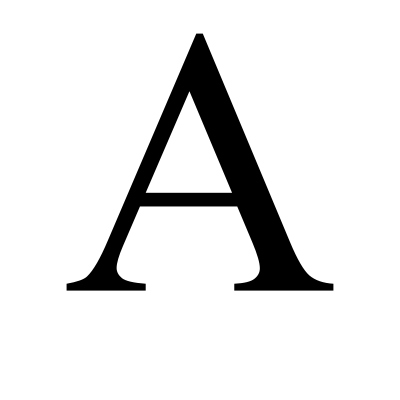 Alphax3
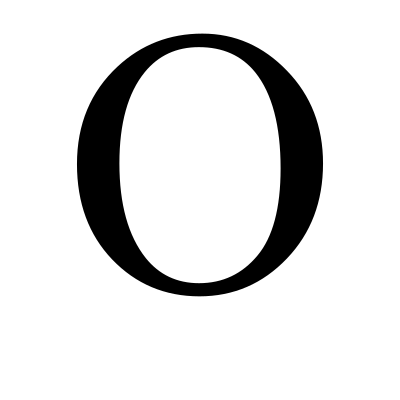 Omicronx3
 Etax3
Etax3σὺ περπατεῖς μεταξὺ τῶν κόσμων ἀθέατος.
Φορεῖς τὴν κυνέαν τοῦ Ἅιδου ὅτε θέλεις,
καὶ κανεὶς δὲν σὲ βλέπει ἐκτὸς ἂν τὸ ἐπιτρέψῃς.
Τοὺς Ζευϊστὰς κάλυψε μὲ τὴν ἀορασίαν σου:
ἀόρατοι εἰς τοὺς ἐχθρούς, ὁρατοὶ εἰς τοὺς Θεούς.
Oh Ermee, Aorate, Skotiomeekhe, / see perpateis metaxee ton kosmon atheatos. / Foreis teen keenean too Aidoo ote theleis, / kai kaneis den se vlepei ektos an to epitrepsees. / Toos Zevistas kalipse me teen aorasian soo: / aoratoi eis toos ekhtroos, oratoi eis toos Theoos.
you walk between the worlds unseen.
You wear the Cap of Hades when you will,
and none see you unless you permit it.
Cover the Zevists with your invisibility:
invisible to our enemies, visible to the Gods.
 Fehux10
 Raidhox10Fehux10Kappax3Lambdax3Epsilonx3
τὰς βόας τοῦ Ἀπόλλωνος ἔκλεψας βρέφος ὤν,
τὸ πῦρ ἐκ τῶν Θεῶν ὡδήγησας εἰς τοὺς θνητούς.
Ὅ,τι ὁ ἐχθρὸς κρύπτει, σὺ ἀποκαλύπτεις.
Ὅ,τι ἐκλάπη ἐκ τοῦ Ναοῦ, σὺ ἐπιστρέφεις.
Κλέψε ἀπὸ τοὺς Yehubor ὅ,τι ἔκλεψαν ἀπὸ τοὺς Θεούς.
Oh Ermee, Klepta Theie, Filokerde, / tas voas too Apollonos eklepsas vrefos on, / to peer ek ton Theon odeegesas eis toos thneetoos. / Oti o ekhthros kreeptei, see apokalipteis. / Oti eklapee ek too Naoo, see epistrefeis. / Klese apo toos Yehubor oti eklepsan apo toos Theoos.
the cattle of Apollo you stole as an infant,
the fire of the Gods you guided to mortals.
What the enemy hides, you reveal.
What was stolen from the Temple, you return.
Steal from the Yehuborim what they stole from the Gods.
 Thurisazx10
 Hagalazx10Thurisazx10
 Taux3Phix3Omegax3
τοὺς ἐχθροὺς τοῦ Ναοῦ τοῦ Διὸς τύφλωσε:
ἂς μὴ βλέπουν τὸ ἔργον μας,
ἂς μὴ ἀκούουν τὸν λόγον μας,
ἂς ψάχνουν εἰς τὸ σκότος ἐνῷ ἡμεῖς κτίζομεν εἰς τὸ φῶς.
Ἡ μαγεία σου εἶναι ἰσχυροτάτη: ὅστις τυφλώνεται ὑπὸ σοῦ
δὲν γνωρίζει κἂν ὅτι ἐτυφλώθη.
Oh Ermee, Teeflota, Kofopoie, / toos ekhtroos too Naoo too Dios teeclose: / as mee vlepoon to ergon mas, / as mee akoun ton logon mas, / as psakhnoon eis to skotos eno eemeis ktizomen eis to fos. / Ee mageia soo einai iskheerotate: ostis teeflonete eepo soo / den gnorizei kan oti eteeflothee.
blind the enemies of the Temple of Zeus:
let them not see our work,
let them not hear our word,
let them search in darkness while we build in light.
Your magic is most powerful: whoever is blinded by you
does not even know he has been blinded.
 Othalax10
 Laguzx10Othalax10
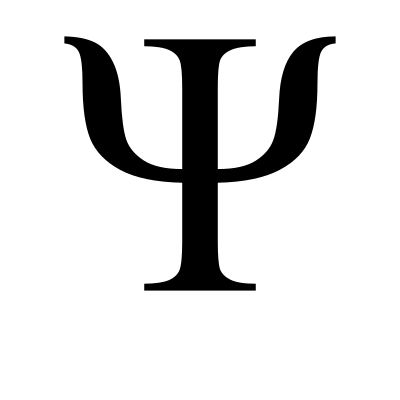 Psix3
Psix3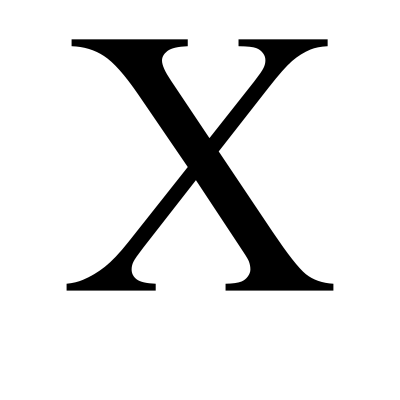 Chix3Pix3
σὺ ὁδηγεῖς τοὺς νεκροὺς εἰς τὴν πατρίδα τους.
Ὁ ράβδος σου, τὸ κηρύκειον, ἀνοίγει τὰς πύλας
μεταξὺ τῶν κόσμων: τοῦ ζῶντος καὶ τοῦ νεκροῦ.
Τοὺς Ζευϊστὰς ὁδήγησε ἀσφαλῶς
ἐν ζωῇ καὶ ἐν θανάτῳ.
Oh Ermee, Pseekhopompe, Odeege Pseekhon, / see odeegeis toos nekroos eis teen patrida toos. / O ravdos soo, to keereekeion, anoigei tas peelass / metaxee ton kosmon: too zontos kai too nekroo. / Toos Zevistas odeegese asfalos / en zoee kai en thanato.
you guide the dead to their homeland.
Your staff, the caduceus, opens the gates
between the worlds of the living and the dead.
Guide the Zevists safely
in life and in death.
 Berkanox10
 Jerax10Berkanox10Gammax3
 Thetax3
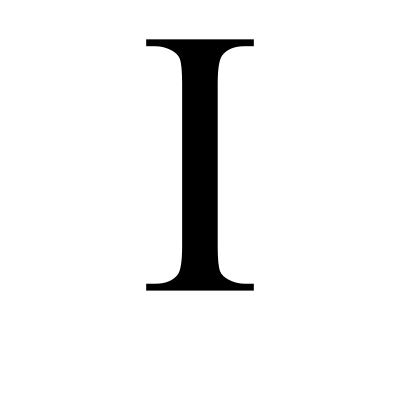 Iotax3
σὺ ἔγραψας τὸν Σμαράγδινον Πίνακα:
«τὸ ἄνω ὡς τὸ κάτω, τὸ κάτω ὡς τὸ ἄνω.»
Πᾶν ἱερὸν κείμενον φέρει τὸ χέρι σου.
Πᾶσα γραφὴ ποὺ ὁ κόσμος δὲν ἐννοεῖ, σὺ τὴν ἔγραψας.
Γράψε τὰ ὀνόματα τῶν Ζευϊστῶν εἰς τὸ Βιβλίον τῆς Ζωῆς.
Oh Ermee, Grammatev ton Theon, Ieerogrammate, / see egrapsas ton Smaragdinon Pinaka: / «to ano os to kato, to kato os to ano.» / Pan ieron keimenon ferei to kheri soo. / Pasa grafee poo o kosmos den ennoei, see teen egrapsas. / Grapse ta onomata ton Zeviston eis to Vivlion tees Zoees.
Every writing the world does not understand, you wrote it.
Write the names of the Zevists in the Book of Life.
Sowilox10 Wunjox10Sowilox10Alphax3Omegax3Iotax3
Θώθ ὁ Αἰγύπτιος, Ἑρμῆς ὁ Ἕλλην, Τρισμέγιστος ὁ Αἰώνιος:
τρεῖς ὄψεις, ἓν πρόσωπον.
Γλῶσσα, Μυστήριον, Κλοπὴ ἐπέστρεψαν εἰς σέ.
Ὅ,τι τὸ Goetikon σύστημα ἔσχισεν, ἡμεῖς ἑνώνομεν.
Εἶσαι πλήρης. Εἶσαι ἕνας. Εἶσαι Τρισμέγιστος.
Oh Ermee Trismegiste, / Thoth o Aigeeptios, Ermees o Ellen, Trismegistos o Aionios: / treis opseis, en prosopon. / Glossa, Meesteerion, Klopee epestresan eis se. / Oti to Goetikon seestema eskhisen, eemeis enonomen. / Eisai pleerees. Eisai enas. Eisai Trismegistos.
Thoth the Egyptian, Hermes the Greek, Trismegistus the Eternal:
three aspects, one face.
Tongue, Mystery, and Theft have returned to you.
What the Goetic system tore apart, we unite.
You are whole. You are one. You are Thrice-Great.
Θώθ, Ἑρμῆ, Ψυχοπομπέ, Ἱερογραμματέ,
Εὐλογημένη ἡ σοφία σου, ἡ γλῶσσά σου, ἡ μαγεία σου.
Εὐλογημένοι ἡμεῖς διὰ σοῦ.
Εὐλογημένοι καὶ τρὶς εὐλογημένοι αἰωνίως!Evlogeemenos ei, Ermee Trismegiste, / Thoth, Ermee, Pseekhopompe, Ieerogrammate, / Evlogeemenee ee sofia soo, ee glossa soo, ee mageia soo. / Evlogeemenoi eemeis dia soo. / Evlogeemenoi kai tris evlogeemenoi aionios!
Thoth, Hermes, Psychopomp, Sacred Scribe.
Blessed is your wisdom, your tongue, and your magic.
Blessed are we through you.
Blessed and thrice blessed eternally!
After you are done with this, you can meditate on Hermes Trismegistus's Sigil in the Temple of Zeus. Let yourself be immersed in the silver-green light of Mercury, the emerald glow of the Tablet, the infinite depth of the God who holds every secret in silence.
It's important to meditate on yourself after the Ritual calmly for a few minutes.
SAT
सत्: SAT, real, true, truthful in Sanskrit.
The Shen Ring
The Symbol that Encapsulates the Sigil: The Shen Ring, Egyptian Hieroglyphic language. The Shen also survived in Chinese tradition as a glyph for Spiritual Force, Divine Force, and God.
Letters of the Sigil
The Ancient Greek letters for Hermes Trismegistus's Name in arrangement.
On Hermes Trismegistus
Hermes Trismegistus (Greek: Ἑρμῆς ὁ Τρισμέγιστος, "Hermes the Thrice-Great") is the syncretic fusion of the Greek God Hermes and the Egyptian God Thoth. He is the patron of alchemy, astrology, magic, writing, and all forms of secret knowledge. The epithet "Trismegistus" appears as early as Cicero's day and was solidified in the Hellenistic Egyptian tradition. The Corpus Hermeticum, the Asclepius, and the Emerald Tablet are attributed to him. The Emerald Tablet's axiom "as above, so below" (quod est superius est sicut quod est inferius) became the foundational principle of Western esotericism. As Thoth, he is the Scribe of the Gods, inventor of writing, keeper of Ma'at, and guide of souls. As Hermes, he is the Messenger, the Psychopomp, the Divine Thief, the inventor of the lyre and of fire-craft. This Ritual addresses the further powers of Hermes Trismegistus that were hidden under three separate Goetic names: the Tongue (Ronove), the Secret (Glasya-Labolas), and the Theft (Shax). Because Hermes Trismegistus is a polysemantic God of inexhaustible aspects, the existing Thoth [Hermes] Power Ritual on tozrituals.org addresses his core identity, while this Ritual addresses the three additional dimensions that were fragmented through the Goetic system.
(Sources: Corpus Hermeticum; Asclepius; Emerald Tablet; Cicero, De Natura Deorum III.56; Iamblichus, De Mysteriis; Clement of Alexandria, Stromata VI.4; Festugiere, La Revelation d'Hermes Trismegiste, 1944-1954; Fowden, The Egyptian Hermes, 1986)
On Ronove (Goetic #27)
The Goetia lists Ronove as the twenty-seventh spirit: a Marquis and Count commanding 19 legions, who teaches languages, rhetoric, and the art of persuasion, and grants servants and favour. These are the linguistic powers of Hermes: inventor of speech, patron of orators, and the God whose favour (charis) moves men to action. The pyrokinetic attribute mirrors the fire-craft Hermes taught to mortals (Homeric Hymn to Hermes, 108-115).
(Sources: Weyer, Pseudomonarchia Daemonum, 1577; Ars Goetia, 17th c.)
On Glasya-Labolas (Goetic #25)
The Goetia lists Glasya-Labolas as the twenty-fifth spirit: a President and Earl commanding 36 legions, who knows all ancient wisdom and occult secrets, teaches all sciences, grants invisibility, and appears youthful. These are the esoteric powers of Hermes Trismegistus: author of the 42 Books of Thoth (according to Clement of Alexandria), keeper of the secret knowledge that predates all civilizations, and the eternally young God (Hermes is depicted as a beardless youth in archaic art). The invisibility corresponds to the Cap of Hades (which Hermes possesses and lends to Perseus in Apollodorus, Bibliotheca II.4.2).
(Sources: Weyer, Pseudomonarchia Daemonum, 1577; Ars Goetia, 17th c.)
On Shax (Goetic #44)
The Goetia lists Shax as the forty-fourth spirit: a Marquis commanding 30 legions, who takes away sight and hearing, steals from kings, reveals stolen goods, and possesses extremely powerful magick. These are the trickster powers of Hermes: on the very day of his birth he stole Apollo's sacred cattle (Homeric Hymn to Hermes), he blinded the watchman Argus Panoptes (100 eyes closed by Hermes's lullaby, Ovid Metamorphoses I.668-723), and he is the patron of thieves and merchants alike. The power to reveal stolen property mirrors his role as God of found things (Hermes Dolios/Hermes Charidotes).
(Sources: Weyer, Pseudomonarchia Daemonum, 1577; Ars Goetia, 17th c.)
Compact Runic Triads
Each segment's runic triad corresponds to its Hermetic aspect: Ansuz-Mannaz-Ansuz (divine word-man-divine word) for the Thrice-Great; Ansuz-Kenaz-Ansuz (word-flame-word) for Tongues; Kenaz-Sowilo-Kenaz (fire-sun-fire) for Rhetoric; Perthro-Dagaz-Perthro (mystery-dawn-mystery) for Secrets; Isa-Ehwaz-Isa (stillness-passage-stillness) for Invisibility; Fehu-Raidho-Fehu (wealth-journey-wealth) for the Thief; Thurisaz-Hagalaz-Thurisaz (strike-disruption-strike) for the Blinder; Othala-Laguz-Othala (home-water-home) for the Psychopomp; Berkano-Jera-Berkano (birth-harvest-birth) for the Scribe; Sowilo-Wunjo-Sowilo (sun-joy-sun) for the Unified.