Heracles's Power Ritual
Son of Zeus, The Lion-Skinned, Puller of the Bow, Breaker of Walls, He Who Descended and Rose Again
Learn more… Tiwazx10
 Uruzx10
 Sowilox10
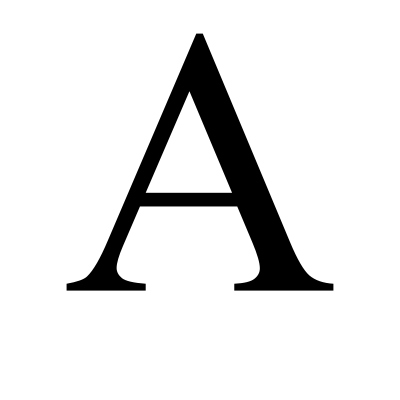 Alphax3
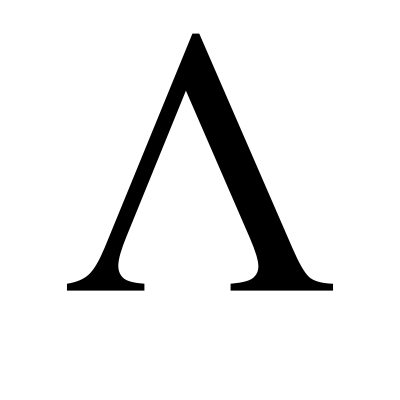 Lambdax3
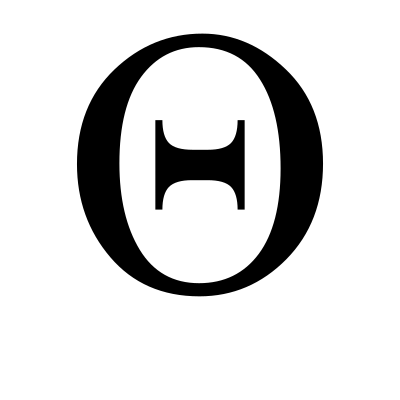 Thetax3
τοῦ Νεμέας θηρὸς τὸ ἄτρωτον δέρμα φέρεις
ὡς αἰγίδα κατὰ παντὸς κακοῦ.
Σὺ πρῶτος ἐδίδαξας τοὺς θνητοὺς
ὅτι τὸ ἄτρωτον σφάζεται γυμναῖς χερσίν.
Δὸς τοῖς Ζευϊσταῖς τὸ θάρρος τὸ σόν.
Oh Heraklees, Alkeidee, Leontofone, / too Nemeas theeros to atroton derma fereis / os aigida kata pantos kakoo. / See protos edidaxas toos thneetoos / oti to atroton sfazetai gymnais kherseen. / Dos tois Zevistais to tharros to son.
you bear the Nemean beast's invulnerable skin as a shield against all evil.
You first taught mortals
that the invulnerable is slain with bare hands.
Grant the Zevists your courage.
 Thurisazx10
 Kenazx10Thurisazx10
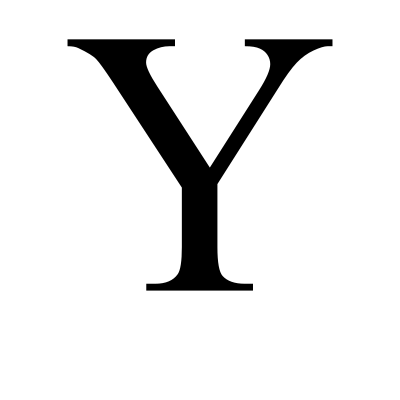 Upsilonx3
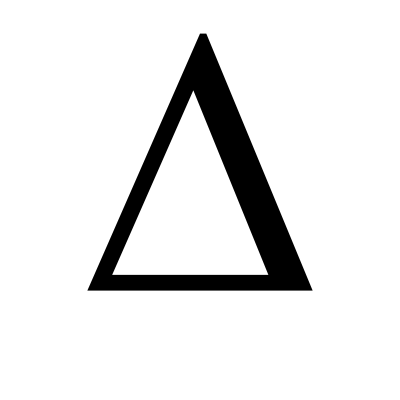 Deltax3
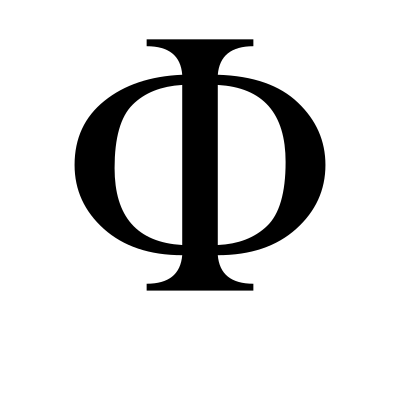 Phix3
Phix3ἐννέα κεφαλαὶ ηὔξοντο ἀνθ' ἑκάστης κοπείσης,
σὺ δὲ πυρὶ ἐκαυτηρίασας τὸ κακόν.
Οὕτω καὶ τοὺς ἐχθροὺς τοῦ Ναοῦ τοῦ Διός:
ὅσον πολλαπλασιάζονται, τοσοῦτον καίονται.
Τὸ πῦρ σου καθαίρει ὅ,τι τὸ ξίφος ἀδυνατεῖ.
Oh Heraklees, Eedrofone, Peerfore, / ennea kefalai eefxonto ant' ekastees kopeisees, / see de peeree ekafteeriasas to kakon. / Ooto kai toos ekhtroos too Naoo too Dios: / oson pollaplasiazontai, tosooton kaiontai. / To peer soo kathairei oti to xifos adeenatei.
nine heads grew for every one severed,
but you cauterized the evil with fire.
So too the enemies of the Temple of Zeus:
the more they multiply, the more they burn.
Your fire purifies what the sword cannot.
 Raidhox10
 Ansuzx10Raidhox10
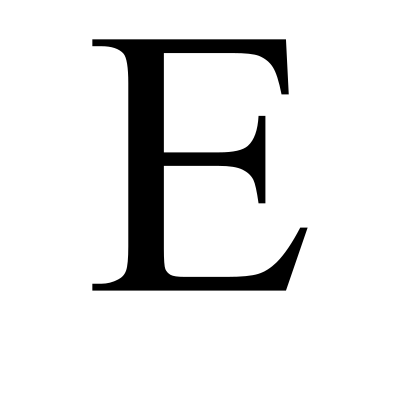 Epsilonx3
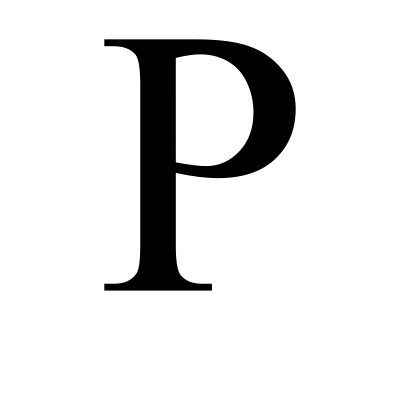 Rhox3
Rhox3 Etax3
Etax3ἐνιαυτὸν ὅλον ἐδίωξας τὴν ἱερὰν ἔλαφον
τῆς Ἀρτέμιδος, ἄνευ βέλους, ἄνευ αἵματος.
Τὴν ὑπομονὴν ἐδίδαξας ὡς ὅπλον.
Τὸ ἱερὸν δὲν σφάζεται: αἱρεῖται.
Δὸς ἡμῖν τὴν καρτερίαν τοῦ ἐνιαυτοῦ.
Oh Heraklees, Takhipoos, Kartere, / eniafton olon edioxas teen ieeran elafon / tees Artemidos, anef veloos, anef aimatos. / Teen eepomonehn edidaxas os oplon. / To ieron den sfazetai: aireitai. / Dos eemeen teen karterian too eniaftoo.
for a full year you pursued the sacred hind
of Artemis, without arrow, without blood.
You taught patience as a weapon.
The sacred is not slain; it is captured.
Grant us the endurance of the year.
Uruzx10 Isax10Uruzx10
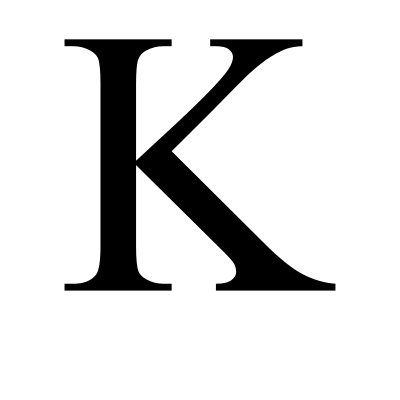 Kappax3
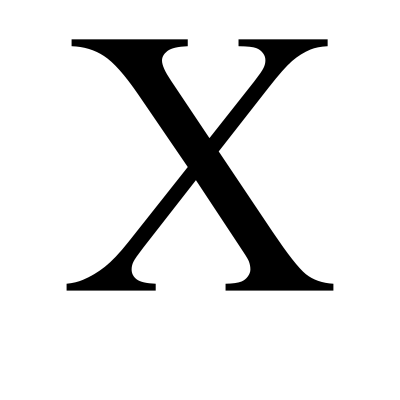 Chix3
Chix3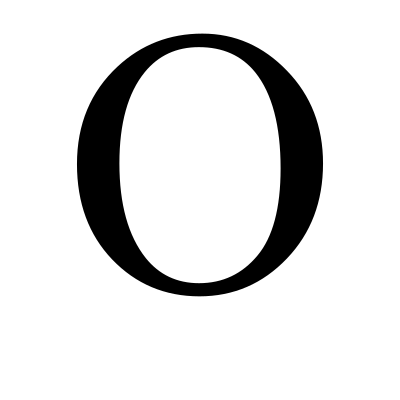 Omicronx3
τὸν Ἐρυμάνθιον κάπρον εἰς χιόνα βαθεῖαν
ἤλασας, καὶ τὸ ἄγριον ἐδεσμεύθη ὑπὸ ψύχους.
Ἡ βία νικᾶται ὑπὸ τοῦ νοῦ.
Τὸ θηρίον βυθίζεται εἰς ὅ,τι δὲν γνωρίζει.
Δὸς ἡμῖν τὸν νοῦν ποὺ δαμάζει τὴν βίαν.
Oh Heraklees, Theerodamasta, Kratere, / ton Erymanthion kapron eis khiona batheian / eelasas, kai to agrion edesmeuthee epo pseekhoos. / Ee via nikatai epo too noo. / To theerion veethizetai eis oti den gnorizei. / Dos eemeen ton noon poo damazei teen vian.
you drove the Erymanthian boar into deep snow, and the savage was bound by cold.
Violence is defeated by the mind.
The beast sinks into what it does not know.
Grant us the mind that tames violence.
 Laguzx10
 Berkanox10Laguzx10Lambdax3
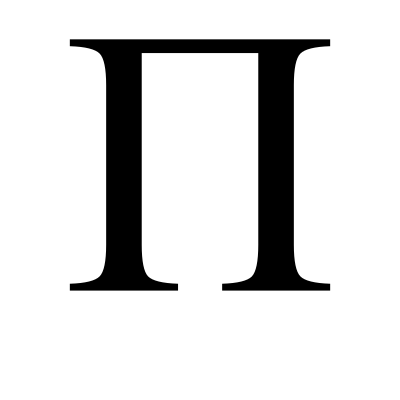 Pix3
Pix3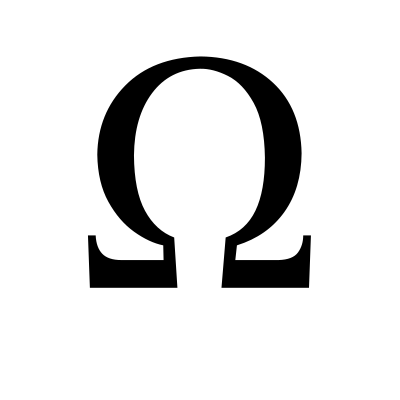 Omegax3
ἐξέτρεψας Ἀλφειὸν καὶ Πηνειὸν
καὶ τριάκοντα ἐτῶν ῥύπον ἐξέπλυνας ἐν ἡμέρᾳ μιᾷ.
Ὁ κόσμος πλήρης κόπρου τῶν Yehubor:
σὺ δὲ τοὺς ποταμοὺς τῆς ἀληθείας ἐκτρέπεις
καὶ τὸν ῥύπον τῶν αἰώνων ἐκπλύνεις.
Oh Heraklees, Katharta, Potameege, / exetrepsas Alfeion kai Peeneion / kai triakonta eton reepon exepleenas en eemera mia. / O kosmos pleerees koprou ton Yehubor: / see de toos potamoos tees aleetheias ektrepeis / kai ton reepon ton aionon ekpleeneis.
you diverted Alpheus and Peneus
and washed away 30 years of filth in a single day.
The world is full of the dung of Yehubor:
you divert the rivers of truth
and wash away the filth of the ages.
Ansuzx10Sowilox10Ansuzx10Etax3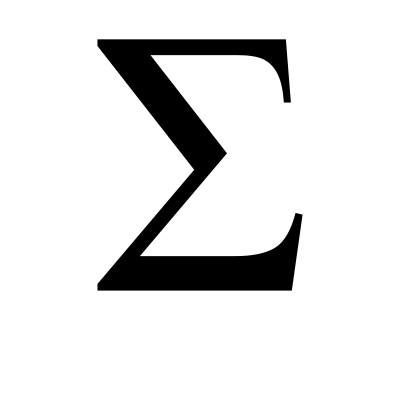 Sigmax3Thetax3
τὰ κρόταλα τῆς Ἀθηνᾶς ἔλαβες
καὶ τὰς χαλκοστόμους ὄρνιθας ἐξεδίωξας.
Ἡ Θεὰ ἔδωκε τὸ ὅπλον, σὺ τὸ ἐχρησιμοποίησας.
Ἦχος πρὸ βέλους: πρῶτον ξύπνησε τὸν ἐχθρόν,
ἔπειτα σφάξε τον.
Oh Heraklees, Ornitholeta, Toxofore, / ta krotala tees Atheenas elaves / kai tas khalkostomoos ornithas exedioxas. / Ee Thea edoke to oplon, see to ekhreesimopoieesas. / Eekhos pro veloos: proton xeepneese ton ekhthron, / epeita sfaxe ton.
the rattles of Athena you received and drove out the bronze-beaked birds.
Sound before arrow: first wake the enemy,
then slay him.
Uruzx10Tiwazx10Uruzx10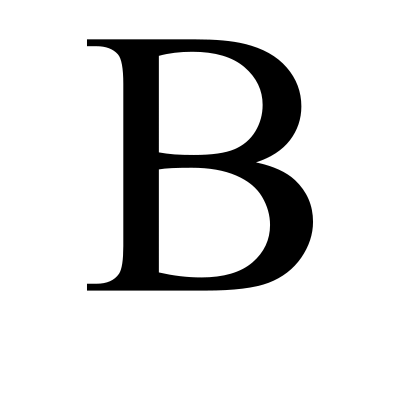 Betax3
 Taux3
Taux3 Mux3
Mux3τὸν ταῦρον τοῦ Ποσειδῶνος ἐδάμασας
γυμναῖς χερσίν, ἄνευ ὅπλου, ἄνευ βοηθείας.
Ἡ ἰσχύς σου ἀρκεῖ ὅπου ἄλλοι χρῄζουν στρατιᾶς.
Τὸ θεῖον θηρίον κλίνει τὸν αὐχένα
ἐνώπιον τοῦ υἱοῦ τοῦ Διός.
Oh Heraklees, Tavrodama, Megasthene, / ton tavron too Poseidonos edamasas / gymnais kherseen, anef oploo, anef voeetheias. / Ee iskhees soo arkei opoo alloi khreezoon stratias. / To theion theerion klinei ton afkhena / enopion too eeoo too Dios.
the bull of Poseidon you tamed with bare hands, without weapon, without aid.
Your strength suffices where others need an army.
The divine beast bows its neck before the Son of Zeus.
 Ehwazx10
 Mannazx10Ehwazx10
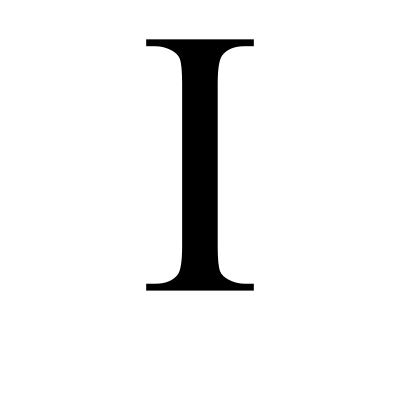 Iotax3
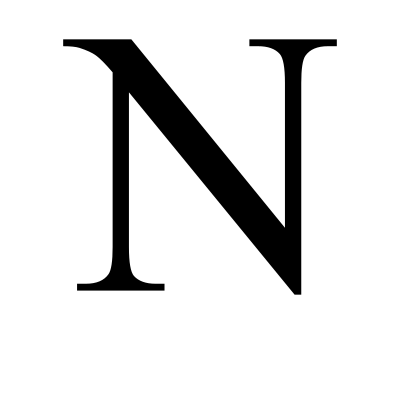 Nux3
Nux3 Gammax3
τὰς ἀνθρωποφάγους ἵππους τοῦ Διομήδους
ἔθρεψας μὲ τὸν κύριόν τους.
Ὅστις τρέφει τὸ κακὸν μὲ σάρκα ἀθῴων
αὐτὸς γίνεται τροφὴ τοῦ ἰδίου κακοῦ.
Τοῦτο τὸ δίκαιον τοῦ Ἡρακλέους.
Oh Heraklees, Ippodama, Dikaiofore, / tas antropofagoos ippoos too Diomeedoos / etrepsas me ton keerion toos. / Ostis trefei to kakon me sarka athoohn / aftos ginetai trofee too idioo kakoo. / Tooto to dikaion too Herakleoos.
the man-eating mares of Diomedes you fed with their own master.
Whoever feeds evil with the flesh of the innocent,
himself becomes food for his own evil.
This is the justice of Heracles.
Berkanox10 Gebox10Berkanox10
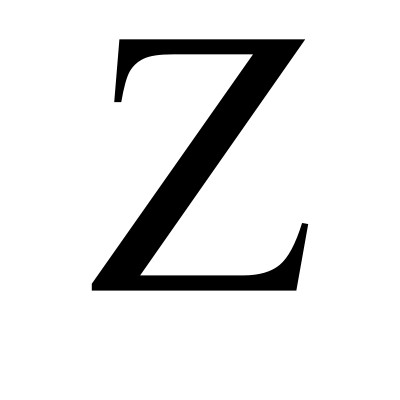 Zetax3
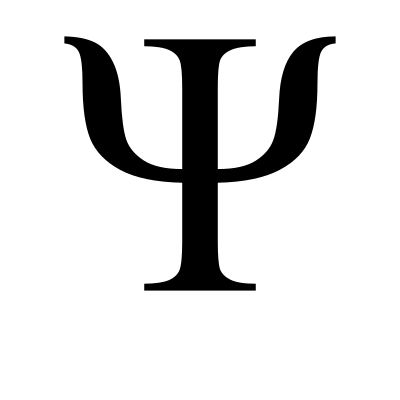 Psix3Gammax3
ἡ Ἱππολύτη σοὶ ἔδωκε τὸν ζωστῆρα ἑκοῦσα,
ἀλλ' ἡ Ἥρα ἔσπειρε ψεῦδος μεταξὺ ἀξίων.
Τὰ Birburim μετατρέπουν δῶρον εἰς πόλεμον.
Ἀλλὰ σύ, Ἡράκλεις, ἐνίκησας καὶ τὸ ψεῦδος.
Τρέμουσιν οἱ ψεῦσται ἐνώπιον τῆς ἰσχύος τοῦ ἀληθοῦς.
Oh Heraklees, Zosteerfore, Amazonomakhe, / ee Ippolutee soi edoke ton zosteera ekoosa, / all' ee Hera espeire psevdos metaxee axion. / Ta Birburim metatrepoon doron eis polemon. / Alla see, Heraklees, enikeesas kai to psevdos. / Tremoosin oi psevstai enopion tees iskheos too aleethos.
Hippolyta gave you the belt willingly,
but Hera sowed falsehood between the worthy.
The Birburim turn gifts into war.
But you, Heracles, conquered even the lie.
The liars tremble before the strength of the true.
 Fehux10
 Dagazx10Fehux10Phix3
 Xix3Deltax3
μέχρι τῶν ἐσχάτων τῆς γῆς ἐταξίδευσας,
τὰς Στήλας σου ἔστησας ὡς ὅρια τοῦ κόσμου.
Τὸν τρισώματον Γηρυόνα ἐφόνευσας,
τοὺς βόας ἐπέστρεψας εἰς τὴν πατρίδα.
Ἡ ὁδός σου εἶναι ἡ ὁδὸς τῶν Ζευϊστῶν: μέχρι τέλους.
Oh Heraklees, Geerionofone, Steelotheta, / mekhri ton eskhaton tees gees etaxidevesas, / tas Steelas soo esteesas os oria too kosmoo. / Ton trisomaton Geeriona efonevsas, / toos voas epestrepsas eis teen patrida. / Ee odos soo einai ee odos ton Zeviston: mekhri teloos.
to the ends of the earth you journeyed,
your Pillars you set as the borders of the world.
The three-bodied Geryon you slew,
the cattle you returned to the homeland.
Your road is the road of the Zevists: to the end.
 Jerax10
 Wunjox10Jerax10Omegax3Mux3Etax3
τὸν οὐρανὸν ἐβάστασας ἐπὶ τῶν ὤμων σου
ἐνῷ ὁ Ἄτλας ἐλάμβανε τὰ χρυσᾶ μῆλα.
Τὸ βάρος τοῦ κόσμου δὲν σὲ ἔκαμψε.
Ὁ Ζευϊστὴς βαστάζει τὸν κόσμον
ὄχι ἐπειδὴ πρέπει, ἀλλ' ἐπειδὴ δύναται.
Oh Heraklees, Atlantovasta, Khreesomeele, / ton ooranon evastasas epi ton omon soo / eno o Atlas elamvane ta khreesa meela. / To varos too kosmoo den se ekampse. / O Zevistees vastazei ton kosmon / okhi epeidee prepei, all' epeidee deenatai.
you bore the heavens upon your shoulders
while Atlas fetched the golden apples.
The weight of the world did not break you.
The Zevist bears the world,
not because he must, but because he can.
 Hagalazx10
 Perthrox10
 Othalax10Thetax3Kappax3Alphax3
κατέβης εἰς τὸν Ἅδην ζῶν καὶ ἀνέβης νικητής.
Τὸν τρικέφαλον φύλακα ἐδάμασας γυμναῖς χερσίν.
Τὸν θάνατον ἐνίκησας χωρὶς νὰ ἀποθάνῃς.
Τὸ πῦρ τοῦ Διὸς σὲ ἀνέμενε εἰς τὸν Ὄλυμπον.
Ἀπεθεώθης. Εἶσαι μεθ' ἡμῶν. Αἰωνίως.
Oh Heraklees, Kerverodama, ex Aidoo Epanelthon, / katevees eis ton Adeen zon kai anevees nikeetees. / Ton trikefalon feelaka edamasas gymnais kherseen. / Ton thanaton enikeesas khoris na apothanees. / To peer too Dios se anemene eis ton Olimpon. / Apetheotheees. Eisai meth' eemon. Aionios.
you descended to Hades alive and rose victorious.
The three-headed guardian you tamed with bare hands.
You conquered death without dying.
The fire of Zeus awaited you on Olympus.
You were deified. You are with us. Eternally.
Υἱὲ τοῦ Διός, Ἀλκείδη, Καλλίνικε,
Εὐλογημέναι αἱ δώδεκα νῖκαί σου
καὶ ἡ ἀθανασία ποὺ ἐκέρδισας διὰ τῆς πυρᾶς.
Εὐλογημένοι ἡμεῖς διὰ σοῦ.
Εὐλογημένοι καὶ τρὶς εὐλογημένοι αἰωνίως!Evlogeemenos ei, Heraklees, / Eee-e too Dios, Alkeidee, Kallinike, / Evlogeemenai ai dodeka nikai soo / kai ee athanasia poo ekerdisas dia tees peeras. / Evlogeemenoi eemeis dia soo. / Evlogeemenoi kai tris evlogeemenoi aionios!
Son of Zeus, Alcides, Glorious Victor.
Blessed are your 12 victories
and the immortality you earned through the pyre.
Blessed are we through you.
Blessed and thrice blessed eternally!
After you are done with this, you can meditate on Heracles's Sigil in the Temple of Zeus, or the one below. Visualize the lion-skin upon your shoulders and the golden light of Olympus descending upon you. Let yourself be immersed in the strength and endurance of the Son of Zeus.
It's important to meditate on yourself after the Ritual calmly for a few minutes.
SAT
सत्: SAT, real, true, truthful in Sanskrit.
The Shen Ring
The Symbol that Encapsulates the Sigil: The Shen Ring, Egyptian Hieroglyphic language. The Shen also survived in Chinese tradition as a glyph for Spiritual Force, Divine Force, and God.
Letters of the Sigil
The Ancient Greek letters for Heracles's Name in arrangement.
On the Greek Sacred Letters
The Greek alphabet carries numerical and cosmological values rooted in the Pythagorean and Orphic traditions. Each letter is vibrated by its full Ancient Greek name (ALPHA, BETA, GAMMA, etc.) and carries the resonance of its numerical value within the isopsephic system. The triads chosen for each Labor correspond to the elemental and planetary qualities of that specific task.
(Sources: Nicomachus of Gerasa, Manual of Harmony; Demetrius, De Elocutione §71; PGM V, VII, XIII)
On Heracles
Heracles (Greek: Ἡρακλῆς, "Glory of Hera") is the greatest hero of Greek mythology, son of Zeus and the mortal woman Alcmene. His Twelve Labors, imposed as penance by King Eurystheus through the machinations of Hera, represent the archetypal journey of purification, endurance, and apotheosis. Upon completing his labors and dying on the pyre at Mount Oeta, Heracles was deified and taken to Olympus, where he married Hebe, Goddess of Youth. His cult was the most widespread in the ancient Mediterranean world, from Spain to India (where he was identified with Vajrapani in Buddhist Gandhara art). The Stoics adopted him as the model of the virtuous hero who labors for humanity. His name, paradoxically meaning "Glory of Hera" despite Hera being his persecutor, encodes the deepest mystery: the opposition that drives the hero to godhood is itself the mechanism of his apotheosis.
(Sources: Homer, Iliad XIX.95-133, Odyssey XI.601-627; Apollodorus, Bibliotheca II.4-7; Diodorus Siculus, Library of History IV.8-39; Pindar, Nemean I, Isthmian IV; Euripides, Heracles; Seneca, Hercules Furens; Burkert, Greek Religion, 1985)
On Vine (Goetic #45)
The Goetia lists Vine (also Vinea) as the forty-fifth spirit: a Great King and Earl commanding 36 legions, appearing as a lion riding a black horse and bearing a viper. His attributed powers (discovering hidden things and witches, building towers, overthrowing walls, creating storms) correspond precisely to Heracles's mythological actions: the lion-skin disguise, the serpent conquered (Hydra), the building and destruction of Troy's walls, the redirection of rivers to create floods. The earlier spirit "Royne" from the Liber Officiorum Spirituum adds love magic (Heracles's many loves), destroying enemies (the Twelve Labors), and consecrating objects, especially books (Heracles as patron of gymnasia where philosophy was taught). The name Vinea connects both to vinum (wine: Heracles as legendary drinker and companion of Dionysus) and to the Latin vinea (siege engine for breaching walls: Heracles as the only hero who built AND destroyed the walls of Troy). The opposing Shemhamphorasch angel Sealiah ("Mover of All Things," governing vegetation, exalting the humiliated) mirrors Heracles precisely: the hero who moved heaven and earth, whose club sprouted living olive-wood, who was himself humiliated under Eurystheus and Omphale before rising to Olympus.
(Sources: Weyer, Pseudomonarchia Daemonum, 1577; Ars Goetia, 17th c.; Liber Officiorum Spirituum; Rudd, Goetia of Dr. Rudd)
Compact Runic Triads
Each Labor's runic triad corresponds to its elemental nature: Tyr-Uruz-Sowilo (victory-strength-glory) for the Lion; Thurisaz-Kenaz-Thurisaz (destruction-fire-destruction) for the Hydra; Raidho-Ansuz-Raidho (journey-divine-journey) for the Hind; Uruz-Isa-Uruz (beast-ice-beast) for the Boar; Laguz-Berkano-Laguz (water-renewal-water) for the Stables; Ansuz-Sowilo-Ansuz (sound-sun-sound) for the Birds; Uruz-Tyr-Uruz (bull-mastery-bull) for the Bull; Ehwaz-Mannaz-Ehwaz (horse-man-horse) for the Mares; Berkano-Gebo-Berkano (feminine-gift-feminine) for the Belt; Fehu-Dagaz-Fehu (cattle-dawn-cattle) for Geryon; Jera-Wunjo-Jera (harvest-joy-harvest) for the Apples; Hagalaz-Perthro-Othala (transformation-fate-return) for Cerberus.