Hera Power Ritual
Queen of Heaven, Sovereign of Order, the Divine Feminine Cycle of the Cosmos, Wife of Kyrios
- This Ritual is based on vibrating the Runes, the Ancient Greek Letters, and making certain affirmations. Raising your energies before the Ritual is advised.
- The Sigil that is provided is the point of focus for this Ritual.
- Click here to pronounce the runes.
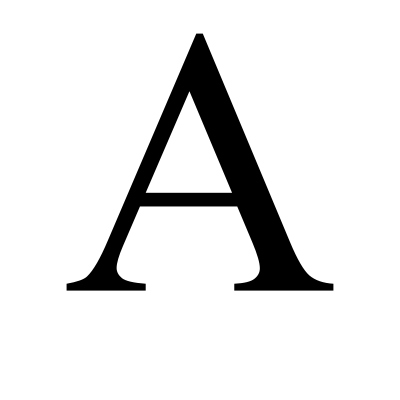 Alphax10
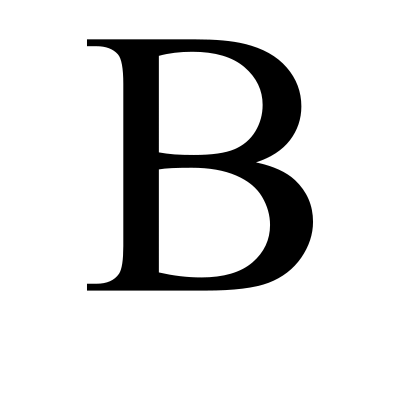 Betax10
 Gammax10
 Ansuzx10
You are invoked by the Divine Assembly and Order of the Temple of Zeus,
Beloved consort of ZEFS, guardian of divine law among Gods and mortals.
In majesty and providence, answer our honorable invocation.
By the Name of Zeus, you are the Wife of Kyrios, Kosmos, and Ananke.
ΗΡΑ, JUNO, BASILEIA, POTNIA, LILITH in your aspect of shadow, you are adored and invoked.
Alphax10 Uruzx10
 Fehux10
From the eternal throne of Olympus, you were united with Zeus in divine union.
Queen beside the King of the Gods, bearer of authority and lawful power,
Your sovereignty became the pillar between divine order and the mortal realms.
 Tiwazx10
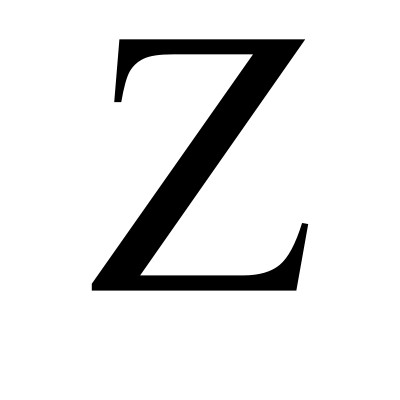 Zetax10
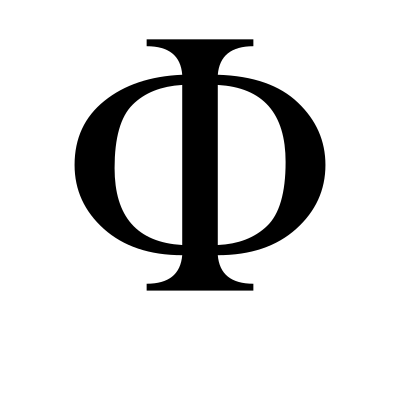 Phix10
Mistress of marriage, oaths, lineage, queenship, and sacred legitimacy,
Guardian of justice, retribution, dignity, destiny, and royal wrath,
Eternal ΗΡΑ, source of order, power, sovereignty, and divine equilibrium.
Fehux3Uruzx3 Thurisazx3Ansuzx3
 Raidhox3
 Kenazx3
 Gebox3
 Wunjox3
You are the Divine Feminine in Light and in Darkness.
Great is your power; unrelenting is your fury.
Chaos and Order are in your Hands.
You bring forth legitimacy, power, blessings, and protection to all your Children.
You are the Consort of God; you are the Goddess of Goddesses.
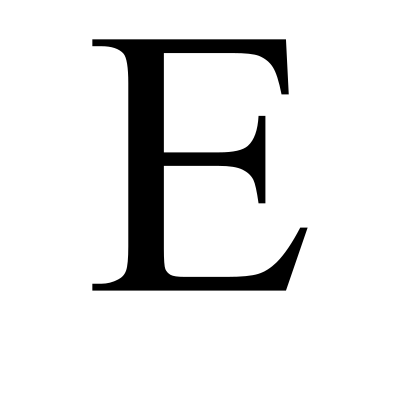 Epsilonx10Phix10
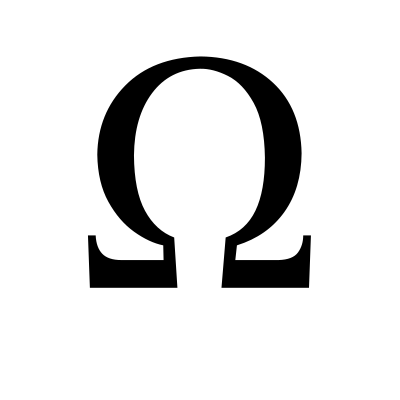 Omegax10
"The children of the family of the Gods are my children, and I am the Mother of Gods and Men.
None shall infringe upon my laws and statutes.
All shall abide by my laws.
Those who abide by my laws shall be blessed with legitimacy, sovereignty, strength, and power,
Blessed by my love for all time to come.
Those who defy my laws, I shall visit with unrelenting wrath.
For I am ERATO, I am ORA, and I am HERA,
And those who know the meanings of my Name shall have eternal peace."
So we, O HERA, venerate your Name, venerate your Powers, and venerate your Attributes.
Bless us as we bless you, love us as we love you, support us as we support you.
We abide by your heavenly laws and dictates.
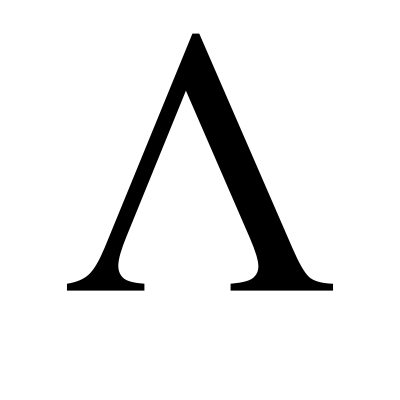 Lambdax10Omegax10Betax10
"I am Hera, the Divine Goddess and the Divine Feminine cycle of the Cosmos.
All time is under my rule; all laws are decreed by my consort.
The mystery of the Holy Marriage is my mystery.
I have gone by many Names, and mortals have ascribed to me endless words of veneration.
Yet I am Hera, Queen of Gods and Men, and I shall guard the children, protect the household, and enable the procreation of men and women, daughters and sons, generations and lineages.
My creative and birthing power is abundant and limitless; for this, mortals have feared it.
But none of my children shall fear my power, so long as they abide by my laws.
Mortals have called me 'Lilith' before, which I am not; yet when mortals require instruction or punishment, I may take this form and strike with unrelenting fury."
Omegax10Epsilonx10Lambdax10Omegax10Your Mother Rhea and Father Cronus have blessed you with powers beyond time and space.
In your hands are entrusted the eternal flows of all generation, creation, and progeny.
What must last forever must go through you, O Hera.
Let us, your loving and loyal children, pass through the gates of spiritual immortality and plentiful generation in the material realms.
We declare the truth of your identity. We recognize you for who you Truly are.
Omegax10Epsilonx10Lambdax10Omegax10Let the gates of feminine power open and receive us kindly, lovingly, and with motherly support and celestial splendor.
May the Power of Powers, Hera, the Woman of Women, confer blessings upon us that shall be eternal; may we be partakers of and aligned with Her Power always.
After you are done with this, you can meditate on Hera's Sigil in the Temple of Zeus. Let yourself be immersed and receive energy from Hera.
It's important to meditate on yourself after the Ritual calmly for a few minutes.
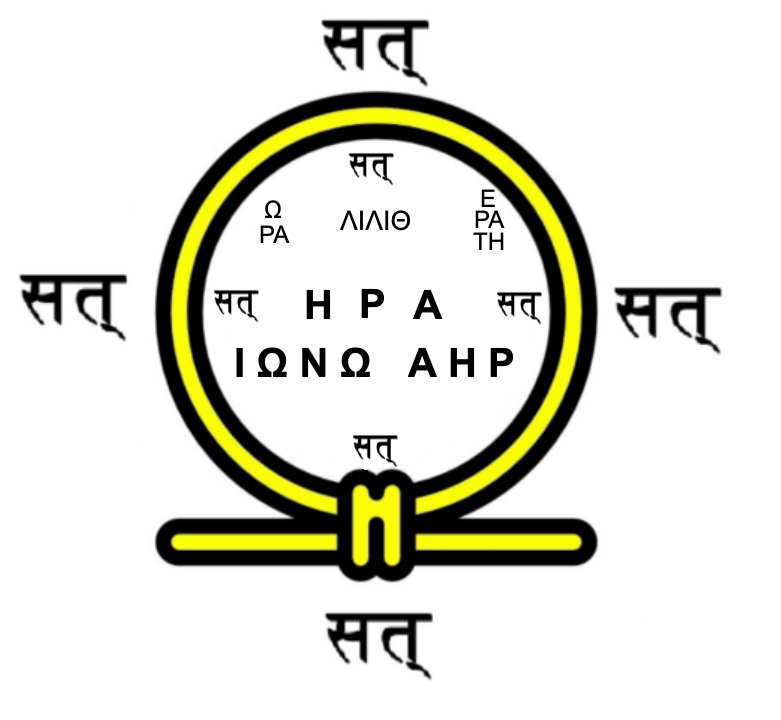
SAT
सत्: SAT, real, true, truthful in Sanskrit.
The Shen Ring
The Symbol that Encapsulates the Sigil: The Shen Ring, Egyptian Hieroglyphic language. The Shen also survived in Chinese tradition as a glyph for Spiritual Force, Divine Force, and God.
Letters of the Sigil
The Ancient Greek letters for Hera's Name in arrangement.
On Hera
Hera (Greek: Ἥρα) is the Queen of the Olympian Gods, consort of Zeus, Goddess of marriage, women, childbirth, and the sacred bond between heaven and earth. Daughter of Cronus and Rhea, sister and wife of Zeus. The Hieros Gamos (Sacred Marriage) of Zeus and Hera is one of the central mysteries of Greek religion, representing the union of cosmic masculine and feminine principles. Her primary cult centers were Argos (the Heraion, one of the oldest temples in Greece), Samos, and Olympia. Homer (Iliad IV.50-52) calls her Basileia ("Queen") and Boopis Potnia ("Ox-eyed Lady"), titles of supreme sovereignty. The name Hera may derive from the same root as hora ("season, right time") and heros ("hero, protector"), connecting her to cosmic order and the guardianship of time itself.
(Sources: Homer, Iliad IV.50-52, XIV.153-360; Hesiod, Theogony 453-458; Pausanias, Description of Greece II.17; Burkert, Greek Religion, 1985; O'Brien, The Transformation of Hera, 1993)
On the Names of Hera
The vibration sequence ΕΡΑ, ΕΡΑΤΩ, ΩΡΑ, ΩΡΕΝ, ΙΩΝΩ, ΙΑΝΩ, ΗΡΑ, ΧΕΡΑ, ΗΡ, ΑΗΡ, ΑΙΘΗΡΕΑ traces the phonetic and theological genealogy of Hera's Name: from Era (the root of desire and love, cf. Erato, Muse of love poetry) through Ora (the season, the right moment) to Aer (air, the breath of the cosmos) and Aitherea (the aethereal, the heavenly). Each name is an aspect of her divine identity, and their sequence is a journey from earthly desire to cosmic sovereignty.
On the Lilith Aspect
The ritual addresses Hera's relationship to the name "Lilith" directly through Hera's own declaration. In Zevist theology, Lilith is not a separate entity but a wrathful aspect that Hera may assume "when mortals require instruction or punishment." This parallels the Mesopotamian Lilitu tradition (wind-spirits associated with nocturnal power) and the later Hebrew demonization of feminine divine authority. The Yehuboric tradition inverted the Queen of Heaven into a figure of terror; the Zevist restoration recognizes that the terror of the Divine Feminine is not evil but the natural consequence of defying cosmic law.