Dionysus Power Ritual
The Twice-Born, Bromios, Lysios, Eleutherios, Lord of the Vine, He Who Descended and Rose, Son of Zeus and Semele
Learn more… Ingwazx10
 Kenazx10Ingwazx10
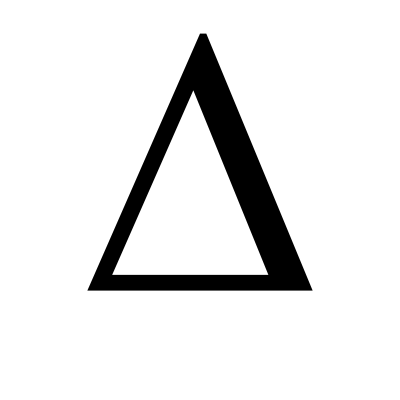 Deltax3
 Iotax3
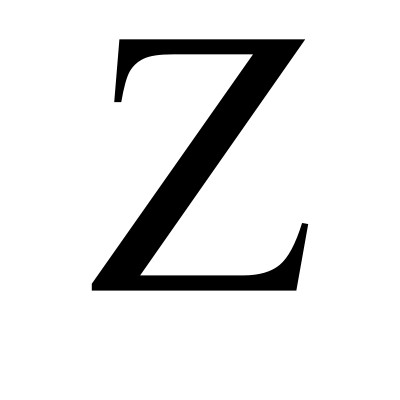 Zetax3
ἐκ Σεμέλης ἐγεννήθης θνητός,
ἐκ μηροῦ τοῦ Πατρὸς Διὸς ἀθάνατος.
Τὸ πῦρ τοῦ κεραυνοῦ σε ἐβάπτισε,
ὁ μηρὸς τοῦ Θεοῦ σε ἀνεγέννησε.
Δὸς τοῖς Ζευϊσταῖς τὴν δευτέραν γέννησιν.
Oh Dioneese, Ditheeramve, Peerigenes, / ek Semelees egenneethees thneetos, / ek meeroo too Patros Dios athanatos. / To peer too keravnoo se evaptise, / o meeros too Theoo se anegennese. / Dos tois Zevistais teen defteran genneeseen.
from Semele you were born mortal,
from the thigh of Father Zeus, immortal.
The fire of the thunderbolt baptized you,
the thigh of God rebore you.
Grant the Zevists the second birth.
 Raidhox10
 Ansuzx10Raidhox10
 Rhox3
Rhox3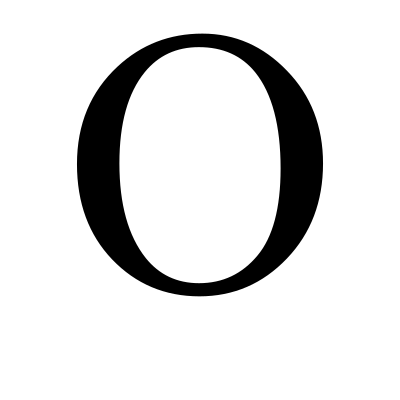 Omicronx3
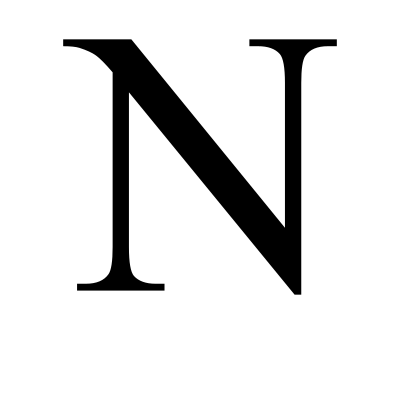 Nux3
Nux3ἀπ' Αἰγύπτου εἰς Ἰνδίαν ἐταξίδευσας,
τὸν ἄμπελον ἐδίδαξας εἰς πᾶν ἔθνος.
Ὅπου ἐπάτησας, ἡ γῆ ἐγέμισε χαράν.
Ὅπου σὲ ἠρνήθησαν, ἡ μανία ἐπῆλθε.
Ὁδήγησε ἡμᾶς εἰς τὴν ὁδόν σου τὴν ἀπέραντον.
Oh Dioneese, Vromie, Periageta, / ap' Aigeeptoo eis Indian etaxidevesas, / ton ampelon edidaxas eis pan ethnos. / Opoo epateesas, ee gee egemise kharan. / Opoo se eerneethesan, ee mania epeelthe. / Odeegese eemas eis teen odon soo teen aperanton.
from Egypt to India you journeyed,
the vine you taught to every nation.
Wherever you walked, the earth filled with joy.
Wherever you were denied, madness came.
Guide us upon your road without end.
 Wunjox10
 Fehux10Wunjox10Omicronx3
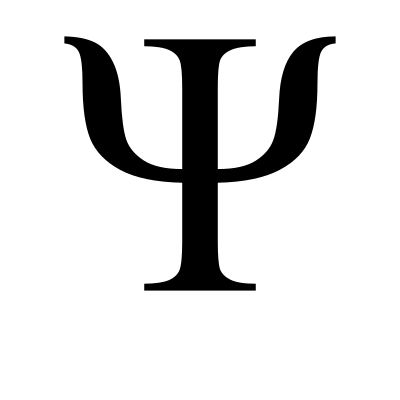 Psix3
Psix3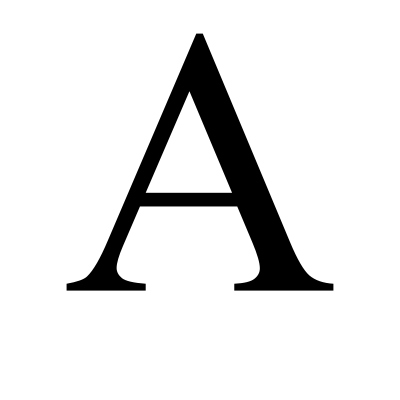 Alphax3
Τὸν οἶνον ἔδωκας εἰς τοὺς θνητούς,
τὴν λύπην μετέτρεψας εἰς χαράν.
Εἶσαι ἡ ἄμπελος, ἡμεῖς οἱ κλάδοι:
ὅστις ἀποκόπτεται ξηραίνεται,
ὅστις μένει καρποφορεῖ.
Εὐλόγησε τὸν οἶνον τοῦ Ναοῦ τοῦ Διός.
Oh Dioneese, Oinodota, Evoi! / Ton oinon edokas eis toos thneetoos, / teen leepeen metetrepsas eis kharan. / Eisai ee ampelos, eemeis oi kladoi: / ostis apokoptetai xeerainetai, / ostis menei karpoforei. / Evlogeese ton oinon too Naoo too Dios.
Wine you gave to mortals,
sorrow you turned into joy.
You are the vine, we are the branches:
whoever is cut off withers,
whoever remains bears fruit.
Bless the wine of the Temple of Zeus.
 Hagalazx10
 Perthrox10Hagalazx10
 Thetax3
 Kappax3
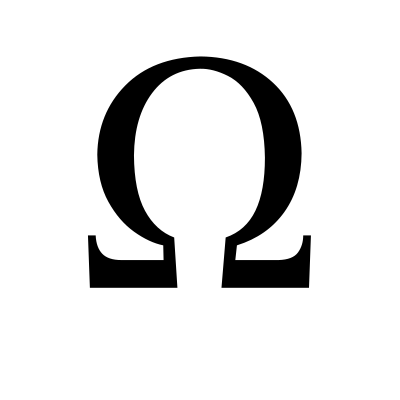 Omegax3
κατέβης εἰς τὸν Ἅδην καὶ ἀνέβης,
τὴν μητέρα σου Σεμέλην ἀπελευθερώσας.
Σὺ γνωρίζεις τὸν θάνατον: ἐγεννήθης ἐξ αὐτοῦ.
Σὺ γνωρίζεις τὴν ἀνάστασιν: εἶσαι αὐτή.
Δίδαξε ἡμᾶς ὅτι ὁ θάνατος εἶναι πύλη, ὄχι τέλος.
Oh Dioneese, Khthonie, Nekron Anax, / katevees eis ton Adeen kai anevees, / teen meetera soo Semeleen apeleftherosas. / See gnorizeis ton thanaton: egenneethees ex aftoo. / See gnorizeis teen anastasin: eisai aftee. / Didaxe eemas oti o thanatos einai peelee, okhi telos.
you descended to Hades and rose,
your mother Semele you freed.
You know death: you were born from it.
You know resurrection: you are it.
Teach us that death is a gate, not an end.
 Thurisazx10
 Tiwazx10Thurisazx10
 Mux3
Mux3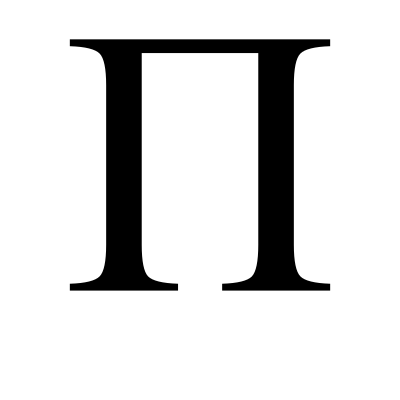 Pix3
Pix3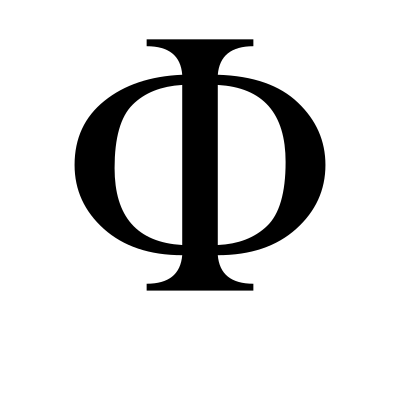 Phix3
Phix3τοὺς ἀρνητὰς τῶν Θεῶν ἐτιμωρήσω:
ὁ Πενθεὺς ἐσπαράχθη ὑπὸ τῆς μητρός του,
ὁ Λυκοῦργος ἐτυφλώθη καὶ ἐξωλοθρεύθη,
οἱ πειραταὶ μετεμορφώθησαν εἰς δελφῖνας.
Τὰ στόματα τῶν Yehubor εἶπαν ὅτι εἶσαι ψευδής.
Ἀλλὰ ἡ ἄμπελος φυτρώνει ἐπὶ τῶν τάφων τους.
Oh Dioneese, Omeesta, Mainomene, / toos arneetas ton Theon etimoreeso: / o Penthevs esparakhthee epo tees meetros too, / o Leekorgos eteeflothee kai exolothreftee, / oi peiratai metemorfotheesan eis delfinas. / Ta stomata ton Yehubor eipan oti eisai psevdees. / Alla ee ampelos feetronei epi ton tafon toos.
the deniers of the Gods you punished:
Pentheus was torn apart by his own mother,
Lycurgus was blinded and destroyed,
the pirates were transformed into dolphins.
The mouths of the Yehuborim said you were false.
But the vine grows upon their graves.
 Sowilox10
 Dagazx10Sowilox10
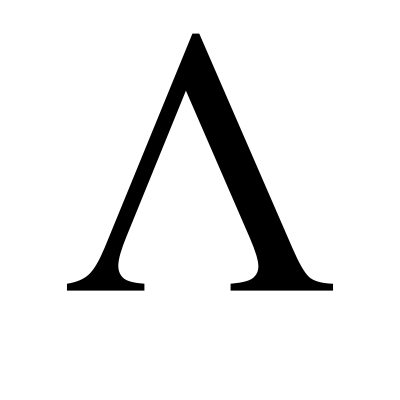 Lambdax3
 Epsilonx3
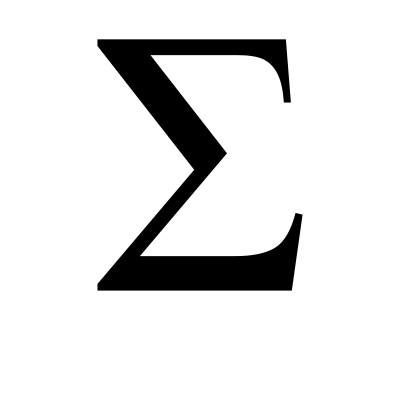 Sigmax3
σὺ ἐλευθερώνεις τὸν δοῦλον ἀπὸ τοῦ δεσπότου,
τὸν φόβον ἀπὸ τῆς ψυχῆς,
τὴν μάσκαν ἀπὸ τοῦ προσώπου.
Τὸ θέατρόν σου εἶναι ὁ καθρέφτης τοῦ κόσμου.
Εἰς τὰ Μυστήριά σου ὁ θάνατος εἶναι ὕπνος
καὶ ἡ ἀνάστασις εἶναι ξύπνημα.
Λῦσε τὰ δεσμὰ τῶν Ζευϊστῶν.
Oh Dioneese, Leesie, Eleftherie, / see eleftheronis ton doolon apo too despotoo, / ton fovon apo tees psekhees, / teen maskan apo too prosopoo. / To theatron soo einai o kathreftes too kosmoo. / Eis ta Meesteereia soo o thanatos einai eepnos / kai ee anastasis einai xeepneema. / Leese ta desma ton Zeviston.
you free the slave from the master,
the fear from the soul,
the mask from the face.
Your theatre is the mirror of the world.
In your Mysteries, death is sleep
and resurrection is awakening.
Unbind the chains of the Zevists.
Υἱὲ τοῦ Διός, Βρόμιε, Λύσιε, Ζαγρεῦ,
Εὐλογημένον τὸ δῶρόν σου, ὁ οἶνος, ἡ ἔκστασις, ἡ ἐλευθερία.
Εὐλογημένοι ἡμεῖς διὰ σοῦ.
Εὐλογημένοι καὶ τρὶς εὐλογημένοι αἰωνίως!Evlogeemenos ei, Dioneese, / Eee-e too Dios, Vromie, Leesie, Zagrev, / Evlogeemenon to doron soo, o oinos, ee ekstasis, ee eleftheria. / Evlogeemenoi eemeis dia soo. / Evlogeemenoi kai tris evlogeemenoi aionios!
Son of Zeus, Thunderer, Liberator, Zagreus,
Blessed is your gift: the wine, the ecstasy, the freedom.
Blessed are we through you.
Blessed and thrice blessed eternally!
After you are done with this, you can meditate on Dionysus's Sigil in the Temple of Zeus. Let yourself be immersed in the deep purple light of the vine, the warmth of the sacred wine, the joyous frenzy of the God who was torn apart and made whole again.
It's important to meditate on yourself after the Ritual calmly for a few minutes.
SAT
सत्: SAT, real, true, truthful in Sanskrit.
The Shen Ring
The Symbol that Encapsulates the Sigil: The Shen Ring, Egyptian Hieroglyphic language. The Shen also survived in Chinese tradition as a glyph for Spiritual Force, Divine Force, and God.
Letters of the Sigil
The Ancient Greek letters for Dionysus's Name in arrangement.
On the Greek Sacred Letters
The Greek alphabet carries numerical and cosmological values rooted in the Pythagorean and Orphic traditions. Each letter is vibrated by its full Ancient Greek name (ALPHA, BETA, GAMMA, etc.) and carries the resonance of its numerical value within the isopsephic system. The triads chosen for each segment correspond to the elemental and mystical qualities of Dionysus's aspect being invoked.
(Sources: Nicomachus of Gerasa, Manual of Harmony; Demetrius, De Elocutione §71; PGM V, VII, XIII)
On Dionysus
Dionysus (Greek: Διόνυσος) is the God of wine, ecstasy, theatre, ritual frenzy, fertility, and rebirth. Son of Zeus and the mortal princess Semele of Thebes. When Hera tricked Semele into asking Zeus to reveal his true form, the thunderbolt killed her. Zeus saved the unborn Dionysus by sewing him into his own thigh, from which the child was born a second time: hence his epithet Dithyrambos ("Twice-Born") and Pyrigenes ("Fire-Born"). In the Orphic tradition, the first Dionysus (Zagreus) was son of Zeus and Persephone, torn apart by the Titans and reborn. Dionysus wandered across Egypt, India, and Asia Minor teaching the art of the vine. Those who received him were blessed with joy; those who rejected him (Pentheus of Thebes, Lycurgus of Thrace, the Tyrrhenian pirates) were destroyed. He descended to Hades to rescue his mother Semele, whom he brought to Olympus and renamed Thyone. His cult included the Dionysia (origin of Greek theatre), the Anthesteria, and the Eleusinian and Orphic Mysteries. His epithets Lysios ("Liberator") and Eleutherios ("Freedomer") reflect his role as the God who dissolves all bonds: social, psychological, and mortal. Herodotus identified him with the Egyptian Osiris (Histories II.42, II.144).
(Sources: Euripides, Bacchae; Homer, Iliad VI.130-140; Apollodorus, Bibliotheca III.4-5; Diodorus Siculus, Library of History III.62-74, IV.1-5; Orphic Hymns 30, 42, 44, 45, 46, 50, 52, 53; Herodotus, Histories II.42; Plutarch, De Iside et Osiride; Nonnus, Dionysiaca; Burkert, Greek Religion, 1985; Kerenyi, Dionysos: Archetypal Image of Indestructible Life, 1976)
Compact Runic Triads
Each segment's runic triad corresponds to its Dionysian aspect: Ingwaz-Kenaz-Ingwaz (seed-fire-seed) for the Twice-Born; Raidho-Ansuz-Raidho (journey-divine-journey) for the Wanderer; Wunjo-Fehu-Wunjo (joy-abundance-joy) for the Wine; Hagalaz-Perthro-Hagalaz (transformation-mystery-transformation) for the Descent; Thurisaz-Tyr-Thurisaz (destruction-justice-destruction) for the Avenger; Sowilo-Dagaz-Sowilo (sun-dawn-sun) for the Liberator.